Holidaypac
 Dec 11,2025

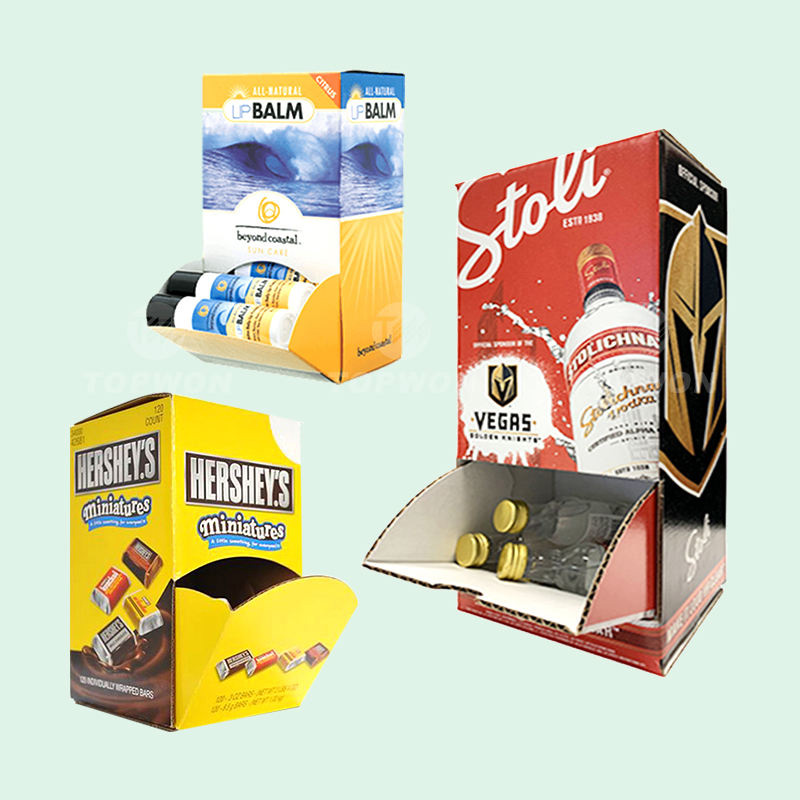
If you walk into any grocery store or convenience shop, you’ve likely pulled a candy bar or a soda bottle from a shelf, only to watch the next item slide perfectly into place.
That isn’t magic. It’s physics.
Specifically, it is the work of Custom Gravity Feed Cardboard Displays. These are specialized retail fixtures designed to enhance product visibility and accessibility by utilizing a gravity-driven mechanism. At Holidaypac, we see these displays as the unsung heroes of the retail world. They ensure items are consistently presented at the front of the display, saving staff time and making it easier for customers to grab what they need.
In this guide, I’m going to walk you through everything you need to know about these displays—from the different types and design considerations to the nitty-gritty of installation and costs.
Let’s define our terms first.
A gravity feed display uses an inclined shelf or a roller track. When a customer removes the front item, the item behind it slides forward automatically. This simple mechanism ensures that products are always at the front, right at eye level.
For retailers in grocery, convenience, and specialty sectors, this is a game-changer. It maximizes shelf space and optimizes inventory turnover. Instead of a customer reaching into a dark shelf void to find a product, the product comes to them.
This creates a streamlined shopping experience.
It significantly increases impulse purchases because the product is always "in your face" in a polite, organized way. Plus, for us manufacturers, it’s a fascinating challenge to engineer cardboard that is both sturdy enough to handle the weight and slick enough to let products glide.
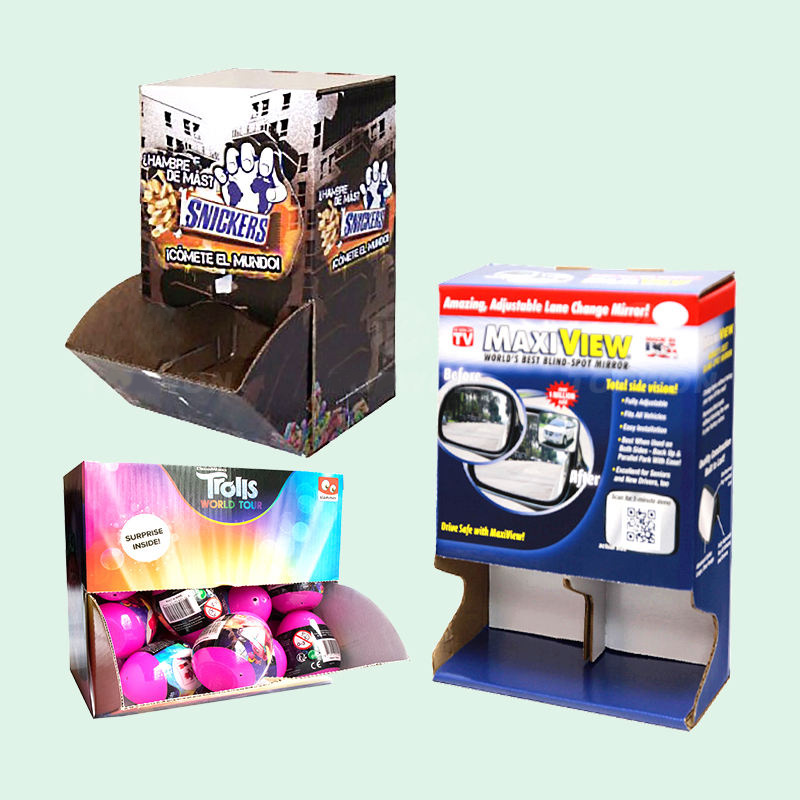
One size definitely does not fit all.
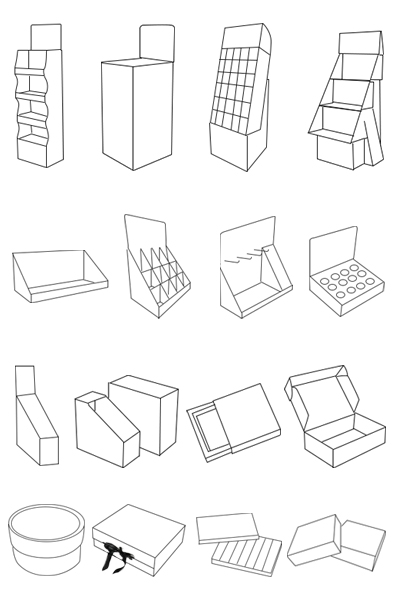
There are several types of custom gravity feed cardboard displays, and choosing the right one depends entirely on what you are selling and where you are selling it. Here is the breakdown.
These are the most common types you will see. They feature inclined shelves that allow products to slide forward smoothly as the front items are taken.
Real estate on a checkout counter is expensive. You need to make every inch count.
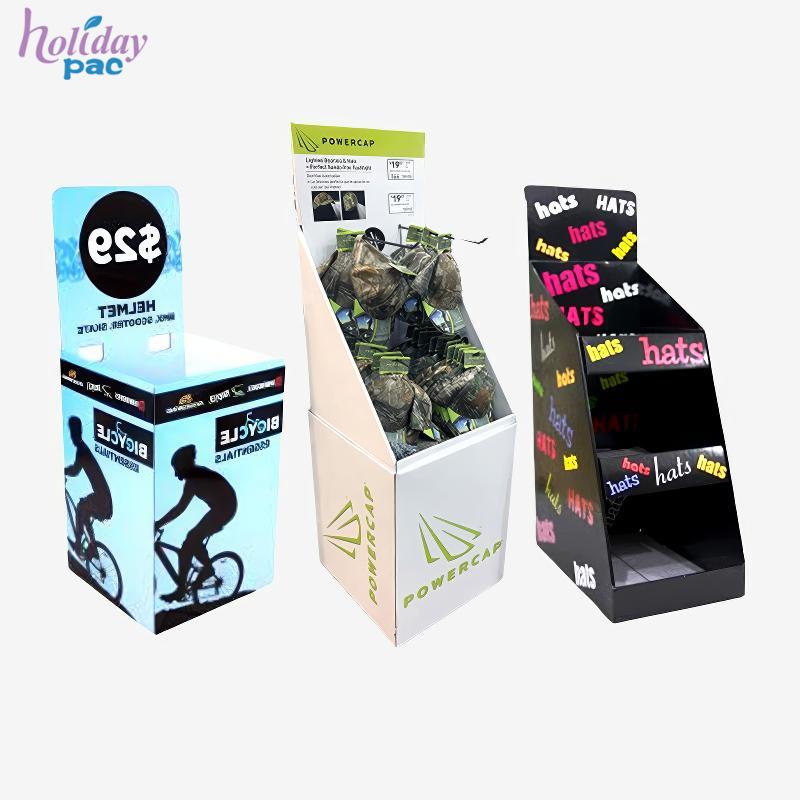
Countertop displays are compact and designed specifically for high-traffic areas. They are perfect for small packaged items like gum, travel-sized toiletries, or batteries. The goal here is to maximize counter space effectively while keeping the area looking neat.
Sometimes, you need to go big.
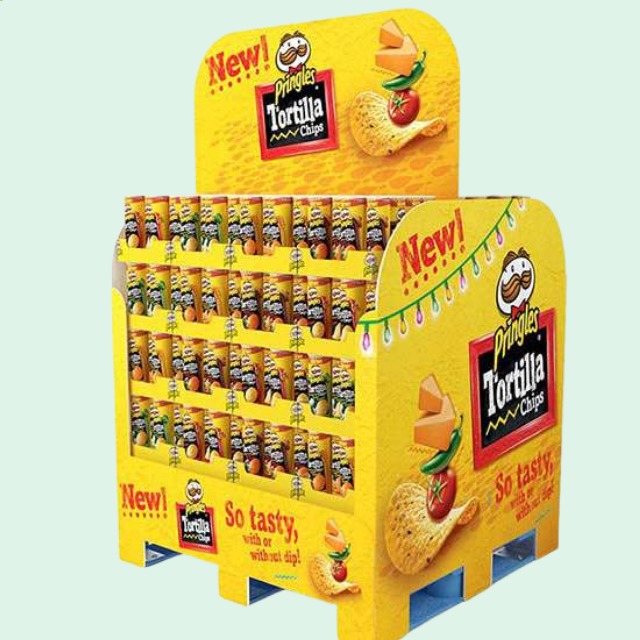
These displays are larger and designed to accommodate bulk items or larger format goods. You will often see these strategically placed in aisles to capture attention. Their height makes them a valuable asset for driving sales in supermarkets because they act as a standalone billboard for the product.
Yes, gravity feed works in the cooler, too.
These are specially designed for perishable items like beverages and snacks that need to stay cold. They not only keep products fresh but also maintain that crucial gravity feed mechanism. This is vital for reducing the need for frequent manual restocking in a cold environment.
At Holidaypac, this is where we get creative.
Custom stands can be designed to accommodate specific product shapes or weird packaging. We can build them with adjustable dividers or modular tracks to adapt to various SKUs. This flexibility allows brands to showcase a diverse range of products while maintaining a cohesive branding strategy.
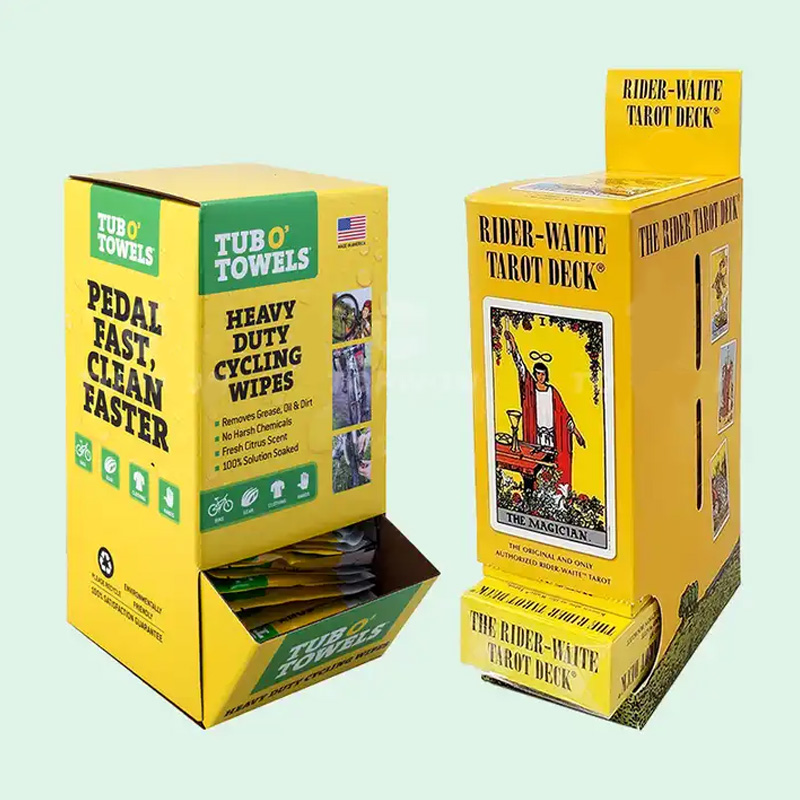
Why invest in Custom Gravity Feed Cardboard Displays? It’s not just about looking cool. It’s about efficiency and revenue.
If you work in retail, you know the headache of expired goods.
Gravity feed systems naturally support a First In, First Out (FIFO) approach. Because the products are loaded from the back (or slide from the back), the oldest stock is always at the front effectively. This minimizes waste and ensures you aren't throwing away expired product.
Time is money.
With traditional shelves, employees spend hours "facing" the aisles—pulling products forward to make the shelf look full. With gravity feed, the shelf faces itself. Employees no longer need to constantly pull products forward or deal with misplaced items. This frees them up to help customers or manage inventory elsewhere.
A messy shelf kills sales.
These displays promote an organized, clutter-free layout. When products are always front-facing, they are more visible. Increased visibility leads to higher sales because shoppers are simply more likely to buy what they can easily see. It builds brand trust because your presentation looks professional.
Designing Custom Gravity Feed Cardboard Displays involves a lot of moving parts. It influences the cost, the timeline, and whether the thing actually works.
The more complex the design, the higher the cost and the harder it is to make.
It is crucial to engage in a collaborative design session. At Holidaypac, we take a client’s vision and translate it into a concept that balances brand visibility with structural integrity. If you make it too complicated, you might price yourself out of a good ROI.
Cardboard isn't just cardboard.
We have options ranging from eco-friendly paperboard to laminated corrugated materials.
Never skip this step.
Prototyping involves creating tangible models. You need to physically hold the display. Does the product slide correctly? Is the angle too steep? This phase ensures the display meets expectations before we commit to a full production run.
The physics have to work.
We use angle finders to ensure the tilt is optimal for product flow. If the angle is too shallow, the product gets stuck. If it's too steep, the product smashes into the front lip. Getting this right enhances the shopping experience and reduces labor costs associated with restocking.
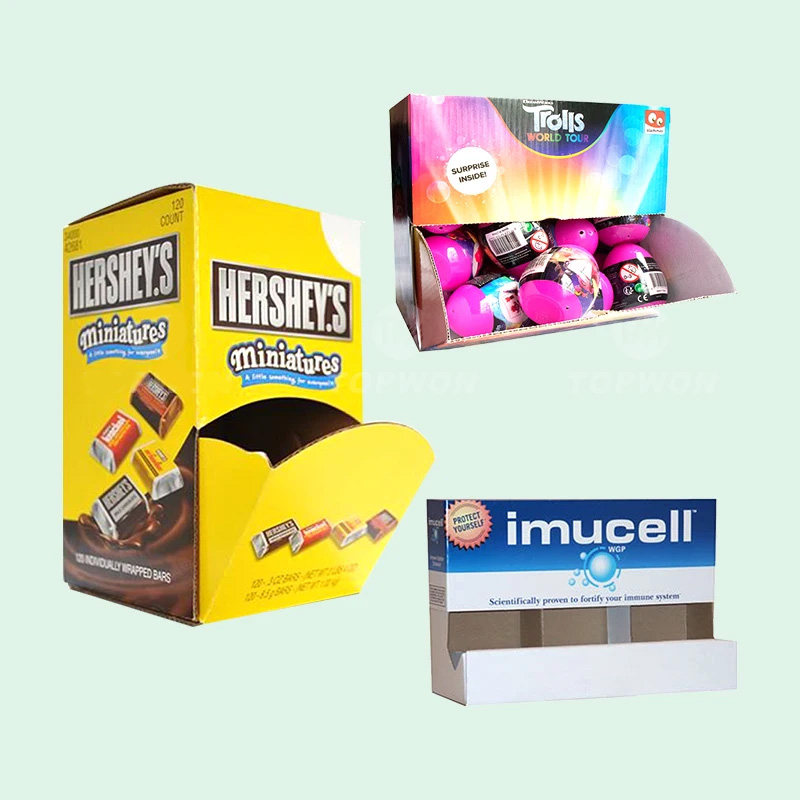
How do we turn a sheet of paper into a revenue-generating machine?
Branding is everything. We use various printing methods like lithography, flexography, and digital printing to ensure your logo pops. We typically use cardboard made from recycled content. It is cost-effective and aligns with the growing demand for sustainability.
Once the design is locked, skilled craftspeople take over using advanced machinery. The process involves die-cutting sheets of cardboard into specific shapes.
It is worth noting the environmental aspect here. Finished paper retains a small amount of water, and we treat and return a significant portion of the water used during production back to the environment. Reducing greenhouse gas emissions and water usage are essential objectives for us.
We don't just ship it and hope for the best.
Samples are produced and revised multiple times to ensure compliance. Once finalized, the displays are packaged efficiently. We often look at strategies like altering packaging sizes to optimize shipping costs.
Let’s talk about the planet.
The production of cardboard displays is generally more energy-efficient than plastic or metal alternatives. This results in lower greenhouse gas emissions.
But what about waste?
Despite the huge amount of cardboard produced, recycling rates are incredibly high. In the United States alone, over 93% of cardboard was recycled in 2022. By choosing Custom Gravity Feed Cardboard Display, you are choosing a material that is highly circular. Sourcing sustainable materials is essential for reducing the environmental footprint of your retail strategy.
You bought the display. Now you have to set it up. Proper preparation is essential to ensure a seamless setup.
Do not just fill it up and walk away.
Cardboard is durable, but it isn't invincible.Schedule routine checkups to inspect for dust or wear. If you see bending or deterioration, address it immediately. A beat-up display makes the product inside look cheap.
This is usually the first question I get asked.
The price varies significantly based on complexity and quantity.
Higher prices usually mean thicker board materials, advanced locking mechanisms, or fancy print finishes.
If someone quotes you less than $1.50 per unit, run.Extremely low bids often indicate substandard materials or compromised quality control, especially with overseas manufacturing. You get what you pay for, and a display that collapses under the weight of your product is not a bargain.
Do not just look at the sticker price.
You must evaluate the TCO. This includes shipping costs, labor for assembly, and potential damages during transport. A compact design might cost a few cents more to make but save you thousands in shipping because you can fit more units on a pallet.
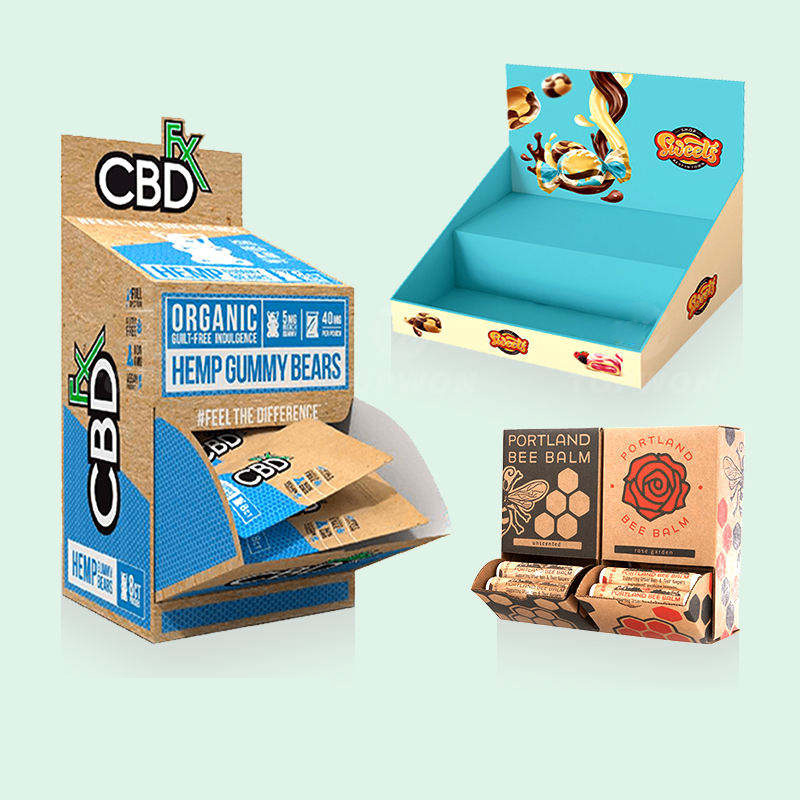
Investing in Custom Gravity Feed Cardboard Displays creates a ripple effect.
Initially, the investment might seem substantial. However, the return on investment (ROI) becomes evident quickly. You reduce labor costs because staff aren't constantly restocking. You minimize product waste through FIFO. You increase sales because customers can actually see and reach your product.
You are making every inch of shelf space count.
At Holidaypac, we have seen brands achieve massive improvements in engagement just by switching to a better display strategy. It creates a cleaner environment, and frankly, it just makes the store look better.
If you are ready to organize your inventory and boost your shelf presence, it is time to look at gravity feed. It is a practical, sustainable, and highly effective tool in the modern retail arsenal.


Links