Holidaypac
 Mar 10,2026

Author: Cassie Lan (Holidaypac Founder)
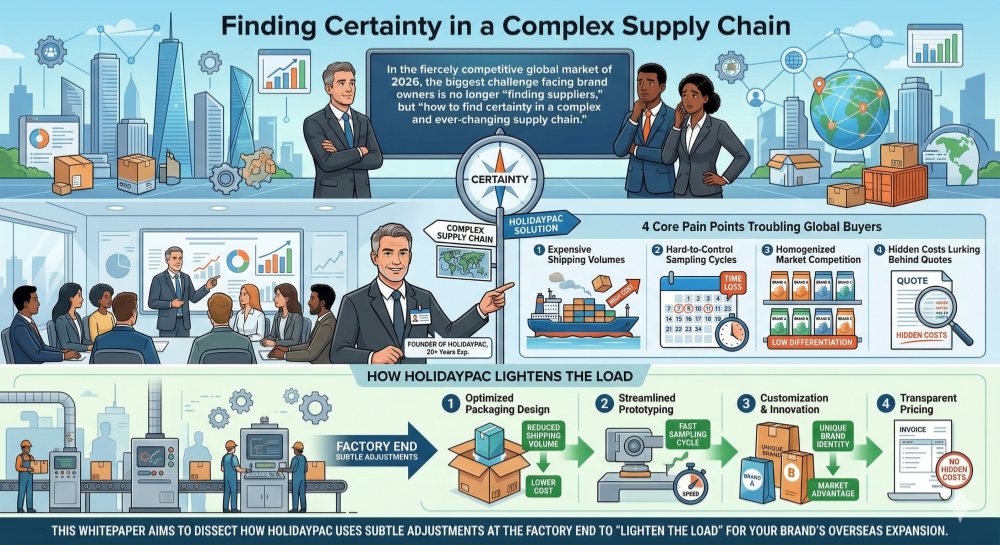
In the fiercely competitive global market of 2026, the biggest challenge facing brand owners is no longer "finding suppliers," but "how to find certainty in a complex and ever-changing supply chain."
As the founder of Holidaypac, I have been deeply involved in the foreign trade packaging industry for over 20 years. In a recent in-depth strategy session with our global business team, I distilled four core pain points troubling global buyers: expensive shipping volumes, hard-to-control sampling cycles, homogenized market competition, and hidden costs lurking behind quotes.
This whitepaper aims to dissect, from the customer's perspective, how Holidaypac uses subtle adjustments at the factory end to "lighten the load" for your brand's overseas expansion.
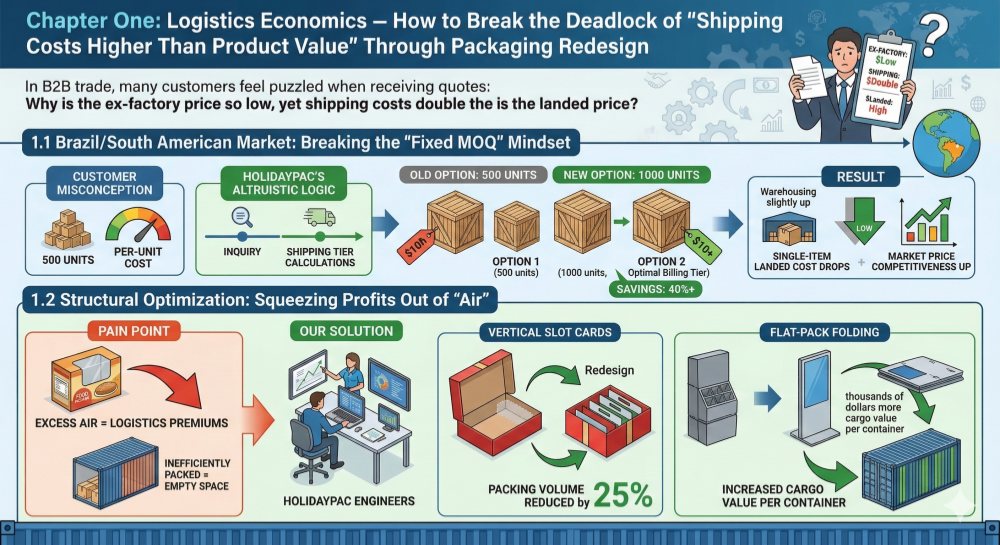
In B2B trade, many customers feel puzzled when receiving quotes: Why is the ex-factory price so low, yet shipping costs double the landed price?
When handling long-haul routes like South America, shipping fees are typically charged in tiers based on volume (CBM).
The essence of packaging is protection, but excess air is the culprit behind logistics premiums.
Many buyers often ask: "Cassie, why is your quote $0.2 higher than others?"
In the foreign trade packaging industry, skimping on grammage is an unspoken rule.
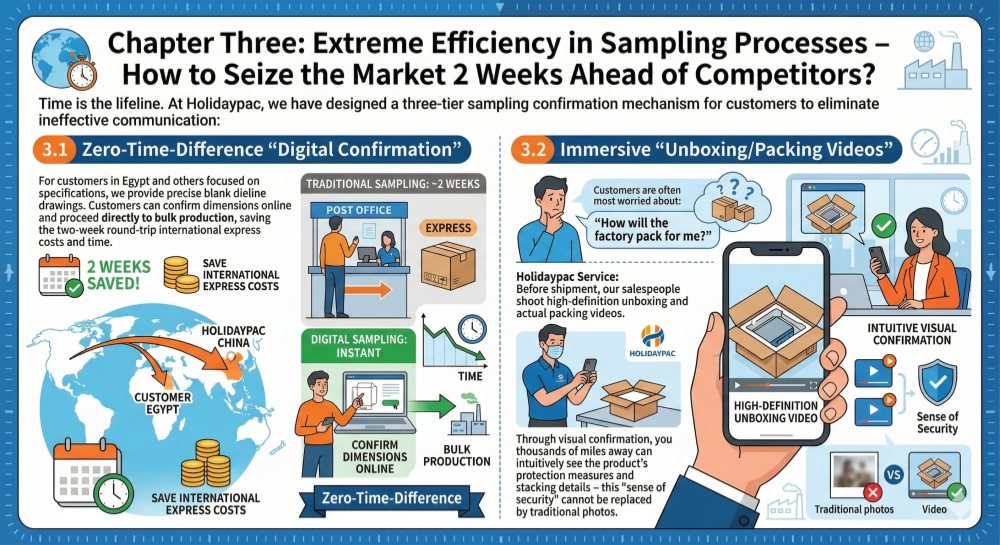
Time is the lifeline. At Holidaypac, we have designed a three-tier sampling confirmation mechanism for customers to eliminate ineffective communication:
For customers in Egypt and others focused on specifications, we provide precise blank dieline drawings. Customers can confirm dimensions online and proceed directly to bulk production, saving the two-week round-trip international express costs and time.
Customers are often most worried about: "How will the factory pack for me?"
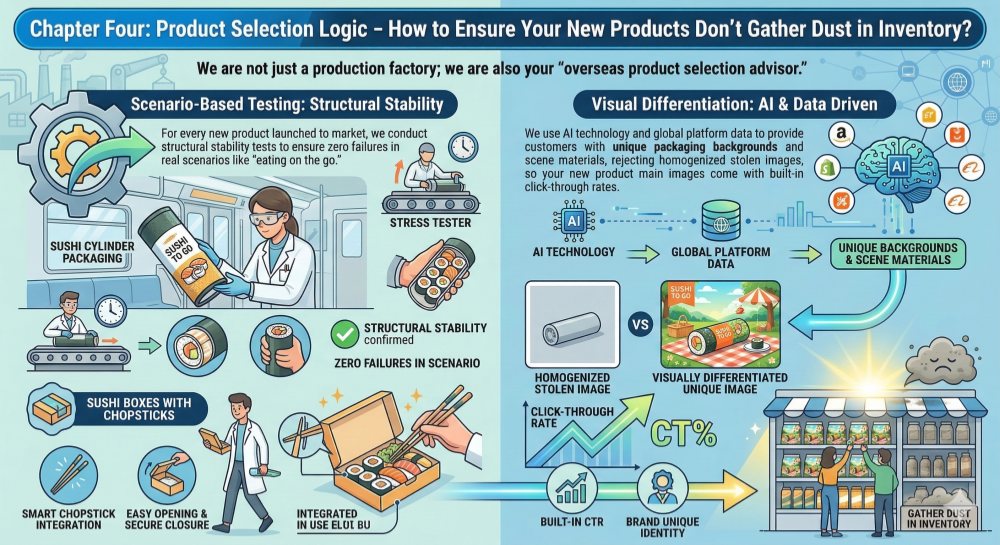
We are not just a production factory; we are also your "overseas product selection advisor."
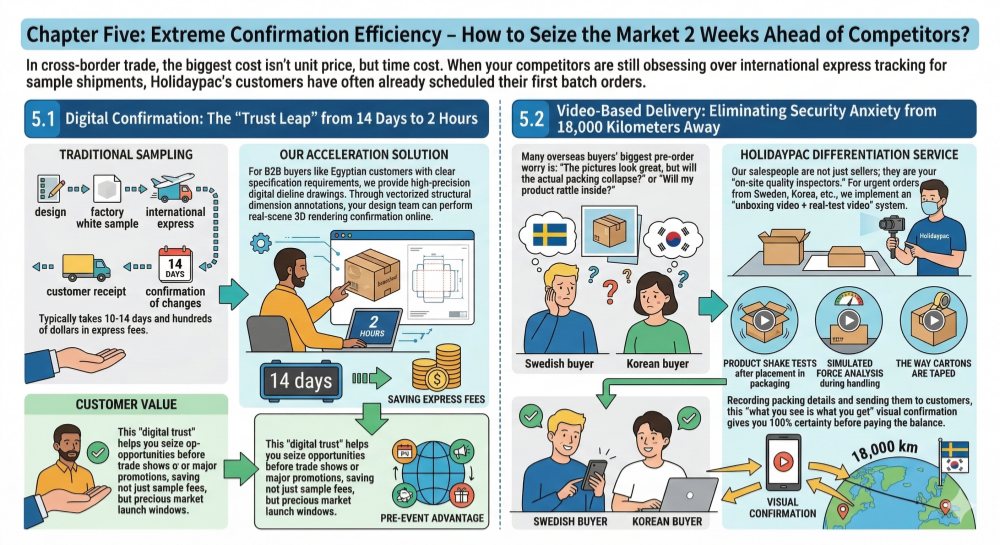
In cross-border trade, the biggest cost isn't unit price, but time cost. When your competitors are still obsessing over international express tracking for sample shipments, Holidaypac's customers have often already scheduled their first batch orders.
Traditional sampling confirmation processes involve: design - factory white sample - international express - customer receipt - confirmation of changes. This typically takes 10-14 days and hundreds of dollars in express fees.
Many overseas buyers' biggest pre-order worry is: "The pictures look great, but will the actual packing collapse?" or "Will my product rattle inside?"
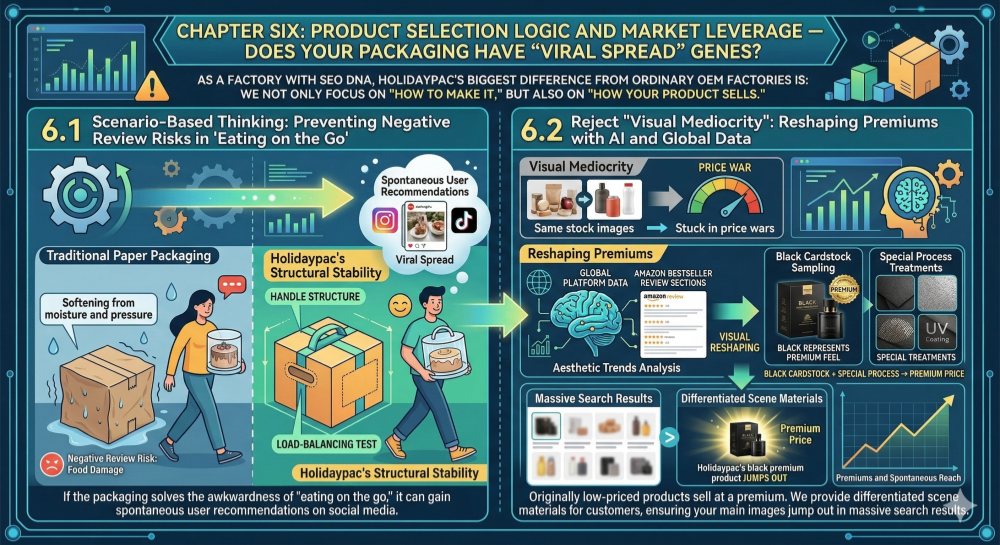
As a factory with SEO DNA, Holidaypac's biggest difference from ordinary OEM factories is: We not only focus on "how to make it," but also on "how your product sells."
In our morning meetings, we deeply analyzed the popular PVC cake cylinders. Why can they penetrate remote markets?
If you use the same stock images as competitors on Amazon or independent sites, you'll be stuck in price wars.
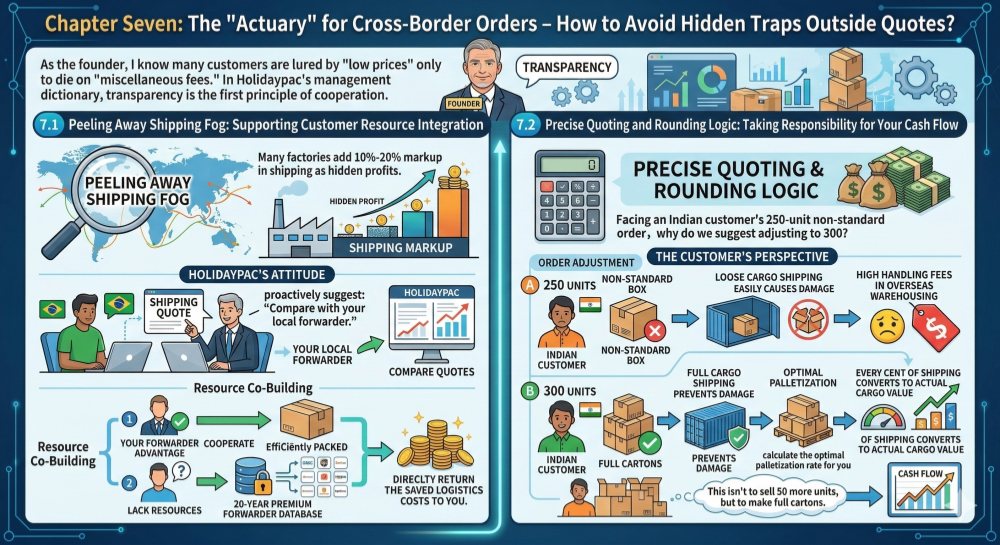
As the founder, I know many customers are lured by "low prices" only to die on "miscellaneous fees." In Holidaypac's management dictionary, transparency is the first principle of cooperation.
Many factories add 10%-20% markup in shipping as hidden profits.
Facing an Indian customer's 250-unit non-standard order, why do we suggest adjusting to 300?
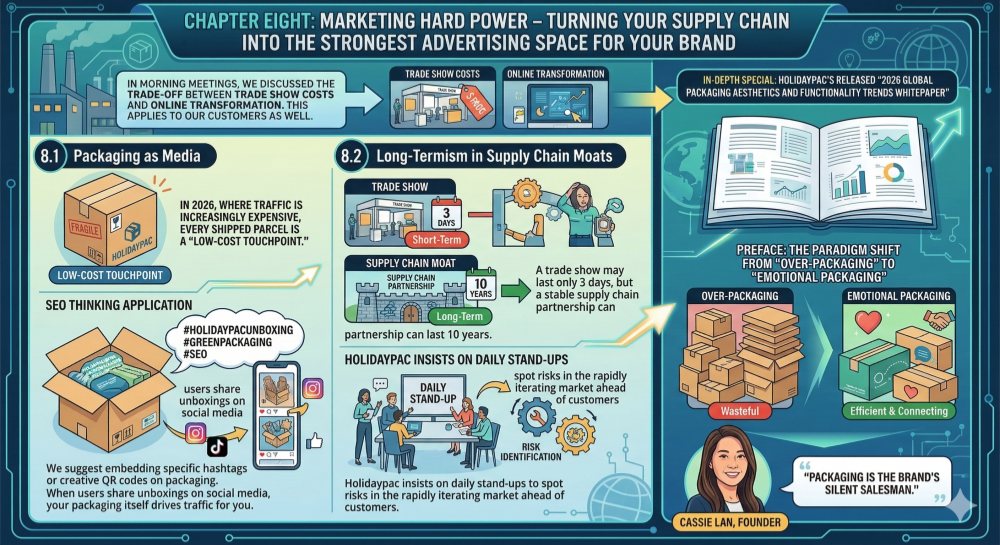
In morning meetings, we discussed the trade-off between trade show costs and online transformation. This applies to our customers as well.
In 2026, where traffic is increasingly expensive, every shipped parcel is a "low-cost touchpoint."
A trade show may last only 3 days, but a stable supply chain partnership can last 10 years. Holidaypac insists on daily stand-ups to spot risks in the rapidly iterating market ahead of customers.
In-Depth Special: Holidaypac's Released "2026 Global Packaging Aesthetics and Functionality Trends Whitepaper"
Preface: The Paradigm Shift from "Over-Packaging" to "Emotional Packaging"
As Holidaypac's founder, Cassie Lan always emphasizes: "Packaging is the brand's silent salesman."
At the 2026 juncture, the global consumer market is undergoing a profound aesthetic transformation. Traditional over-packaging is waning due to environmental regulations (like the EU's PPWR), replaced by "emotional packaging" – a new form integrating minimalist structures, tactile interactions, and digital dissemination genes.
Based on Holidaypac's 20 years of global trade data and recent market research, we have outlined four core aesthetic trends. This is not just an aesthetic report; it's your product selection pitfall avoidance guide.
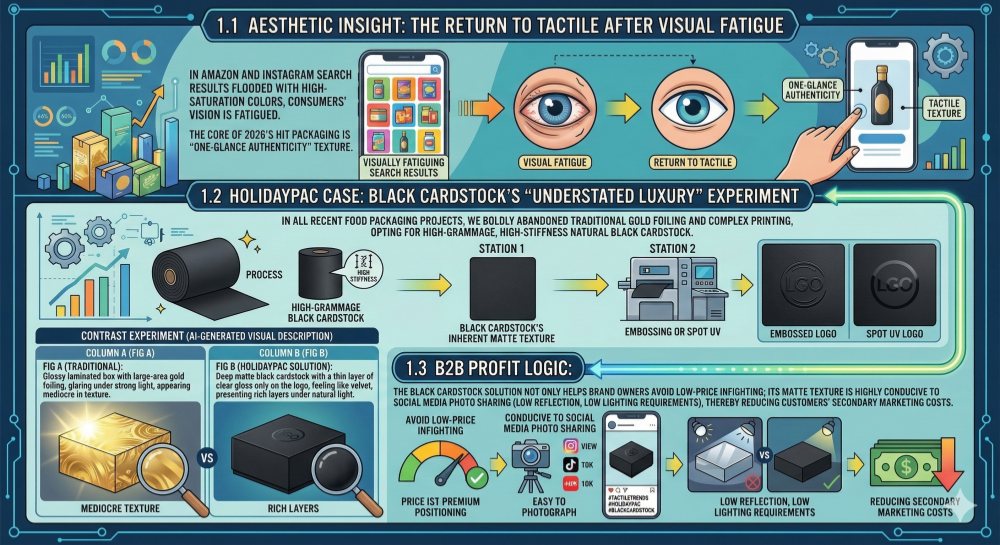
In Amazon and Instagram search results flooded with high-saturation colors, consumers' vision is fatigued. The core of 2026's hit packaging is "one-glance authenticity" texture.
In all recent food packaging projects, we boldly abandoned traditional gold foiling and complex printing, opting for high-grammage, high-stiffness natural black cardstock.
The black cardstock solution not only helps brand owners avoid low-price infighting; its matte texture is highly conducive to social media photo sharing (low reflection, low lighting requirements), thereby reducing customers' secondary marketing costs.
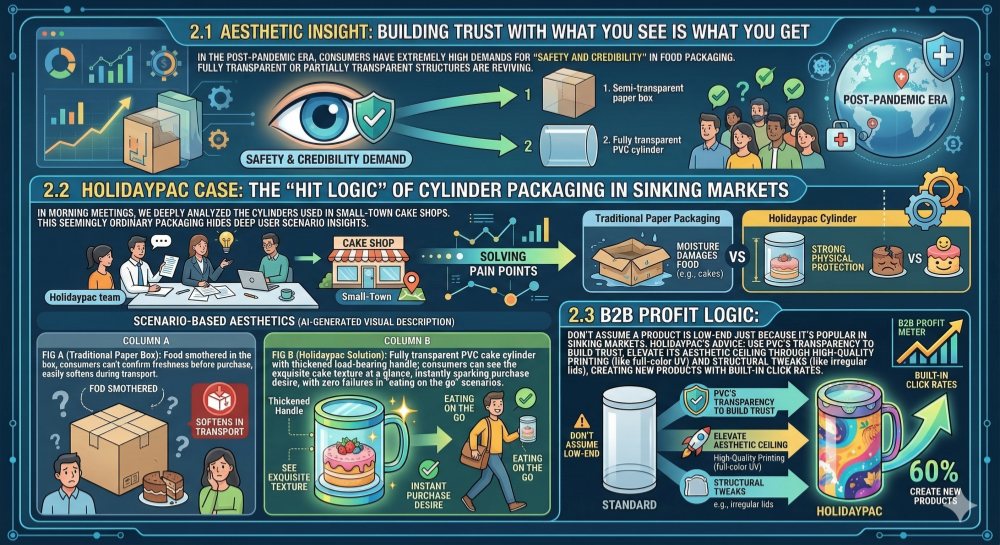
In the post-pandemic era, consumers have extremely high demands for "safety and credibility" in food packaging. Fully transparent or partially transparent structures are reviving.
In morning meetings, we deeply analyzed the cylinders used in small-town cake shops. This seemingly ordinary packaging hides deep user scenario insights.
Don't assume a product is low-end just because it's popular in sinking markets. Holidaypac's advice: Use PVC's transparency to build trust, elevate its aesthetic ceiling through high-quality printing (like full-color UV) and structural tweaks (like irregular lids), creating new products with built-in click rates.
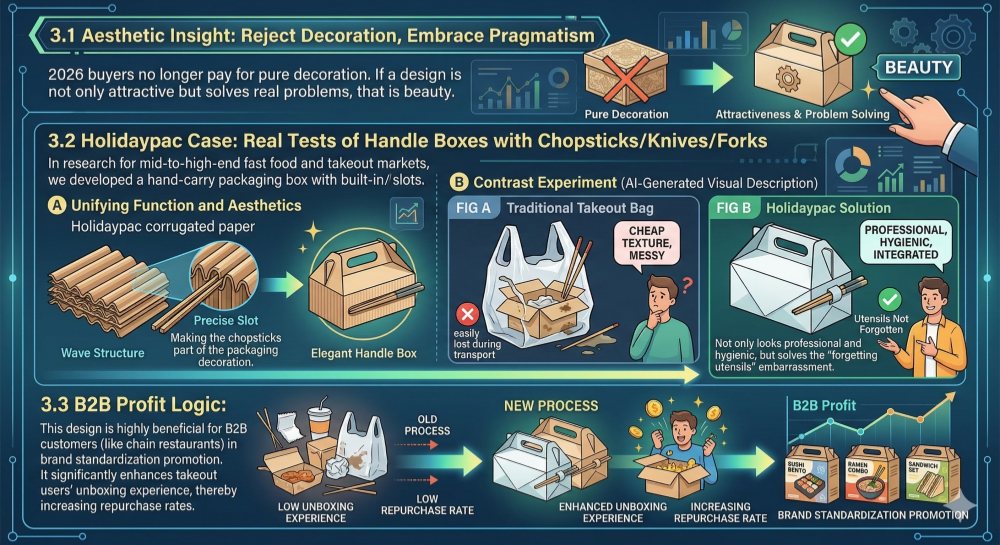
2026 buyers no longer pay for pure decoration. If a design is not only attractive but solves real problems, that is beauty.
In research for mid-to-high-end fast food and takeout markets, we developed a hand-carry packaging box with built-in chopsticks/knife/fork slots.
This design is highly beneficial for B2B customers (like chain restaurants) in brand standardization promotion. It significantly enhances takeout users' unboxing experience, thereby increasing repurchase rates.
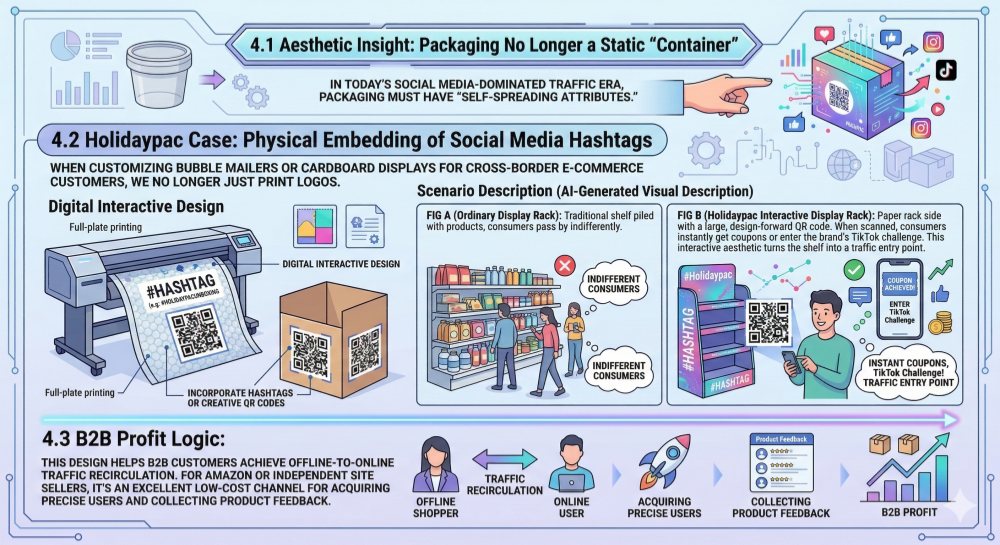
In today's social media-dominated traffic era, packaging must have "self-spreading attributes."
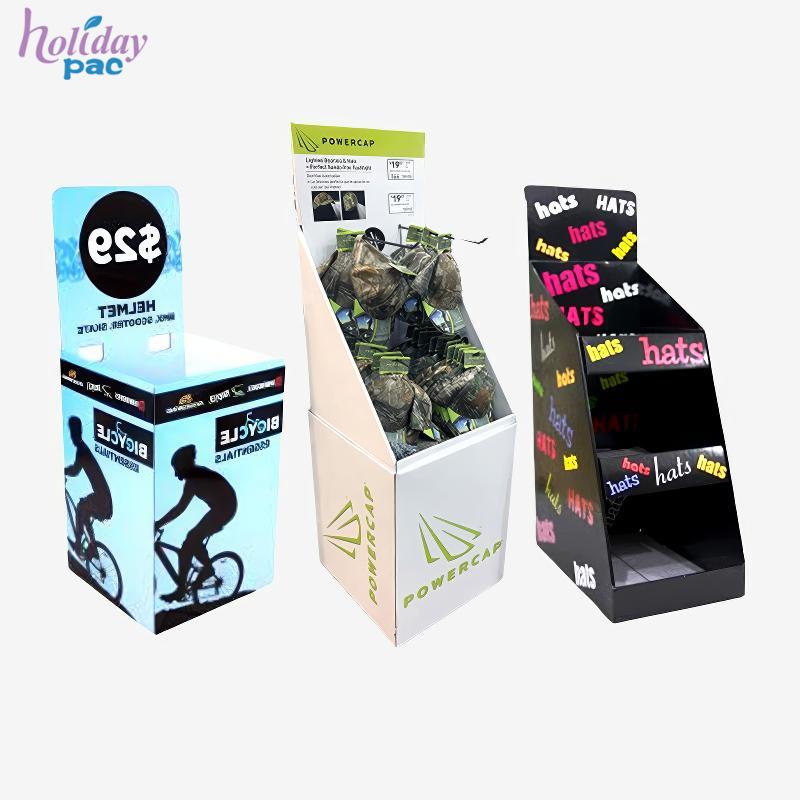
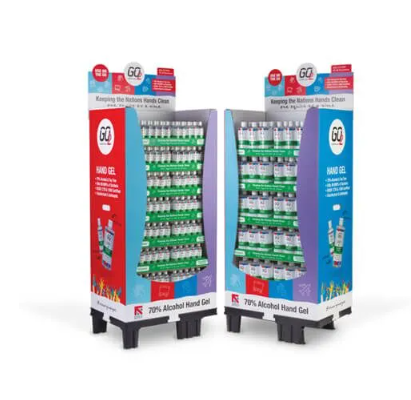
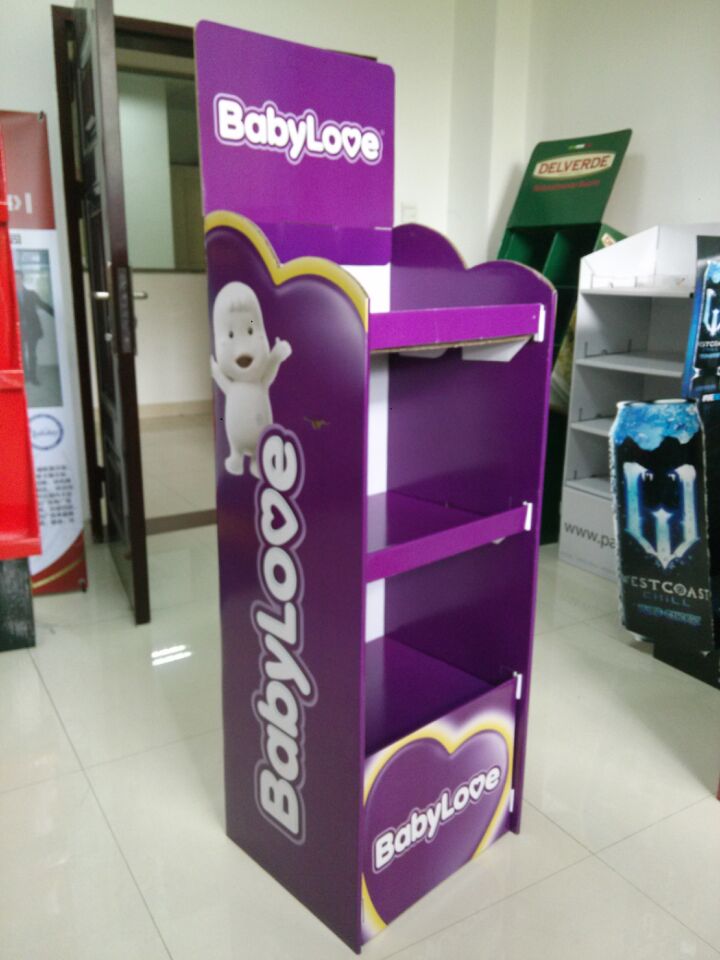
When customizing bubble mailers or cardboard displays for cross-border e-commerce customers, we no longer just print logos.
This design helps B2B customers achieve offline-to-online traffic recirculation. For Amazon or independent site sellers, it's an excellent low-cost channel for acquiring precise users and collecting product feedback.
Founder Interview: Cassie Lan – From the "Golden Age" of Foreign Trade to the 20-Year Vigil and Evolution of "AI Intelligent Manufacturing"
Q1: Cassie, you often call yourself a "20-year foreign trade veteran." Looking back on these 20 years, what do you think is the biggest change in Chinese manufacturing?
Cassie: This is a grand topic. If I had to sum it up in one word, it's "the transformation from 'brawn' to 'brains.'"
When I first entered the industry, we were in the "golden age," where Chinese manufacturing relied on extreme cost-effectiveness and diligence. I remember 20 years ago, as long as a factory had machines and workers, orders would come flying in like snowflakes. But back then, we were at the bottom of the value chain, with weak bargaining power.
Now it's different. At Holidaypac, we no longer just "replicate" according to customer drawings. We delve into customers' logistics costs, product selection logic, and even their SEO conversion rates. We've shifted from "porters" to "architects." This change is essentially Chinese manufacturing's upgrade from mere "processing" to "full-chain services."
Q2: As Holidaypac's founder, why are you so dedicated to the niche field of "packaging"?
Cassie: Because packaging is "the brand's skin, the core of logistics."
In 20 years of global trade combat, I've seen too many good products damaged during trans-Pacific journeys due to improper packaging, or profits devoured by bloated volumes. What a pity!
Packaging is more than a box. It's the first second of contact between the customer's brand and consumers (First Moment of Truth). I love Chinese classics and literature; Zhuangzi said "get the fish and forget the basket," but for foreign trade brands, if the "basket (packaging)" is poorly done, the fish might not reach the customer at all. I hope through Holidaypac to make packaging an added value for Chinese manufacturing going global, not a burden.
Q3: You not only understand manufacturing but are also a 7-year SEO expert and 3-year AI practitioner. How does this cross-disciplinary thinking empower Holidaypac?
Cassie: This is actually my "secret weapon."
Traditional factory bosses only watch the production line, but I watch Google's trend charts. Through 7 years of SEO accumulation, I can insight global buyers' searches via keyword data. For example, the surge in "Sustainable Packaging" and "Minimalist Display" in 2026 is our radar for adjusting product R&D directions.
Introducing AI is to turn our practical experience into "replicable certainty." We use AI to optimize logistics consolidation algorithms and assist in packaging structural design. This cross-boundary approach allows us to provide faster responses, offering solutions that are not just "usable," but "sellable."
Q4: In the March 5 morning meeting, you mentioned multiple global customer cases. What's the intention behind this refined management?
Cassie: The intention is just two words: altruism.
The essence of B2B business is trust. When I tell a Brazilian customer "quoting 1000 is more cost-effective than 500 for shipping," or tell Chris "reducing two specs can save delivery fees," I'm using my 20 years of experience to help them avoid pitfalls.
At Holidaypac, we have a principle: No one-off deals; be the customer's "cloud factory" and "strategic partner." If I can help customers save 30% on logistics, their business thrives, and my orders endure. This is the ancient Chinese saying: "Fulfill others to fulfill yourself."
Q5: For the future, what new visions do you have for Holidaypac and Chinese manufacturing?
Cassie: I'm leading the team on a project called "Green Walker," focusing on biodegradable eco-packaging and kitchenware. I hope future Chinese manufacturing sheds the "cheap" label and becomes synonymous with "eco-friendly, intelligent, humanistic."
I'll continue delving into SEO and AI, building Holidaypac into a "human-understanding intelligent manufacturing platform." No matter where you are in the world, if you have dreams of brand globalization, Holidaypac is your strongest backing.
Cassie's Founder Message:
"In 20 years of foreign trade, I've seen the world's prosperity and endured industry lows. But I always believe: As long as we keep customers in mind and stay grounded, every inch of Chinese manufacturing's corrugated paper can fold into infinite possibilities."


Links