Holidaypac
  Apr 24,2026
HolidayPac Is Now a Registered U.S. Trademark: What This Milestone Means for Our Global Buyers in the Paper Packaging and Retail Display Industry
A Letter to Our Buyers, Partners, and Friends
Dear valued buyers, brand partners, procurement managers, and everyone who has walked with us through our journey in paper packaging and retail display:
I want to share a milestone that has been years in the making. On May 6, 2025, under Registration No. 7,783,946, the United States Patent and Trademark Office officially registered HolidayPac as a protected trademark in International Class 16. Our application was filed on July 4, 2024 — a date I find poetic, because Independence Day reminded us exactly why we were doing this: to establish an independent, internationally protected identity for a brand that has earned the trust of hundreds of global buyers.
For a company born in Shenzhen, China — a city that has become synonymous with manufacturing excellence and export innovation — this USPTO registration is not just a legal certificate. It is a promise. A promise that when you purchase from HolidayPac, you are working with a verified, protected, and accountable brand that can legally defend the quality behind its name in one of the most important consumer markets in the world.
This blog post is for you — the buyer. Whether you are a procurement manager at a Fortune 500 retailer, a founder of a fast-growing DTC brand, a brand manager sourcing for an upcoming product launch, or an Amazon seller looking to elevate your unboxing experience — I want to explain what this trademark means for your business, how our paper packaging and retail display capabilities fit into the biggest trends shaping 2026, and why this is the right moment to partner with us.
Part One: What the USPTO Trademark Registration Actually Means
Let me be direct, because buyers appreciate directness.
A U.S. trademark registration under Class 16 — the classification covering paper, cardboard, and stationery goods — is one of the most rigorous brand protections available in international commerce. Our HolidayPac mark is legally protected across a full spectrum of paper-based products, including:
- Adhesive paper labels
- Advertising signs of paper
- Boxes, cartons, storage containers, and packaging containers made of paper or cardboard
- Kraft paper and recycled paper
- Packaging boxes of cardboard
- Paper shopping bags
- Printed cook books
- Specialty papers including vegetable parchment for food wrapping, preparation, processing, and packaging
- Stationery writing paper and envelopes
- Synthetic paper and wax paper
- Works of art made of paper and writing paper
The mark itself tells our story visually: the stylized wording "HOLIDAYPAC" where the letter "O" is represented by a design of the earth, the dot of the letter "I" is a leaf, and the letter "A" is a design of halobios — the marine life that represents the oceans we are all trying to protect. Earth. Leaf. Ocean. These are not decorative flourishes. They are our design philosophy condensed into a logo.
Why This Matters to You as a Buyer
When you place an order with a supplier, you are trusting them with three things: your money, your brand reputation, and your shelf date. A USPTO-registered trademark signals three corresponding commitments back to you:
1. Legal accountability in the United States. If you are a U.S.-based buyer, we now have direct legal standing in your jurisdiction. Disputes, quality claims, and intellectual property protection have a clear framework.
2. Anti-counterfeiting protection. The paper packaging industry has a persistent counterfeit problem — "lookalike" suppliers who mimic established brand names to capture orders, then deliver substandard product. With HolidayPac now federally registered, any attempt to copy our brand can be pursued under U.S. trademark law. When you see the HolidayPac name on an invoice, a box, or a quote, you know it is genuinely us.
3. Long-term partnership credibility. Trademark applications are not cheap or fast. The fact that we invested the resources, time, and legal rigor to secure federal protection tells you we are here for the long term. We are not a drop-shipping intermediary. We are not a here-today-gone-tomorrow trading company. We are a manufacturing brand with skin in the game.
Part Two: Who We Are — A Brief Introduction for New Buyers
For those of you who are meeting us for the first time through this post, here is the short version:
Shenzhen Holiday Package and Display Co., Ltd. operates out of our facility at 3F, Building 4, Jianjin Industrial Zone, Donghuan 2nd Road, Longhua, Shenzhen, China 518109. We are a Chinese limited company specializing in paper-based packaging and retail display solutions, serving global buyers across North America, Europe, the Middle East, Southeast Asia, and Oceania.
Our core manufacturing competencies include:
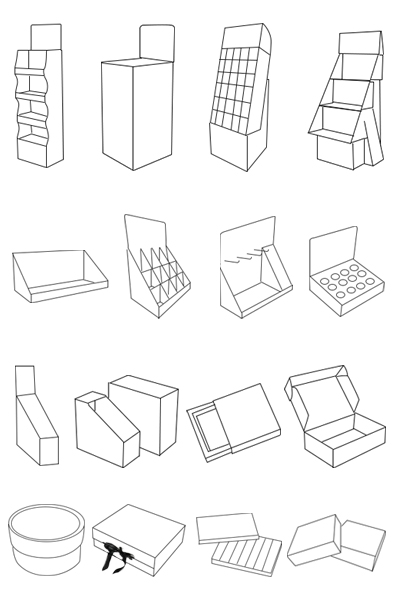
- Custom paper packaging: folding cartons, corrugated mailer boxes, rigid gift boxes, kraft paper bags, paper shopping bags, product sleeves, and specialty food-grade paper
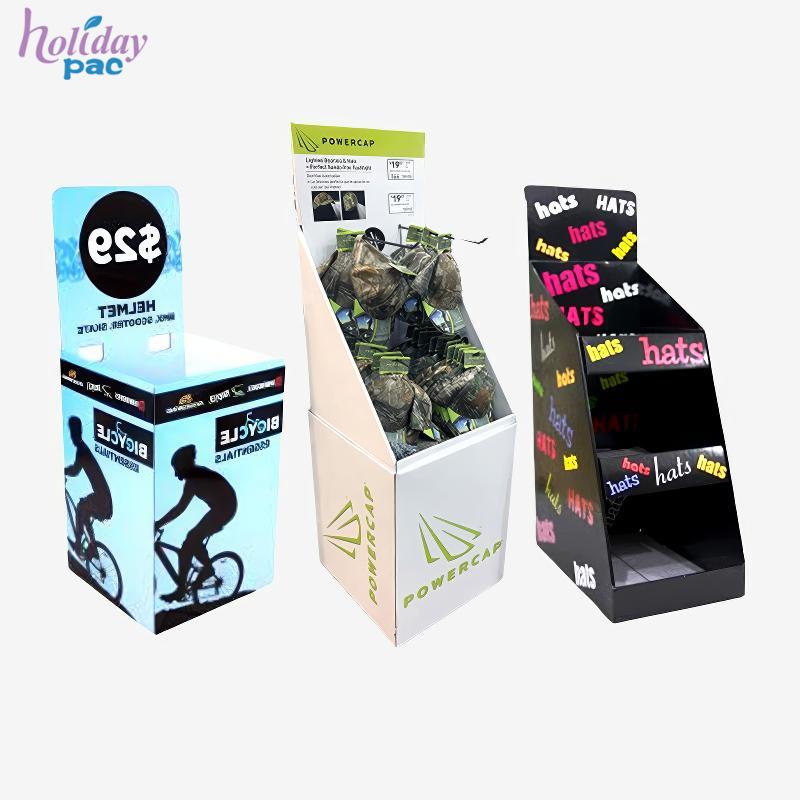
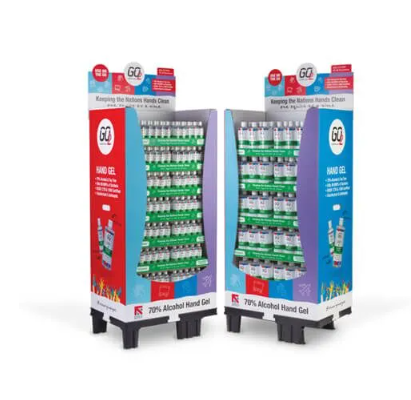
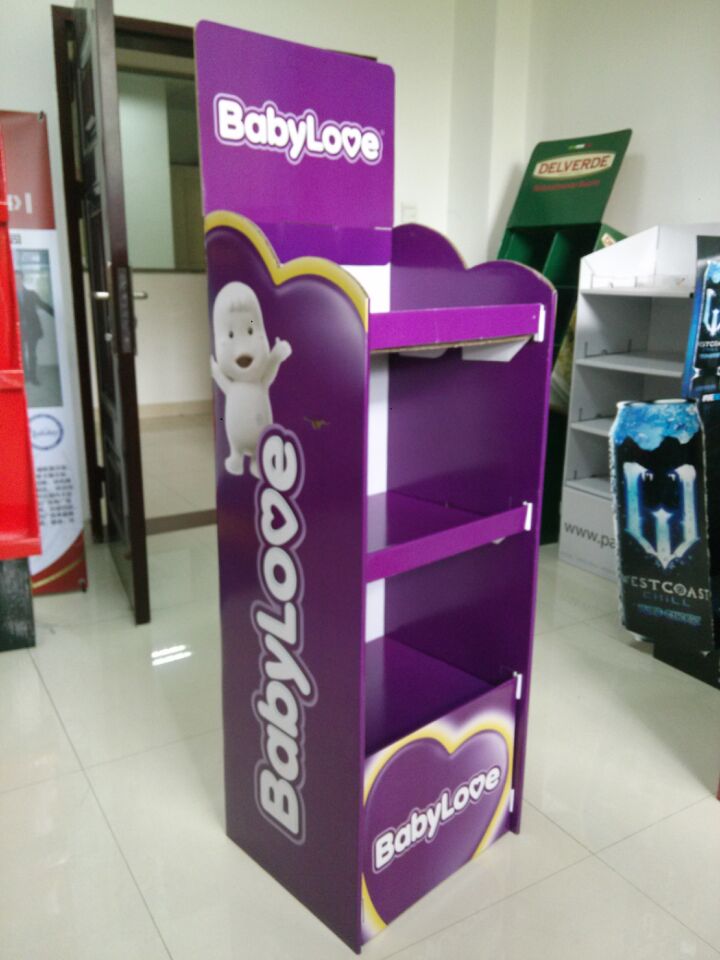
- Point-of-purchase (POP) and point-of-sale (POS) displays: floor display units, counter displays, pallet displays, shelf-ready packaging (SRP), endcap displays, and seasonal merchandising units
- Printed collateral: adhesive labels, hang tags, booklets, printed recipe books, advertising signs, and promotional materials
- Retail display packaging: the hybrid category where a product's packaging itself converts into a retail display unit, maximizing shelf impact while minimizing SKU complexity
Our first commercial use date on record is April 1, 2024, and in the short time since then, our output has been deployed in retail environments across multiple continents. Our buyers range from household-name brands to emerging DTC startups launching their first SKU.
Part Three: The Big Picture — Why Paper Packaging Is the Defining Material of the Next Decade
Let me step back from HolidayPac for a moment and talk about the industry itself, because understanding where the category is heading will help you make smarter sourcing decisions regardless of which supplier you ultimately choose.
The global paper packaging market is currently valued at USD 282.85 billion in 2026 and is projected to reach USD 413.39 billion by 2035, growing at a compound annual growth rate of 4.3%. Behind those numbers are three powerful forces that every buyer needs to understand.
Force One: The "Paperization" of Everything
The packaging industry is in the middle of a material transition that has a name: paperization. It refers to the systematic replacement of plastic packaging with paper-based alternatives, and it is happening across virtually every consumer category — food and beverage, beauty, personal care, electronics, fashion, wellness, home goods, and gifting.
Why now? Three reasons converge:
- Regulation. Extended Producer Responsibility (EPR) rules across the European Union, single-use plastic bans in dozens of jurisdictions, and the rising compliance cost of plastic have made paper the lower-risk choice. Around 64% of companies globally have shifted to sustainable paper packaging alternatives in response to rising environmental regulations.
- Infrastructure. Paper is the only major packaging material with a mature global recycling infrastructure. Corrugated cardboard recovery rates exceed 90% in many developed markets. That matters because regulators and retailers increasingly judge packaging by whether it can re-enter a material cycle — not by vague claims.
- Consumer preference. Gen Z and Millennial buyers are driving measurable category shifts. Social listening data shows that paper packaging mentions in food and beverage are growing, with hot drinks, confectionery, and dairy leading the adoption curve.
For buyers, the takeaway is simple: if your current supplier cannot execute sophisticated paper packaging — including moisture barriers, grease resistance, structural integrity, and premium finishing — you are going to hit a wall in the next 24 months.
Force Two: The Rise of Shelf-Ready Retail Display Packaging
The point-of-purchase display market is now valued at USD 17.14 billion in 2026 and projected to reach USD 22.23 billion by 2031. Inside that market, corrugated board leads all material choices with a 36.4% share, and Asia Pacific (where we manufacture) holds the largest regional share at 34.4%.
Why do retail displays still matter in an era of e-commerce? Because impulse purchases still originate in stores. The physical shelf is where brands get discovered, where trial happens, where a tissue paper insert or a cleverly die-cut counter display turns a passing glance into a purchase. Digital may dominate discovery, but the last mile of conversion is still overwhelmingly physical.
At HolidayPac, our retail display capability is deeply integrated with our packaging capability — and that matters more than most buyers realize. When the same supplier engineers your primary packaging AND your shelf-ready display AND your floor unit, three things happen:
- Brand consistency. The die-cut windows, color profiles, structural language, and finishing techniques stay coherent from the shelf display down to the individual carton the consumer picks up.
- Logistics simplification. One supplier, one shipment window, one quality audit process.
- Cost compression. Shared tooling, shared substrate runs, and shared setup costs lower the per-unit landed cost of the full merchandising system.
Force Three: The Unboxing Economy
This is the force that deserves its own section, because it has rewritten the rules of what packaging is for.
In 2026, unboxing is no longer a moment between purchase and product use. It is a marketing channel. TikTok and Instagram have turned unboxing into organic reach, and the brands that win are the ones whose packaging was designed with a camera in mind.
For e-commerce buyers, this means your packaging is now doing three jobs simultaneously:
- Protection. The functional job — keep the product safe through parcel delivery.
- Brand expression. The identity job — communicate who you are before the consumer touches the product.
- Media production. The content job — look good enough on camera that your customers create content featuring your packaging for free.
The winning structural elements we see buyers requesting most often for 2026 launches include magnetic closure boxes, custom-printed tissue paper, branded kraft mailers with interior prints, die-cut inserts that showcase the product like a jewelry presentation, and subtle touches like a printed thank-you message on the inside flap.
Part Four: How HolidayPac Fits Into These Trends — A Buyer's Capability Guide
Now let me get specific about what our trademark-protected operation can actually do for you. I am going to organize this the way buyers think — by use case, not by product catalog.
Use Case 1: Sustainable Paper Packaging for Brands With Real ESG Commitments
If your brand has made public sustainability commitments — whether to shareholders, to certification bodies, or to consumers directly — your packaging needs to survive scrutiny. "Greenwashing" is no longer tolerated, with 66% of consumers now doubting brand environmental claims.
Our paper packaging solutions in this category include:
- FSC-certified paperboard sourced from responsibly managed forests
- Recycled content ranging from 30% post-consumer recycled to 100% recycled kraft
- Mono-material construction to support clean recycling streams (no plastic-coated paper that fails sortation)
- Bio-based barrier coatings for food contact applications where moisture resistance is required but compostability is the end goal
- Soy-based and water-based inks to reduce VOC emissions from printing operations
- Vegetable parchment and specialty food-safe papers for the growing category of bakery, confectionery, and prepared food direct-to-consumer
We can provide documentation, certifications, and lifecycle information that your sustainability team can actually use in public-facing reports.
Use Case 2: Retail Display Packaging for Big-Box, Mass Market, and Club Store Programs
If you sell into Costco, Sam's Club, Target, Walmart, Home Depot, or similar mass retailers, you already know that your packaging lives or dies by its shelf-readiness. Retailers want displays that can be dropped onto a floor, cut open, and sold — with minimal associate labor.
HolidayPac produces:
- Pallet display units engineered to ship flat, erect quickly, and hold stock through a full promotional cycle
- Quarter-pallet and half-pallet displays for smaller brand footprints
- Shelf-ready packaging (SRP) — the corrugated trays with perforated tear-strips that let stock arrive display-ready
- Counter displays and power wings for impulse-driven product categories
- Endcap units designed for seasonal promotions
- Custom die-cut floor standees for brand activations and new product launches
Our structural engineering team works from planogram requirements backward, so the display you receive is built for the exact retail environment it will stand in.
Use Case 3: Premium Unboxing Experiences for DTC and E-Commerce Brands
For the ecommerce founders and brand managers reading this: the cost of acquiring a customer is going up every year. The cheapest marketing you have left is the packaging they are about to open.
Our premium unboxing packaging includes:
- Rigid gift boxes with magnetic closures and fabric ribbon pulls
- Custom mailer boxes with printed interiors and branded die-cut inserts
- Tissue paper printed in your brand colors with custom patterns or monograms
- Kraft paper mailers for the sustainable premium aesthetic that Gen Z responds to
- Product sleeves and belly bands that add a premium finishing layer over simpler structural boxes
- Printed booklets and recipe books (we are federally trademark-protected for printed cook books specifically) for brands in food, wellness, and lifestyle
Short-run printing capability means we can serve emerging brands with low MOQs and growing brands with seasonal limited-edition runs, without forcing you to commit to inventory risk.
Use Case 4: Paper Shopping Bags and Branded Retail Accessories
For bricks-and-mortar retailers and brands running pop-up experiences, our paper shopping bag category is one of our most mature product lines. From laminated luxury bags with rope handles to kraft paper take-out bags to folded flat-bottom grocery bags — we produce them all, fully customizable, at MOQs that match your business stage.
Use Case 5: Food-Contact Paper and Specialty Packaging
The food and beverage sector is one of the fastest-moving in paper packaging right now. Our specialty paper capabilities include vegetable parchment for wrapping, baking, and food preparation; wax paper for deli and bakery applications; grease-resistant liners; and food-safe kraft for prepared meal packaging. All sourced and manufactured with food-contact safety in mind.
Part Five: The Questions Our Buyers Ask Most Often
After more than two years of commercial operation and thousands of buyer conversations, I want to answer the questions that come up in almost every sourcing call.
"What is your minimum order quantity?"
MOQs vary by product complexity. For stock-structure mailer boxes with custom print, we can go as low as 500 units. For custom-tooled rigid boxes, MOQs typically start at 1,000. For large-format retail displays, we can run as few as 200 units for pilot programs. We intentionally keep our MOQs flexible because we want to support brands from their first 500-unit test all the way to their millionth unit.
"How long is your lead time?"
Standard lead time for custom packaging is 15-25 days from artwork approval to ex-works. Rush production is possible for an expedited fee. Retail display programs typically run 20-30 days depending on structural complexity.
"Can you hit our target price?"
This is the most asked question in our industry, and my honest answer is: maybe, but only if the conversation is honest on both sides. Paper packaging has real input costs — pulp prices, printing plate costs, die-cutting tooling, freight. What we can do is engineer value: simpler structures that use material more efficiently, shared tooling across SKUs, and substrate choices that balance cost and performance. We don't compete on being the cheapest. We compete on delivering the best landed value for the brand you are trying to build.
"Do you handle freight and import?"
We can quote EXW, FOB Shenzhen, CIF, or DDP terms depending on your needs. For buyers new to international sourcing, we commonly start with FOB and help you connect with freight forwarders we have worked with for years.
"What is your quality control process?"
Every order goes through three inspection stages: in-process inspection during production, pre-shipment inspection at carton-level, and random sampling for defect rates. For larger buyers, we welcome third-party inspections from SGS, BV, or Intertek, and we can accommodate on-site audits from your QA team.
"Can we see samples before we order?"
Yes, and you should. Our standard practice for custom projects is to produce a physical prototype or pre-production sample that matches the final specification. For existing structures, we can send stock samples. Never commit to a five-figure packaging order without seeing and touching a sample first — that is good sourcing discipline with any supplier.
Part Six: A Deep Dive into 2026 Packaging Trends Every Buyer Should Budget For
Beyond the big three forces I described earlier, there are specific, tactical trends shaping buyer decisions in 2026. I want to walk through each one, because your packaging RFPs this year should explicitly address them — and if your current supplier cannot discuss them intelligently, that is a signal.
Trend 1: Mono-Material Design Is Becoming Table Stakes
For most of the last decade, packaging innovation was about combining materials — paper with plastic barriers, paperboard with metallic foils, fiber with polymer coatings. Those combinations solved performance problems but created recycling problems. In 2026, the industry is reversing course.
Mono-material paper packaging means the entire structure is recyclable through a single waste stream. No laminated foil that contaminates paper recycling. No plastic window that forces consumers to disassemble the pack before disposal. No mystery coating that recyclers cannot identify.
For buyers, the practical implication is that your 2026 packaging should pass what I call the "single-bin test": could a consumer throw the entire package into the paper recycling bin without separating anything? If the answer is no, you are accumulating regulatory and reputational risk.
HolidayPac's engineering team is specifically trained to design for mono-material outcomes. When you give us a structural challenge — a moisture-resistant food pack, a window-fronted retail box, a rigid gift box with metallic accents — our first-pass design proposal will always explore the paper-only pathway before suggesting any mixed-material alternatives.
Trend 2: QR Codes Are Becoming Sustainability Accountability Tools
QR codes have evolved beyond marketing gimmicks. Forward-thinking brands now embed them into packaging to display product-specific carbon footprint data, guide consumers to proper disposal methods based on their postal code, and track packaging return rates in deposit-refund systems.
Brands that implement QR-linked sustainability disclosures report measurably higher trust scores in post-purchase surveys — in some cases 34% higher than competitors without transparency features. For buyers, this means your packaging artwork should be planned from day one to accommodate a scannable code that links to a real, verifiable sustainability landing page.
We produce packaging for multiple brands that use QR codes for exactly this purpose, and we can advise on code placement, printing resolution, substrate compatibility, and the minimum quiet-zone requirements that keep scans reliable.
Trend 3: Short-Run Digital Printing Is Democratizing Premium Packaging
Historically, custom packaging was a game for brands with deep pockets and high volumes. Plate-based offset printing required committing to tens of thousands of units before the economics made sense. That world is gone.
Digital printing technology now makes short-run custom packaging economically viable at order quantities as low as 500 units. For emerging brands, this changes everything:
- You can test multiple packaging designs against the same product and measure which converts better
- You can run seasonal limited editions without commitment to year-round inventory
- You can create influencer-specific or market-specific variants without separate tooling investments
- You can iterate quickly on buyer feedback instead of being locked into one design for 18 months
HolidayPac offers short-run digital printing alongside traditional offset and flexographic printing, so we can scale with you from your first pilot through your largest promotional campaign. The transition between print methods is seamless because we maintain color consistency across all production pathways.
Trend 4: The Minimalism-Meets-Craft Aesthetic
Packaging design in 2026 is converging on a clear aesthetic: elevated minimalism. Clean typography. Uncluttered layouts. Natural paper textures visible through light printing. Strategic use of finishing techniques like subtle embossing, spot UV accents, or matte-against-gloss contrast instead of maximalist color explosions.
This aesthetic reads as authentic, sustainable, and premium simultaneously — which is why it works across categories from beauty to food to home goods.
Executing this aesthetic well is actually harder than executing maximalist design, because every element has to earn its place. Our pre-press team works with buyer design files to optimize them for the specific finishing techniques and substrate combinations that will produce the intended feel. A gorgeous Pantone color on screen can look dull on the wrong paper; a subtle emboss can disappear on the wrong substrate. Getting this right requires a supplier who has printed on the material before, at scale.
Trend 5: Omnichannel-Ready Packaging
The line between retail packaging and e-commerce packaging is dissolving. A growing share of buyers want the same SKU to work on a retail shelf AND survive the rigors of individual parcel shipping AND look beautiful in an unboxing video.
This is harder than it sounds. Retail packaging traditionally prioritizes shelf impact, while e-commerce packaging prioritizes protection and logistics efficiency. Reconciling those two priorities requires structural engineering choices: reinforced corners, integrated protective inserts, tamper-evident seals, and dimensional profiles that fit both retail planograms and carrier sortation systems.
When a buyer comes to us with an omnichannel SKU, we typically propose a two-layer approach: a retail-ready primary package that delivers the brand experience, nested inside a protective outer mailer that absorbs shipping abuse and carries its own branded exterior. Both layers can be designed to maximize the unboxing moment when the parcel arrives.
Trend 6: The Return of Tactile Finishing
After years of flat, minimalist trends, buyers are swinging back toward tactile finishing techniques that give packaging a sensory dimension beyond the visual. Soft-touch laminations that feel like fabric. Debossed logos that reward fingertip discovery. Textured substrates that communicate material quality before a consumer even reads the copy.
This is particularly pronounced in premium categories — beauty, wellness, luxury food, and high-end gifting — where the packaging itself is a signal of product quality. When a consumer holds a heavy, textured box with a velvet-soft finish and a precise magnetic closure, they read that as a proxy for what's inside.
HolidayPac's finishing options include soft-touch lamination, matte and gloss varnishes, spot UV, hot stamping in gold, silver, rose gold, and custom foils, embossing and debossing, die-cutting into complex shapes, and specialty substrates ranging from textured paperboards to genuine recycled craft materials.
Part Seven: How to Evaluate a Paper Packaging Supplier — An Honest Buyer's Framework
I have been on both sides of the sourcing conversation. Before I founded HolidayPac, I spent years in the packaging industry working with buyers, seeing which suppliers earned long-term relationships and which ones burned through accounts. Let me share the framework I recommend to any buyer evaluating paper packaging partners — whether or not you end up choosing us.
Evaluation Criterion 1: Legal and Commercial Legitimacy
Verify that your supplier has legitimate registered business status in their home country, and if they claim any trademarks, verify them. The USPTO database is public — you can search "HolidayPac" and find our Reg. No. 7,783,946. Every legitimate brand should welcome this kind of verification.
Red flags: suppliers who cannot provide a registered business license, who operate only through a personal email address, who change company names frequently, or who resist basic due diligence questions.
Evaluation Criterion 2: Manufacturing Capability Transparency
Ask to see the factory. If that's not feasible, ask for a virtual tour, machinery photos, production video, and names of other buyers (with their permission) you can reference. Ask specifically: "Do you manufacture this category in-house, or do you subcontract?"
Many suppliers in the paper packaging industry are actually trading companies that place orders with multiple factories. That is not inherently bad — some trading companies provide real value through quality control, design services, and logistics. But you should know what you are working with, because subcontracting adds a layer of risk and cost.
HolidayPac manufactures in our own facility in Longhua. You can visit. You can speak with our production team. You can audit our process.
Evaluation Criterion 3: Design and Engineering Support
Great packaging suppliers are design partners, not just print shops. When you describe your product, packaging goals, and target retail environment, your supplier should come back with structural recommendations, material suggestions, and cost-optimization ideas — not just a quote based on your exact spec.
Test this on any new supplier: describe a product you are launching and ask them to propose three different packaging approaches at three different price points. The quality of their response will tell you whether you are talking to a trader, a printer, or a true packaging partner.
Evaluation Criterion 4: Quality Control Rigor
Ask about defect rates, inspection protocols, and what happens when defects are discovered. A serious supplier will have documented QC procedures, published acceptable quality limits (AQL), and a clear process for replacements or credits when issues arise.
Ask specifically how they handle color matching across multiple production runs — this is where many suppliers fall short. Your packaging in the second production run should look identical to the first, not "close enough."
Evaluation Criterion 5: Sustainability Documentation
If sustainability matters to your brand (and in 2026, it should matter to every brand), ask for hard documentation: FSC chain-of-custody certification numbers, post-consumer recycled content percentages with supporting documentation, ink and coating safety data sheets, and factory environmental certifications.
Be suspicious of suppliers who make sweeping sustainability claims without documentation. With 66% of consumers doubting brand environmental claims, you cannot afford to inherit unverified claims from your supply chain.
Evaluation Criterion 6: Communication and Responsiveness
Send an inquiry on a Friday evening in their time zone. Does a human respond by Monday morning? Ask a technical question that requires engineering input. Does the response come from someone who actually understands the question, or is it escalated awkwardly?
The supplier who responds thoughtfully and quickly during the sales cycle is the supplier who will respond that way during a production crisis six months later. The supplier who takes five days to send a templated reply during the courtship phase will be impossible to reach when something goes wrong.
Part Eight: What This Trademark Means for the HolidayPac Roadmap
Registering HolidayPac as a U.S. trademark is not the end of a journey — it is the beginning of a more ambitious one. Here is what buyers can expect from us over the next twelve to twenty-four months:
Expanded product categories within Class 16. Our trademark covers the full scope of paper packaging and stationery goods. We are actively expanding our capabilities in specialty food-contact papers, premium rigid packaging, and retail display innovation.
Broader international IP protection. The United States registration is one piece of a broader trademark strategy that includes our home market in China and expansion into the European Union and other key markets.
Deeper sustainability commitments. We are building out our FSC certification coverage, expanding our recycled content options, and investing in lower-carbon manufacturing practices. When a buyer asks us for documentation, we want to hand it over without hesitation.
More transparent buyer communication. This blog is part of that commitment. We will be publishing regular updates on industry trends, sourcing best practices, and behind-the-scenes looks at our manufacturing — because informed buyers make better long-term partners.
Part Nine: A Personal Note from Cassie Lan
When I founded Shenzhen Holiday Package and Display Co., Ltd., I did it with a simple belief: that paper packaging, done right, could be both beautiful and responsible, both functional and expressive, both cost-effective and premium. I believed buyers deserved a supplier who would treat their brand with the same care they treated their own.
Every HolidayPac box that ships out of our Longhua facility carries more than a product. It carries the trust of a buyer who chose us over dozens of alternatives. That trust is the reason we exist, the reason we invested in USPTO protection, and the reason I personally read every buyer complaint and every buyer testimonial that crosses my desk.
To our existing buyers: thank you for your partnership. The trademark belongs to all of us.
To buyers considering us for the first time: I invite you to start a conversation. Send us your product dimensions, your target price range, your brand guidelines, and your launch timeline. We will respond with a real engineer's perspective — not a generic quote template.
And to anyone building a brand right now, in any industry, in any country: remember that the packaging you choose is a statement about what you believe your brand is worth. We are ready to help you make that statement beautifully, sustainably, and with the confidence that comes from working with a federally trademark-protected partner