Holidaypac
 Apr 23,2026

Trusted Packaging Partner for Japanese Restaurants & Food Brands
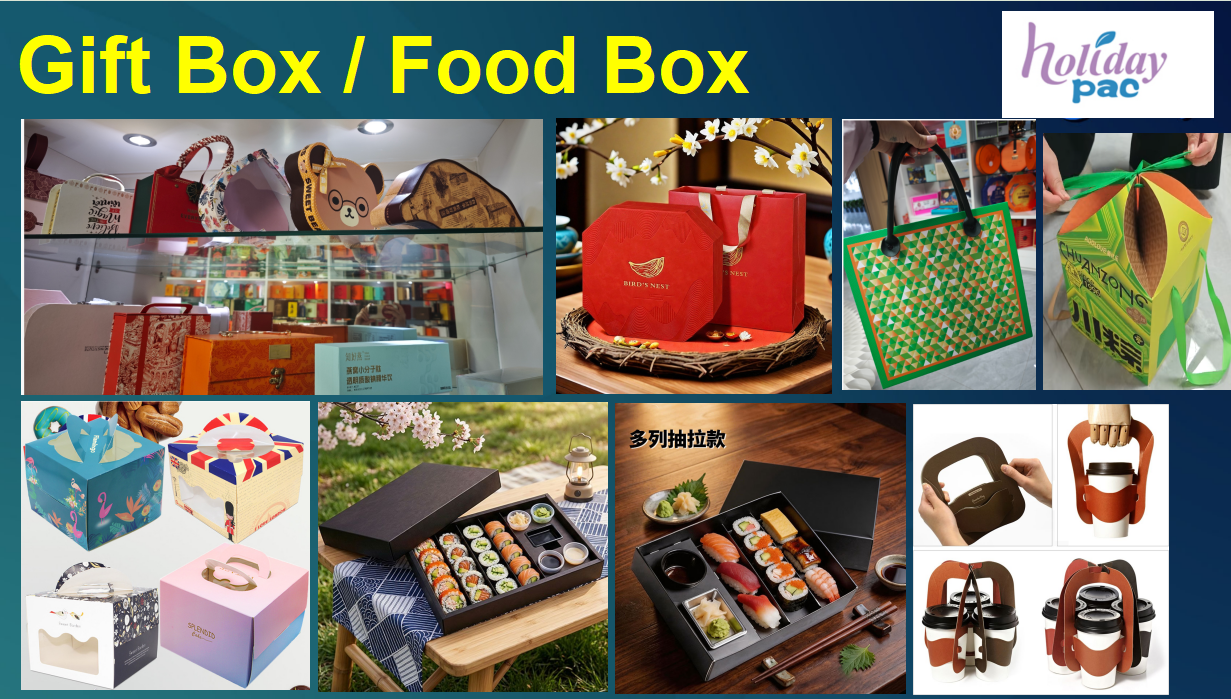
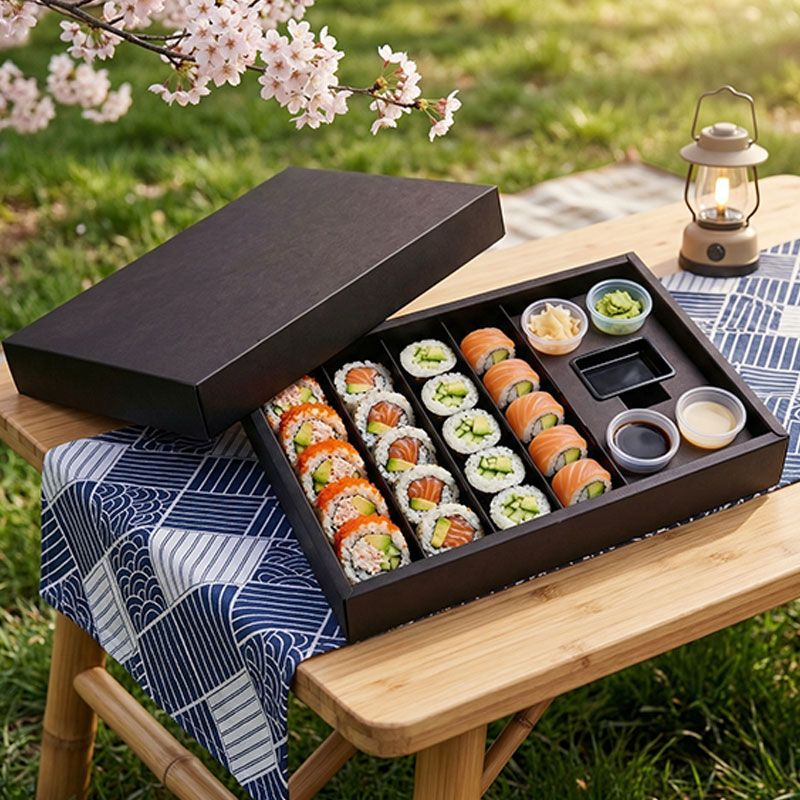
Food-grade packaging factory · Custom food boxes for sushi, bakery, bento · OEM for Japanese restaurant chains, food brand operators, and trading companies
Why Japanese Brands Choose Holidaypac in 2026: A Founder's Honest Guide to Custom Packaging, Cardboard Displays, and Building a Factory That Actually Cares
By Cassie Lan, Founder of Holidaypac Packaging Factory
From a keynote delivered to Japanese retail and e-commerce buyers, April 22, 2026
In the spring of 2010, I sat across from a buyer from Osaka in a small meeting room in Xiamen. I had just co-founded Xiamen Holiday Paper Product Co., Ltd. with my partner Tiger Wang. We had 1 printers, 10 workers, and a stubborn belief that paper packaging from China could be world-class.The buyer turned a sample box in his hands for almost two minutes without speaking. Then he asked me one question:"Cassie, can your factory promise that the box arriving in Tokyo six months from now will look exactly like this one?" I paused. I knew the answer should be yes. But I also knew that, at that time, our industry's honest answer was usually "almost." Almost the same color. Almost the same fold. Almost the same paper weight. The Japanese market does not run on "almost."That conversation has shaped sixteen years of my career. It is also the reason I wanted to give this talk to all of you today, and the reason I am turning this keynote into a written guide. If you are a brand owner, a buyer, a procurement manager, or an e-commerce operator looking for a packaging partner in 2026 — especially one that understands the Japanese standard of katachi (form), kihin (dignity), and omotenashi (hospitality) — this article is written for you.I am Cassie Lan, founder of Holidaypac Packaging Factory. Over the last sixteen years, our team has shipped custom cardboard displays, retail packaging, food-grade boxes, and shelf-ready trays to brands in more than forty countries. This is everything I wish I could have told that Osaka buyer back in 2010.
The global custom display packaging market reached USD 24.7 billion in 2025 and is forecast to hit USD 39.7 billion by 2035, growing at a compound annual rate of 5.6 percent. Japan, in particular, is identified by analysts as one of the most demanding and fastest-evolving markets, driven by a national preference for premium aesthetics and advanced manufacturing technology. Meanwhile, the broader Japan packaging market is projected to grow from USD 76.88 billion in 2025 to USD 104.9 billion by 2032. What does that mean for you, sitting in a brand meeting in Tokyo, Yokohama, or Fukuoka? It means that the box your customer holds in their hand has officially become a media channel. It is no longer a container. It is a 360-degree advertisement that travels from the warehouse to the shelf to the unboxing video on TikTok and YouTube Shorts. In 2026, three forces are reshaping what "good packaging" actually means:
Five years ago, "unboxing" was a buzzword. In 2026, it is a measurable revenue driver. A Japanese cosmetics brand we work with tracked its unboxing-related social mentions for one quarter and discovered that more than 31 percent of new customers cited a friend's unboxing video as their first touchpoint with the brand. The packaging, in other words, was doing the work of a paid influencer campaign — quietly, every single day, for free. If your packaging cannot survive a 30-second video shot under bright ring lights, you are leaving money on the table. The texture of the paper, the satisfying snap of a magnetic closure, the way the inner tray reveals the product — these are no longer "nice to have." They are part of the product itself.
Five years ago, "eco-friendly" was a sticker you put on the bottom of the box. In 2026, it is written into procurement contracts. European and Japanese buyers now routinely ask for FSC certification, soy-based ink documentation, recyclability ratings, and full carbon-footprint reporting before they place a single purchase order.
At Holidaypac, we made a decision in 2018 that I am still proud of: every product line, by default, must be made from recyclable or biodegradable materials unless the customer specifically requests otherwise. We were ahead of the market then. Now, the market has caught up — and brands that did not invest early are scrambling.
In late 2025, several large retailers in Asia and North America began rolling out connected shelf systems — electronic shelf labels that talk directly to smart packaging through QR codes, NFC tags, and embedded sensors. Industry analysts are now predicting that by 2026, between 25 and 35 percent of SKUs in major retail chains will carry some form of scannable, connected experience: how-to videos, recycling instructions, loyalty rewards, supply-chain traceability.
Your packaging, in other words, is becoming a portal. It is a website you can hold in your hand. The brands that understand this shift early are designing their boxes with QR placement, contrast ratios, and quiet zones in mind from day one — not as an afterthought.
These three forces are why packaging in 2026 is not the same business it was in 2020. And it is why the relationship between a brand and its packaging factory matters more than ever.
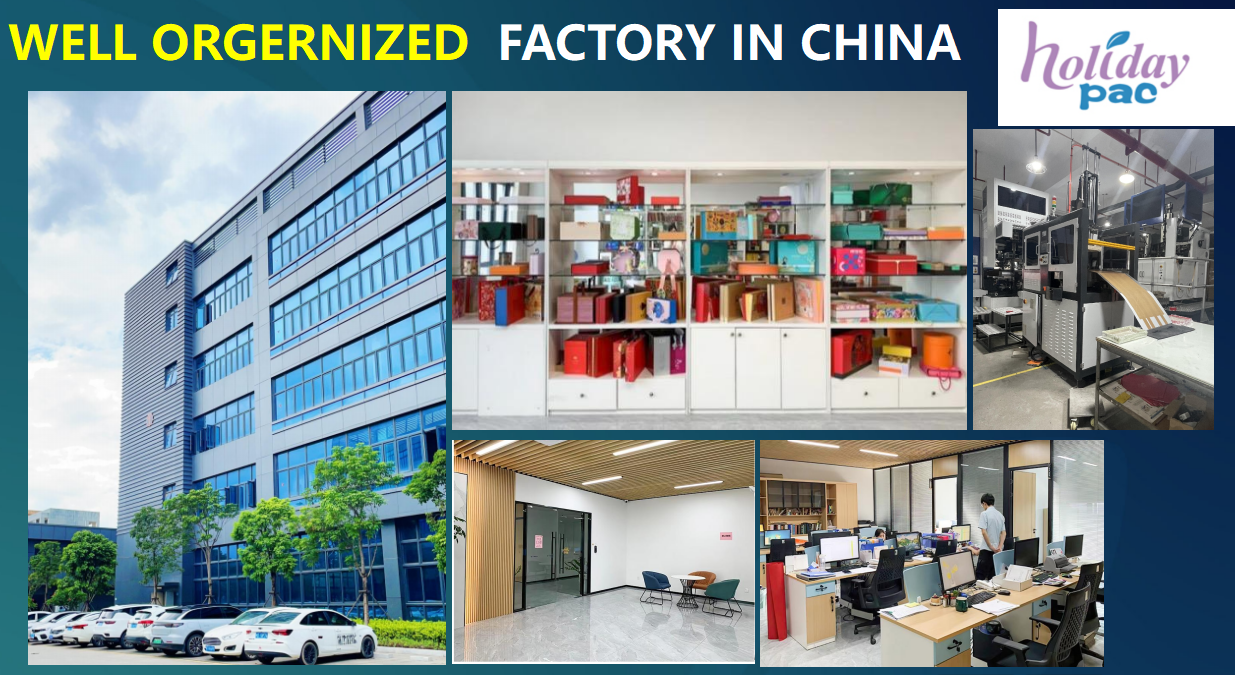
Before I go any further, let me give you an honest tour of our company. I believe a buyer should know exactly who they are working with before signing a contract.
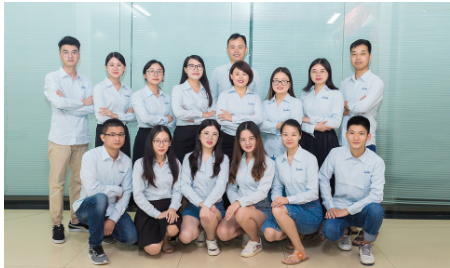
Holidaypac is the trade name of a group of three sister companies that I co-founded with Tiger Wang:
- Xiamen Holiday Paper Product Co., Ltd. (founded 2010) — our original printing and paper-box factory in Tongan Park, Xiamen. Over 10,000 square meters. Three large-format six-color printers (largest printing size 1600 × 1200 mm). Cutting machines, lamination, sample room, in-house warehouse.
- Xiamen Holiday Import & Export Co., Ltd. (founded 2012) — our dedicated export arm, set up because we realized that handling our own customs, documentation, and freight was the only way to guarantee delivery dates to overseas customers.
- Shenzhen Holiday Package & Display Co., Ltd. / CT Wares (Shenzhen office founded 2014, CT Wares founded 2016) — our marketing, design, and co-packing arm. "C" stands for Cassie, "T" stands for Tiger. CT Wares specializes in co-packing services and warehouse fulfillment, because so many of our customers want us to not only make the packaging but also pack their products inside it before shipping. In 2020, we expanded again with a Cambodia branch, partly to give clients an alternative production base outside of mainland China for tariff and trade reasons, and partly to bring our quality standards to Southeast Asia. In 2021, we restructured our Xiamen factory into a dedicated food-grade box workshop, because food and beverage brands were becoming a larger and larger share of our business. What do we make? The honest list is long, but our flagship products are:
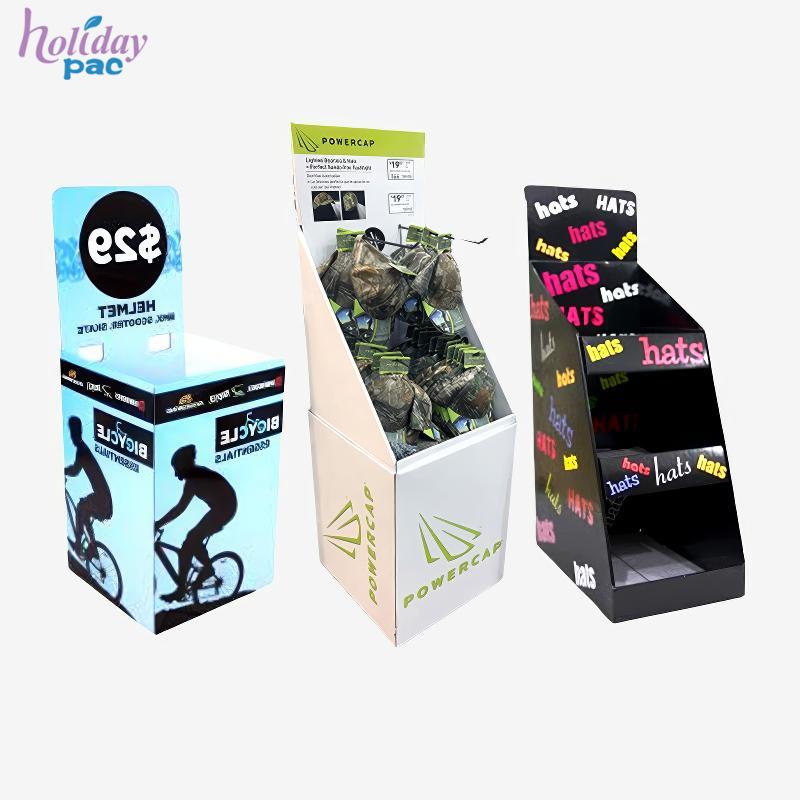
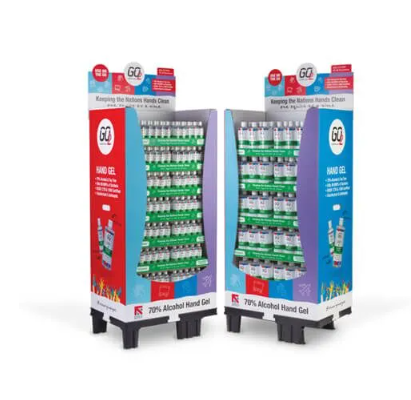
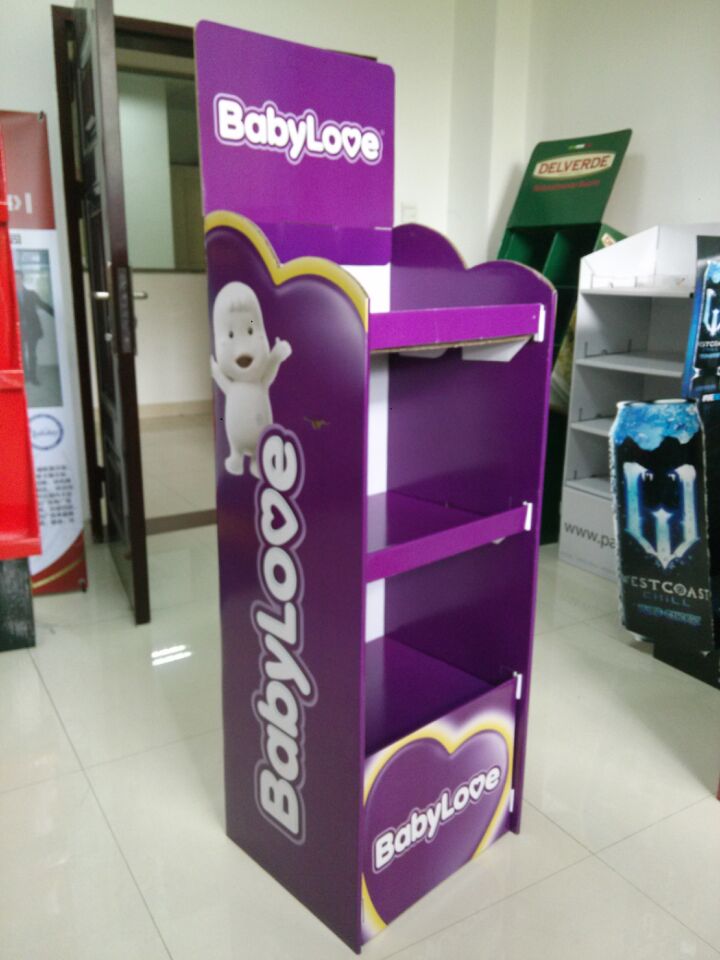
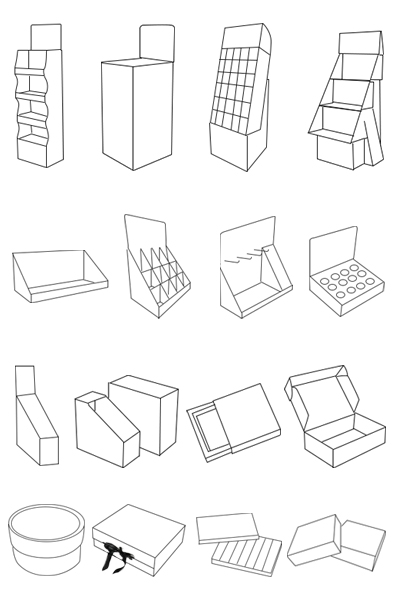
- Cardboard floor displays, FSDUs (free-standing display units), PDQ trays, sidekick displays, end-cap displays, pallet skirts
- Shelf-ready packaging (SRP) for supermarkets and convenience stores
- Custom mailer boxes, gift boxes, magnetic closure boxes
- Food-grade packaging: bakery boxes, sushi boxes, cake boxes, pizza boxes, air fryer liners
- Cosmetic and skincare boxes, candle boxes, lipstick boxes, perfume boxes
- Greeting cards, recipe cards, journals, paper bags, fridge magnets, light boxes, custom stickers, custom pouches
Our mission, in one sentence: Born from nature, returning to nature. Inspired by the philosophy of Zhuangzi — the ancient Chinese thinker who taught that "all things and I are one" — we treat packaging not as an industrial product but as a cultural vessel that carries a brand's story to its customer. That sounds poetic. Let me tell you what it actually means in a factory.
Before I go into the specific problems Japanese buyers raise with me, I want to spend a moment on something more fundamental — why the Japanese market is, in my honest opinion, the most demanding and most rewarding market a packaging factory can serve.
I have shipped to forty countries. I have sat in meetings in Düsseldorf, Sydney, Los Angeles, São Paulo, and Dubai. Each market has its own personality. The American market rewards speed and bold visual impact. The European market rewards sustainability documentation and cool, functional design. The Australian market rewards friendliness and a no-nonsense attitude.The Japanese market is different. It rewards what I call invisible perfection.
What is invisible perfection? It is the inside of a folded box that no customer will ever see — but is finished as carefully as the outside. It is the alignment of a cut edge to a hairline tolerance. It is the way the lid of a gift box closes with a soft, controlled descent rather than a sudden drop. It is the choice of a paper texture that feels right in the hand even before the customer consciously notices it.
When Japanese buyers reject a sample, they often cannot articulate what is wrong. They simply say, "chigau ne" — "it's not right." And they are correct. Something is not right. The job of a good packaging partner is not to argue. It is to listen, iterate, and find the version that earns a quiet "hai, kore de ii desu" — "yes, this is good." That word good, in Japanese business, is the highest compliment a packaging supplier can receive.
To serve this market, a factory needs three capabilities most Chinese factories do not have:
First, patience. A Japanese product launch can take twelve months from first sample to first shipment. Compare that to the American market, where a brand may want bulk product in eight weeks. A factory that cannot tolerate the slower Japanese rhythm will burn out, get sloppy, and lose the relationship.
*Second, a culture of kaizen — continuous improvement.* Japanese clients do not expect a factory to be perfect. They expect it to get better, visibly, with every order. Our annual review meetings with our long-term Japanese clients always include a slide titled, "What did we improve since last year?" If the slide is empty, we have a problem.
*Third, the ability to say no respectfully. This sounds counterintuitive. But Japanese buyers respect a supplier who says, "We cannot do this in the timeline you asked, but here is what we can do," far more than a supplier who says yes to everything and then misses the deadline. The cultural value of yakusoku* (約束) — the keeping of one's word — runs deep. We have learned to say no early, with a clear alternative.
Now, with that context, let me get into the specific problems Japanese buyers have raised with me over the years.
I have spent a lot of time over the last decade in Tokyo, Osaka, and Nagoya. Whenever I sit down with a new Japanese buyer, the same five problems come up again and again. I want to address each of them honestly, because pretending they do not exist is the fastest way to lose your trust.
This is the single most common complaint I hear about Chinese factories. And it is, unfortunately, often true.
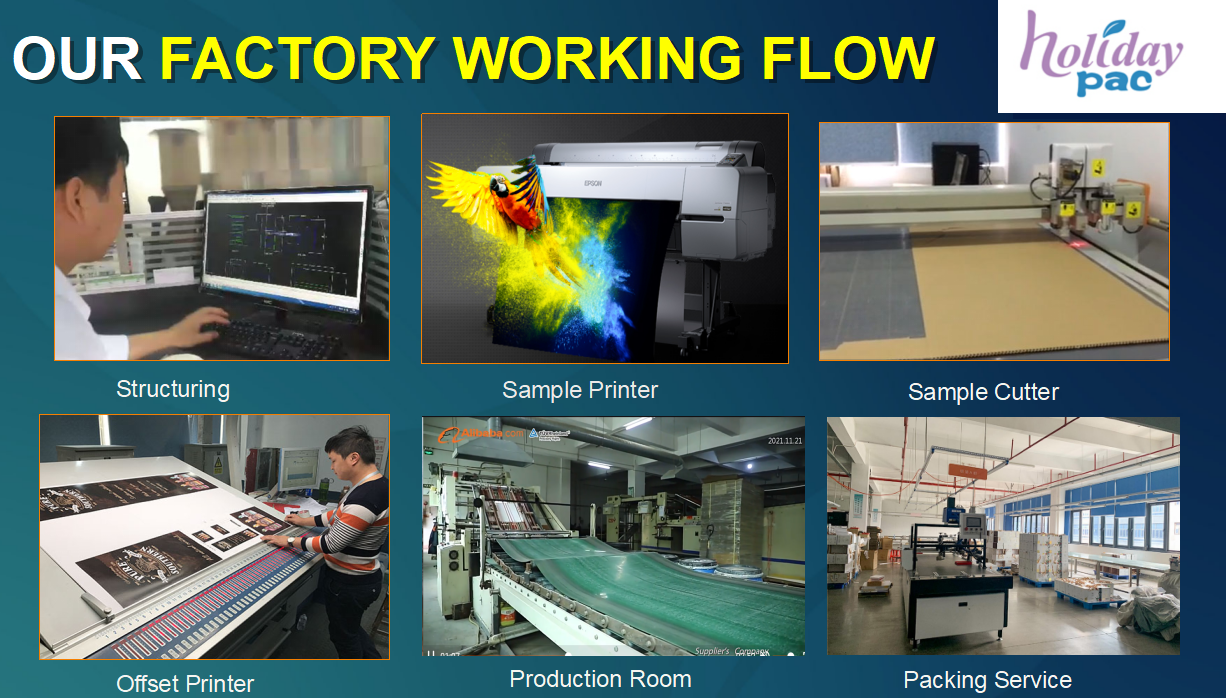
The reason is structural. Many small factories make samples on a different machine than they use for mass production. The sample comes off a high-end digital printer; the mass run comes off an aging offset press. The colors drift. The paper weight is "close enough." The folding tolerance is off by half a millimeter, which is invisible on one box but obvious on a pallet of 500.
Our solution at Holidaypac is what we call the same-line sample policy. Every sample we send to a customer is produced on the exact same line, with the exact same paper batch, that will be used for mass production. If we cannot produce the sample that way, we tell the customer up front and explain the variance to expect. This is a slower, more expensive way to make samples. It is also the only way to keep the promise I failed to keep in 2010.
Here is what often happens. A brand pays a 30 percent deposit. The factory acknowledges the order. Then communication slows down. Production updates become vague. Photos arrive late. By the time the goods are on the water, no one really knows whether what is in the container matches what was ordered.
Our standard process is the opposite. We send weekly production updates with timestamped photographs at four checkpoints:
Japanese buyers especially appreciate this because it matches the hourensou (報連相) communication culture — report, contact, consult — that is foundational in Japanese business. We did not invent this process to impress Japanese clients. We invented it because Japanese clients taught us, patiently, that this is what good communication looks like.
Japanese retail loves to test small. A new SKU might launch in 50 stores before scaling to 500. A premium gift brand might want only 200 boxes for a seasonal limited edition.
Most Chinese factories are built for high-volume runs. A typical MOQ is 3,000 or 5,000 units. This kills product-market-fit testing for smaller Japanese brands.
At Holidaypac, our MOQ for many product lines starts at 500 units for mailer boxes, 300 units for gift boxes, and 100 units for cardboard displays. We can do this because we have invested in flexible digital printing alongside our traditional offset lines. Yes, the per-unit cost is higher at low volumes — that is physics, not greed — but we can quote both options transparently so you can make an informed decision.
Japanese buyers, particularly those serving the EU and California markets, need documentation that holds up in an audit. "Recyclable" is not a marketing word; it is a regulatory claim.
We provide:
- FSC (Forest Stewardship Council) certified paper on request
- Soy-based ink certification with batch numbers
- Material safety data sheets for food-contact applications
- Compostability certifications for our biodegradable lines
- Carbon-footprint estimates per SKU on request
If a factory cannot provide these, the question is not whether they are lying. The question is whether they actually understand what your buyer is asking for. Surprisingly often, the answer is no.
This one is subtle. A Japanese brand often has a deeply considered design philosophy — wabi-sabi, ma (negative space), shibui (subtle beauty). When that brief is handed to a factory designer who has never lived inside that culture, the output can feel generic, loud, or "Westernized."
Our design team in Shenzhen includes designers who have studied in Japan, who read Japanese design magazines like Brutus and AXIS, and who understand that the empty space on a box is as important as the printed image. We do not always get it right on the first round. But we listen, and we iterate without charging for revisions on the first three rounds.
I want to share three brief stories. I have changed some details for confidentiality, but the core lessons are real.
One of the global beauty success stories of the last few years has been SHEGLAM, the makeup brand under SHEIN. SHEGLAM rose from a digital-first brand into a globally recognized name partly because of viral marketing, but also because of something less talked about: the consistency and quality of its packaging across markets.
When you scroll through TikTok unboxings of SHEGLAM products, you notice something. The boxes look the same in Brazil, in France, in Japan, in the United States. The cardboard displays in pop-up retail look identical to the boxes shipped to your door. The shelf-ready trays match the brand's palette exactly.
We are proud to have supported SHEGLAM with custom packaging solutions, including innovative cardboard displays and shelf-ready trays that make the brand visible in physical retail the same way it is visible online. The lesson here is not "use SHEIN's supplier." The lesson is: a global brand needs a packaging partner who can scale consistency across continents. That is what we built our factory to do.
A small but well-known tea brand in Kyoto came to us in 2023. They had been working with a Japanese domestic packaging supplier for fifteen years. Their costs were rising. They wanted to test whether moving to a Chinese partner could save money without sacrificing quality.
The first sample we sent failed. The cardboard texture was too smooth. Japanese green tea boxes, we learned, traditionally use a slightly textured washi-inspired paper that diffuses light in a particular way. Our paper was technically better — denser, more durable — but it did not feel right.
We spent six weeks sourcing the right paper. We tested fourteen variants. The fifteenth passed. Today, that brand orders from us four times a year. Their cost dropped 22 percent, their quality went up, and — this matters — their longtime Japanese supplier is still their backup partner. We never asked them to switch entirely. The right answer was a dual-supplier strategy.
The lesson: a good Chinese factory does not try to replace a Japanese supplier. It complements one.
In late 2024, an Australian pet food brand came to us with a problem. Their dry kibble was selling well online but failing in physical retail. Buyers told them shoppers walked past the product without noticing it.
We designed a free-standing cardboard display unit (FSDU) with a die-cut shape resembling the silhouette of a dog, oversized headline graphics at eye level, and an integrated tear-off coupon dispenser at the side. We shipped the displays flat-packed in our co-packing facility, pre-loaded with the product so the retail staff only had to unfold and place.
Within sixty days of rollout in 200 stores, the brand reported a 108 percent increase in sell-through versus the same product on a standard shelf. The packaging did not change. The display did. The packaging factory, in other words, became a sales-strategy partner, not just a vendor.
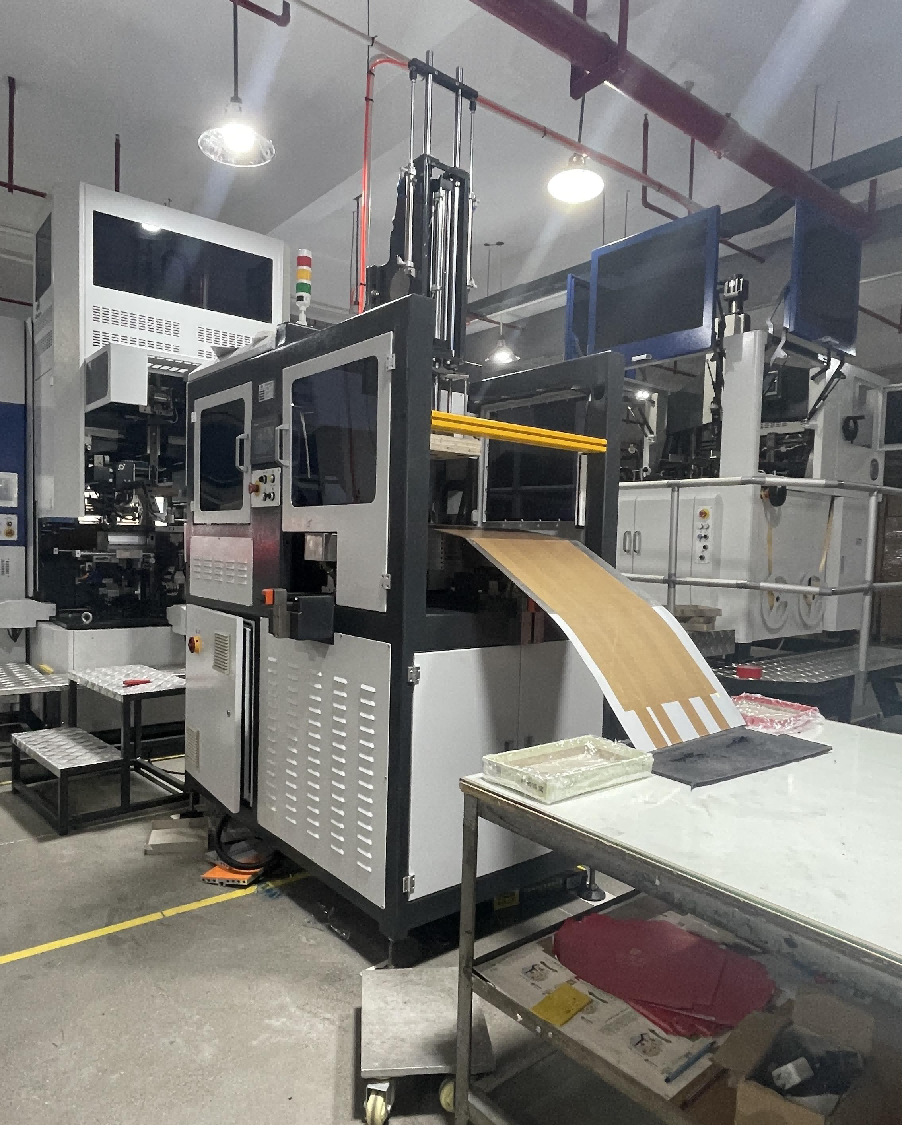
I want to take you on a brief virtual tour of what happens inside the Holidaypac packaging factory when an order arrives. I think this matters because too many brands sign contracts without ever understanding what their money is paying for.
Day 1 — Order intake and engineering review. Your purchase order arrives. Our project manager creates a job dossier with your artwork files, your dieline, your material specifications, your quantity, your destination address, and your delivery deadline. Our structural engineer reviews the dieline for manufacturability. If we spot a problem — a fold that will not hold, a tab that will tear — we flag it and propose a solution before we cut a single sheet.
Day 2 to 3 — Material procurement. We order paper from our certified mills. For FSC-certified paper, this includes the chain-of-custody documentation. For food-grade paper, this includes the migration test results. For specialty papers like the washi-inspired textures used by some of our Japanese clients, this can take longer because we sometimes import from specialty mills.
Day 4 — Pre-press and color management. Our pre-press team builds the printing plates or the digital files. We pull a press proof and compare it against the brand's Pantone reference using a spectrophotometer, not a human eye. The Delta E value (a numerical measure of color difference) must be below 2.0, and ideally below 1.0, for premium brands.
Day 5 to 8 — Printing. Our six-color offset presses run at full speed. Each batch goes through automatic color sensors that catch drift in real time. Press operators pull samples every 200 sheets and check them against the master proof.
Day 9 to 12 — Surface finishing. This is where the magic happens. Spot UV. Soft-touch lamination. Hot foil stamping in gold, silver, copper, holographic, or custom colors. Embossing and debossing. These finishes are what separate a forgettable box from a box that gets photographed and posted on social media.
Day 13 to 15 — Die-cutting, folding, and gluing. Our auto die-cutting machines work to a tolerance of ±0.1 mm. Our gluing line uses food-safe adhesives where required. Quality control inspectors check every 50th unit and reject anything outside specification.
Day 16 — Packing and palletization. Boxes are flat-packed (where possible) to minimize shipping volume and cost. Each carton is labeled with batch numbers, quantities, and your purchase order reference. Our warehouse team builds the pallets to the height limits required by your destination port.
Day 17 — Pre-shipment inspection. Before the container leaves our facility, we conduct a final inspection. We photograph the pallets. We send you a digital pre-shipment report. We do not load the container until you confirm.
Day 18 onward — Logistics and after-sales. Our export team handles the customs documentation, the bill of lading, the certificate of origin, and any country-specific paperwork (Japanese import compliance, EU CE markings, US FDA documentation for food-grade products). We track the container until it arrives at your warehouse. We follow up to confirm condition on arrival.
This is not extraordinary. This is what a serious packaging factory does. But you would be surprised how many factories skip steps four, ten, fourteen, and seventeen. They skip them because each step costs time and money. We do not skip them because skipping them is, in the long run, more expensive than doing them right.
Whether you choose to work with us or with someone else, here is the checklist I would use if I were sitting on your side of the table. I have given this list to friends, to competitors' clients, and to my own family members who have launched products. It is honest.
Before you sign a contract, you should be able to answer "yes" to all of the following questions about your factory:
If you cannot get a confident answer to even three of these, walk away. Find another partner. The cost of a bad packaging vendor is not the price of the boxes; it is the price of every customer who never came back because their first impression of your brand arrived crushed, faded, or wrong.
I want to close with a forward-looking section, because if I am asking you to trust us with your brand, I owe you my honest view of where this industry is heading.
Digital printing technology is now cheap enough that economical short runs of personalized packaging are becoming routine. Within five years, I expect that at least one major Japanese e-commerce platform will offer customers the option of a custom-printed box with their own name, photo, or seasonal greeting, produced on demand and shipped within 48 hours. The factories that can serve this demand will look very different from the factories of 2010. They will be smaller, more digital, more flexible — and much closer to their end markets.
In Tokyo and Osaka, I have already seen the early signs of this. Premium gift brands are designing their boxes to be reused as storage boxes, jewelry boxes, or display objects. The box itself becomes part of the gift. This shifts the entire economic logic of packaging design — from disposable to durable, from cheap to crafted.
In our Shenzhen office, our designers are already using AI tools to generate variations of a brand's packaging concept in minutes instead of days. This does not replace human designers — it makes them faster. Within three years, I expect that the standard design cycle for a new packaging project will compress from six weeks to two. Brands that adapt to this speed will out-compete those that do not.
Every box becomes a website. Every cardboard display becomes a touchpoint. QR codes, NFC tags, augmented-reality experiences activated by pointing a phone at a printed pattern — all of these are technologies that are now economically viable at scale. The brands that treat their packaging as the largest unused marketing channel in their portfolio will gain a structural advantage.
Tariffs, trade tensions, and supply-chain shocks have made single-country sourcing risky. This is why we expanded to Cambodia in 2020. Forward-looking brands in 2026 are building relationships with packaging partners who can shift production between two or three countries depending on tariff conditions. Holidaypac's structure — China plus Cambodia, with co-packing flexibility — was designed exactly for this kind of buyer.
I want to close the practical part of this article with the questions that new clients — especially those approaching us for the first time — ask in their initial email or first video call. If you are reading this and have not yet contacted us, the answers below should save you a few rounds of back-and-forth.
It depends on the product and the printing method. For digitally printed mailer boxes, our MOQ starts at 100 units. For offset-printed gift boxes with finishes such as foil stamping or spot UV, the MOQ is typically 500 to 1,000 units. For cardboard floor displays and FSDUs, the MOQ is usually 500 units, although we have run pilot batches of 200 units for trusted partners testing a new market. For food-grade boxes (sushi boxes, bakery boxes, cake boxes, pizza boxes, air fryer liners), the MOQ varies by configuration but typically starts at 1,000 units.
For a straightforward custom mailer box with no specialty finishes, 15 to 18 working days. For a complex retail display with multiple components and finishes, 25 to 35 working days. For a brand-new product with custom dieline development and multiple sample rounds, allow 6 to 10 weeks from initial brief to production-ready files. Air shipment to Japan adds 5 to 7 days; sea shipment from Xiamen to Tokyo or Yokohama is typically 10 to 14 days.
For blank or generic samples that demonstrate paper quality, structure, and finishing options, yes — free of charge. The customer covers the express courier freight (typically 30 to 50 USD to Japan via DHL or FedEx). For fully customized samples with the customer's artwork, we charge a sample fee that is usually deducted from the mass production order once it is placed.
Our standard terms are 30 percent deposit upon order confirmation, 70 percent balance payable before shipment. We accept T/T (telegraphic transfer), Western Union, and PayPal. For repeat clients with a strong track record, we are open to discussing more flexible terms, including L/C (letter of credit) and net-30 arrangements.
We are a real factory, not a trading company. Our headquarters and original printing facility are located at No. 53, Tongan Park, Tongan Industrial Concentration, Xiamen City, Fujian Province, China. Our Shenzhen office at TongFuYu Industrial Area, Dalang Street, Longhua District, handles design, marketing, and co-packing. Our Cambodia branch was added in 2020 to give clients a tariff-flexible production alternative. We own our printing presses, our die-cutting equipment, our lamination machines, and our finishing lines. We are happy to arrange video tours or in-person factory visits.
Yes. Through our CT Wares facility, we offer co-packing services where we pack your products into our packaging at our facility before shipment. This is especially useful for brands that want to reduce labor costs and simplify their supply chain. We can also handle direct fulfillment for some markets — shipping individual customer orders from our warehouse on your behalf, with custom shipping labels and inserts.
Yes. We can produce on FSC-certified paper with the appropriate chain-of-custody documentation. Our Xiamen facility was reorganized in 2021 to include a dedicated food-grade box workshop that complies with international food-contact standards. We routinely supply Japanese, European, and North American food-and-beverage clients with documentation packs that include migration test results, ink certifications, and material safety data sheets.
We have a clear defect-resolution policy. If the issue is verified as a manufacturing defect on our side, we will either replace the affected units in the next production run at no charge, issue a credit toward your next order, or — in certain cases — issue a partial refund. We document defects with photographs and we expect our customers to do the same when reporting issues. The vast majority of disputes we have seen in the industry come from unclear specifications at the start; we work hard to prevent this by writing detailed specification sheets that both parties sign before production begins.
Absolutely. We routinely sign non-disclosure agreements before receiving sensitive brand artwork, packaging concepts, or product information. Our internal access controls limit project files to the team members directly involved in the project. We have worked with brands launching unannounced products, including premium beauty SKUs, limited-edition gift items, and pre-launch electronic accessories. Confidentiality is, in our culture, non-negotiable.
Yes. We have experience preparing shipments for Amazon FBA (Fulfillment by Amazon) in Japan, the US, and Europe, as well as Rakuten Super Logistics in Japan. This involves specific labeling requirements, carton-weight limits, palletization standards, and FNSKU placement that we handle as part of the standard service. If you have a specific marketplace requirement, send us the spec sheet and we will confirm in writing what we will do.
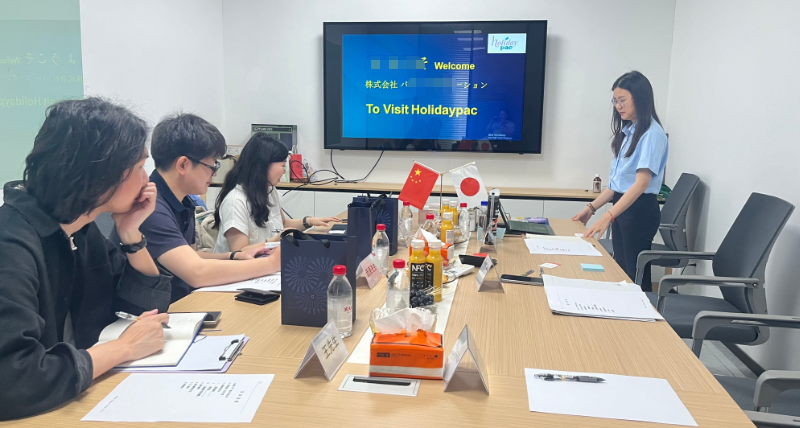
If you have read this far, thank you. I know your time is valuable. I wrote this article — adapted from the keynote I delivered to a group of Japanese clients on April 22, 2026 — because I believe that the conversation between a brand and its packaging factory should be honest, technical, and human. Sixteen years ago, I could not look that Osaka buyer in the eye and promise him that the box arriving in Tokyo would look exactly like the sample. Today, I can. Not because Holidaypac is perfect no factory is — but because we have built a system, a team, and a culture that takes the promise seriously. If you are a Japanese brand, an Asian e-commerce operator, a global retailer, or a startup founder anywhere in the world who is thinking about your next packaging project, I would be genuinely happy to hear from you. Come visit our factories in Xiamen, Shenzhen, or Cambodia. Ask hard questions. Request samples. Test our weekly photo updates. Talk to our existing clients.Packaging is the silent salesperson of your brand. Choose its partner carefully. Born from nature. Returning to nature. Made with care, in our factory, for yours.
— Cassie Lan, Founder, Holidaypac Packaging Factory Xiamen · Shenzhen · Cambodia www.holidaypac.com

Links