When you hear the term Pre-Shipment Inspection, or PSI, it sounds like a simple checklist.
But if you’ve ever dealt with global shipments, you know that PSI is often the only thing standing between you and a costly mistake.
This case study walks you through how a single PSI caught critical pallet size deviations in a batch of cardboard corner guards.
If this inspection hadn’t happened, the order might have been rejected at the warehouse dock.
Or worse — the load could have become unstable during transport.
Before we get into the problem, let me quickly define the product.
Cardboard corner guards are structural protections placed on pallet edges.
They prevent crushing, help stabilize loads, and distribute pressure from stretch wrap and straps. A single mis-sized corner guard or an unstable pallet can make an entire shipment unsafe.
That’s why PSI matters.
A Pre-Shipment Inspection checks the goods after production but before the supplier ships them out.
According to the PSI report you uploaded, the contractor followed:
This setup already tells me something.
You had zero tolerance for critical defects.
And pallet size deviation?
That counts as critical because it affects shipping constraints, safety, and warehouse acceptance.
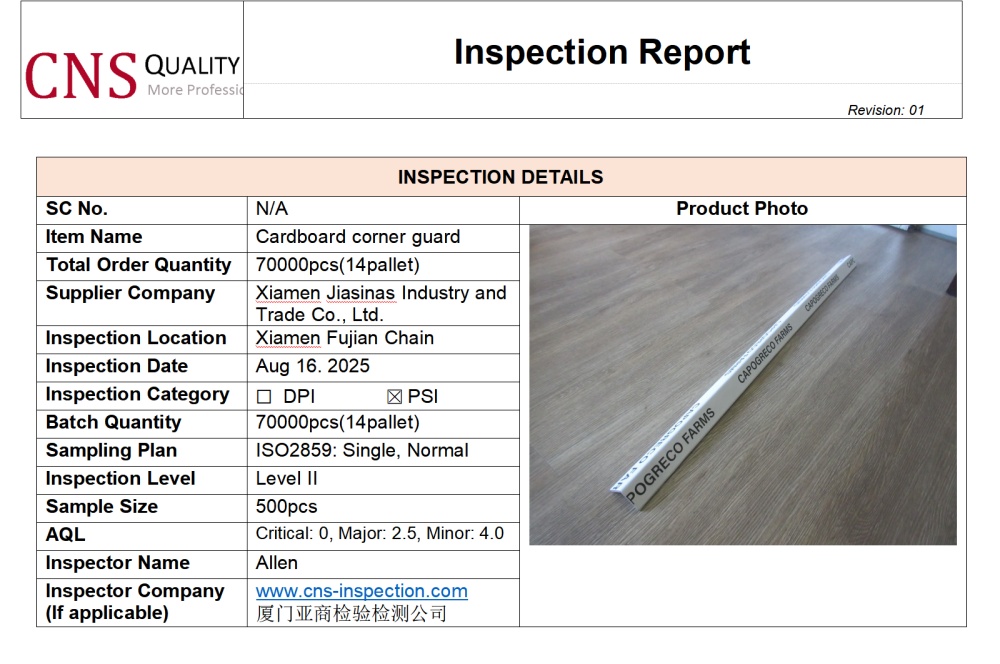
The order consisted of:
5400 pcs/pallet
4000 pcs/pallet
Everything seemed standard at first glance.
Quantity check?
Passed.
All 70,000 pcs accounted for.
Workmanship?
Passed.
Only minor dirt stains and a couple of dents — well within AQL.
Field tests?
Passed.
Rub test, humidity test, odor check… all good.
At this point, if I were the buyer, I’d be thinking:
“Looks fine. Should ship.”
But that’s where PSI shows its value.
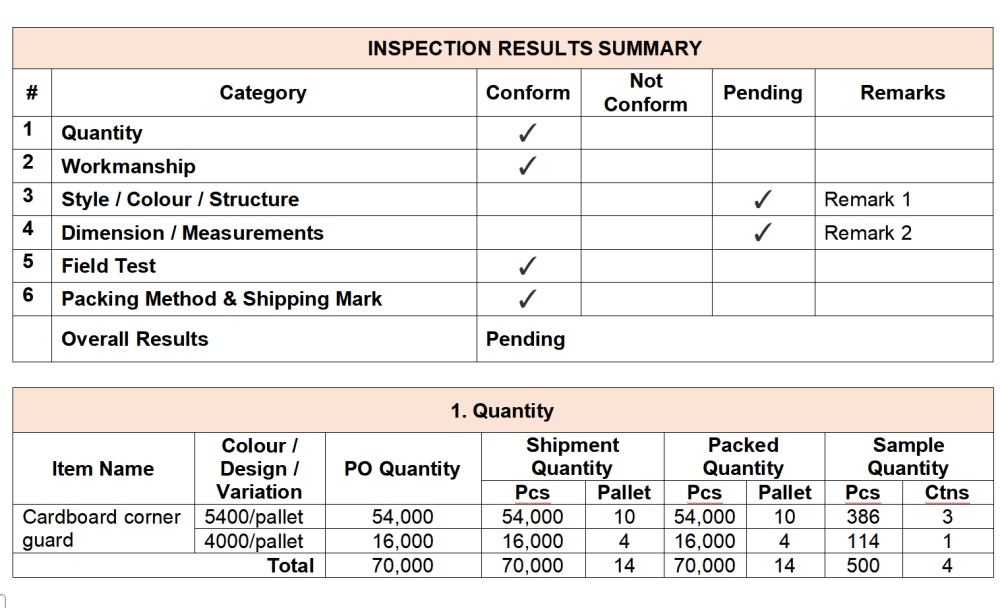
When the inspector measured the pallet dimensions, something jumped out immediately.
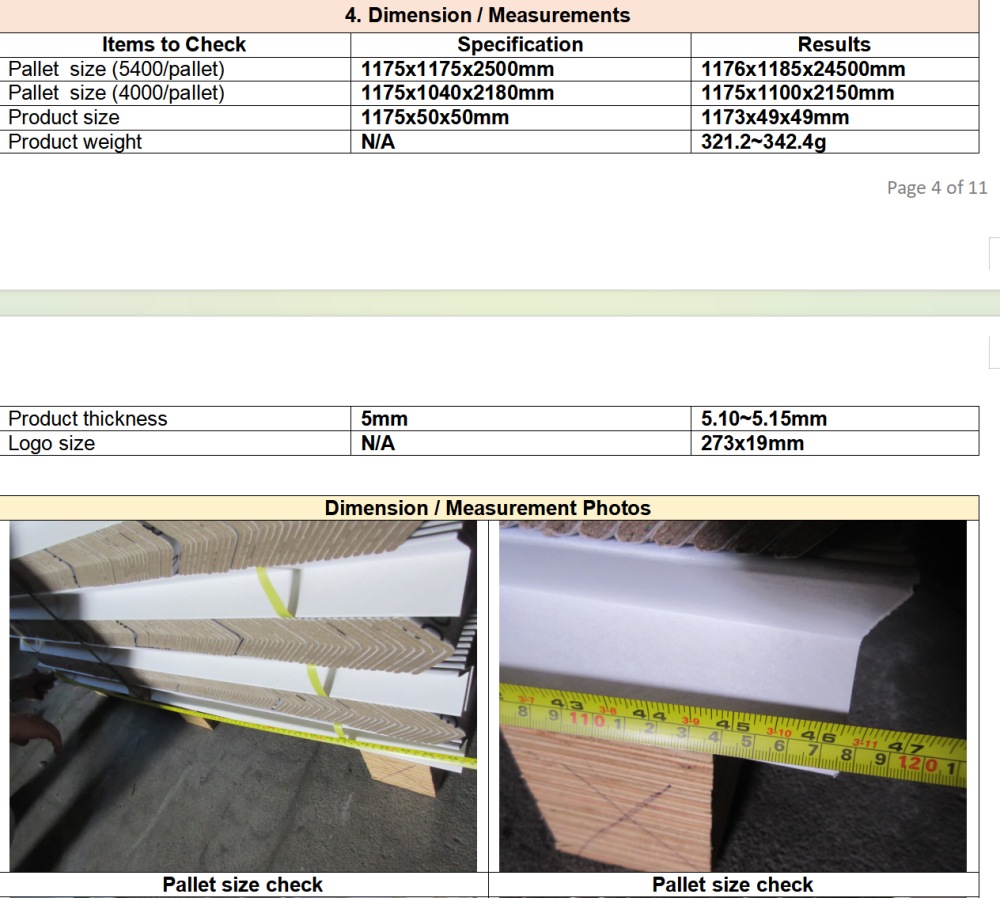
Let’s look at the spec vs. actual:
Two issues:
Even bigger deviation:
You might think:
“Come on, 10 mm or 60 mm doesn’t sound like a disaster.”
But in logistics?
It absolutely can be.
Let me explain.
Shipping containers and warehouse racks follow strict tolerances.
A pallet that is even 1 cm oversize
→ may no longer fit in a standard container stack pattern.
A pallet that is 6 cm oversize
→ can cause misalignment that prevents loading entirely.
Most large warehouses — especially in North America and Europe — have:
If your pallet exceeds the incoming tolerance, the warehouse worker won’t try to “squeeze it in.”
They reject it on sight.
And rejected goods = extra freight, relabeling, re-palletizing, storage fees, delays.
An oversized pallet usually indicates:
Even a small shift in center of gravity increases tipping risk.
If your customer expects:
Any deviation creates downstream chaos.
This is why in the PSI report, the “Dimension/Measurements” section is marked Not Conform (Pending).
Meaning:
The goods cannot ship until you decide how to handle the deviation.
Here’s where the PSI document gives us clues:
Having 5400 pcs/pallet and 4000 pcs/pallet suggests different stacking patterns.
Different patterns = higher likelihood of human error.
Product spec: 1175 × 50 × 50 mm
Actual: 1173 × 49 × 49 mm
This is within tolerance and not serious.
But the small difference hints that cutting variance existed in production.
If product dimensions vary slightly, stack alignment may drift.
Stack drift → pallet drift.
Height deviation (50 mm and 30 mm) usually means:
This points to inconsistent packing procedures rather than product defects.
The report shows:
This inconsistency increases the chance of packaging mistakes.
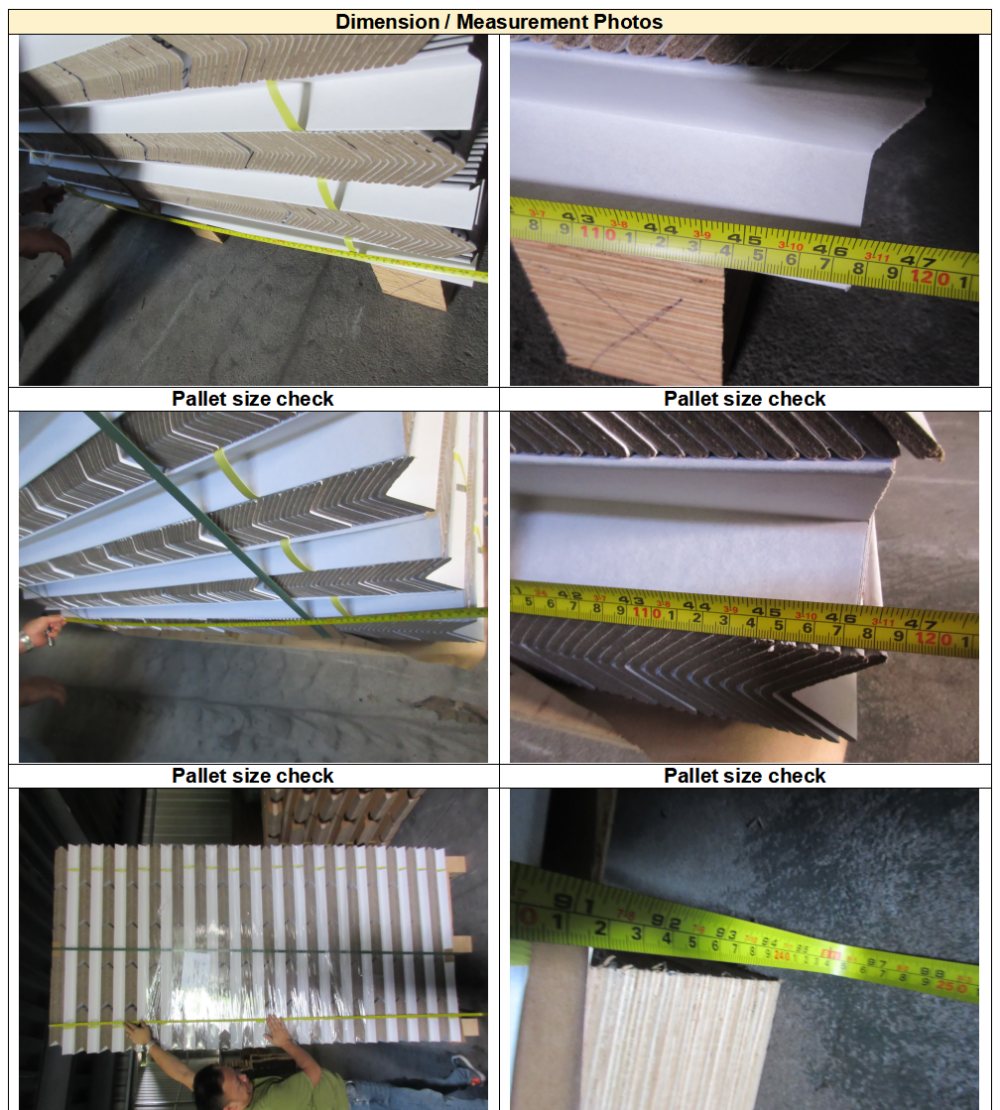
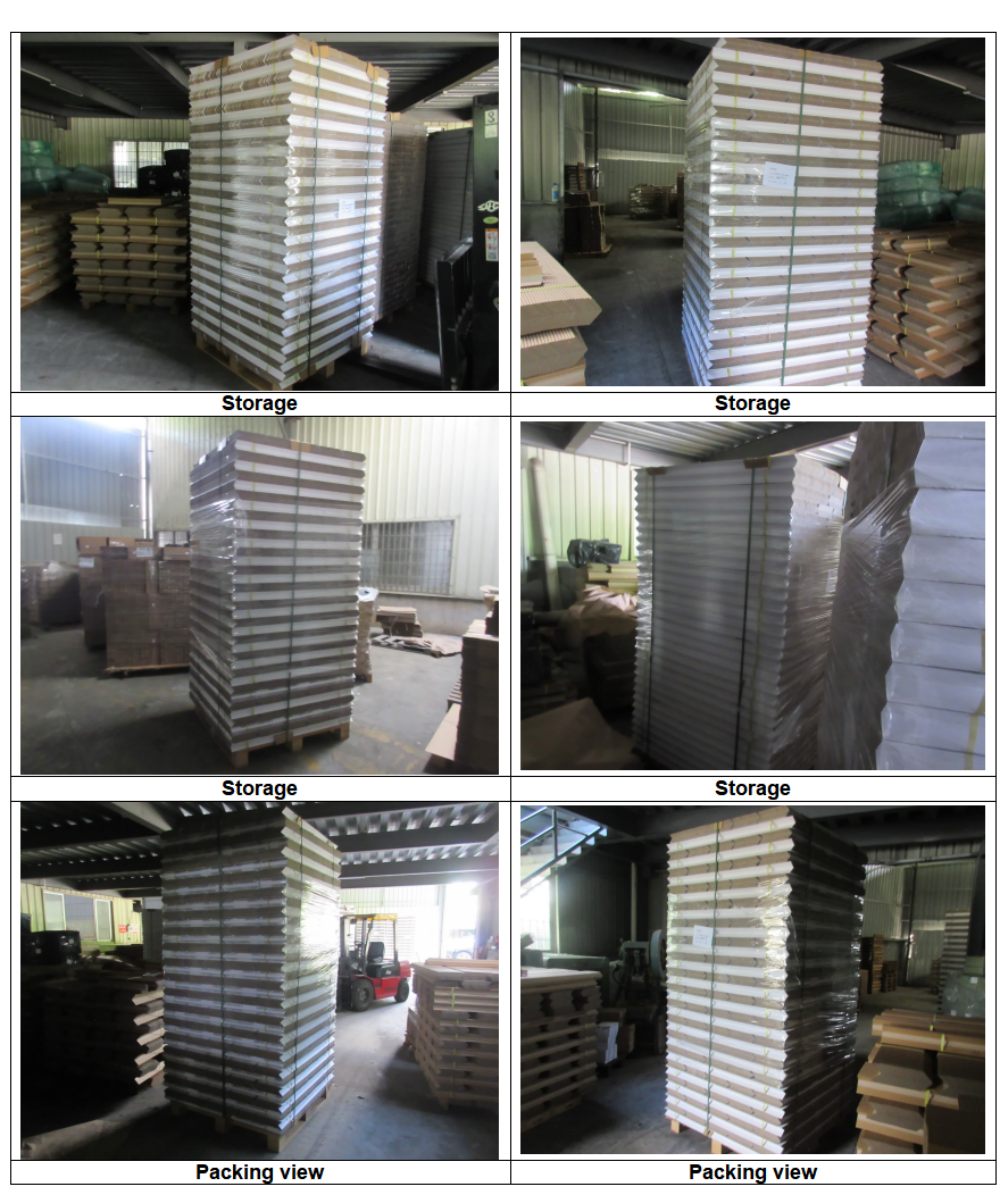
The PSI included:
This wasn’t guesswork.
The inspector recorded the deviations and added photographic proof.
This is why PSI matters: it gives you evidence, not opinions.
Let’s imagine you hadn’t done a Pre-Shipment Inspection.
Your pallets arrive at the port.
The freight forwarder tries to load them.
But the pallet is 60 mm too wide.
That extra width prevents the pallets from being placed two-across inside a 40HQ.
Result:
A single pallet deviation can cost USD 500–2,000 per container.
The goods arrive at your customer’s distribution center.
The automated conveyor can only accept pallets up to:
Your pallet: 1185 mm for one configuration and 1100 mm width for the other.
The first might be rejected, and the second might cause conveyor misalignment.
Rejected goods = deductions + returns + loss of reputation.
A slightly misaligned pallet base reduces stability.
Corner guards are supposed to strengthen, not create imbalance.
A shift of 30–50 mm in height or width increases:
A collapsed pallet during trucking can cause thousands in damage.
This is where the case study shifts from “problem” to “value.”
The PSI allowed you to:
And before it turned into a logistics nightmare.
The supplier can now:
Your customer never sees the problem — because you fixed it proactively.
With photo evidence and measurements, the supplier cannot dispute the deviation.
Container optimization remains intact.
No surprise fees.
This is exactly what a Pre-Shipment Inspection Pallet Size Deviations case is meant to illustrate.
Here’s what this experience shows:
They are critical because they affect logistics, not just the product.
Everything in production may look fine.
But packing errors happen at the final stage — the stage most buyers skip checking.
Visual checks alone cannot detect an oversized pallet.
If you use multiple stacking patterns, give the supplier separate SOPs for each.
If you’re shipping structural paper products—corner guards, pallet protectors, honeycomb panels—do this:
In your case, the PSI prevented a potentially expensive problem.
And that’s the point.
A Pre-Shipment Inspection Pallet Size Deviations case like this is a reminder that product quality and logistics quality are equally important.
You can pass every workmanship test and still fail the shipment if your pallets don’t meet spec.
PSI makes sure that never happens.
In this page, HolidayPac will show the cases how holidaypac supply the packaging and cardboard displays and other related products solution for our clients. To save the communicated time cost and make the solution in a high effect to save our clints time cost. HolidayPAC try to be a global packaging factory, solution expert in paper and paper related products, like, paper packaging, cardboard displays, PDQ, and air fryer liners, pharchment papers.
Links