Holidaypac
 Feb 05,2026

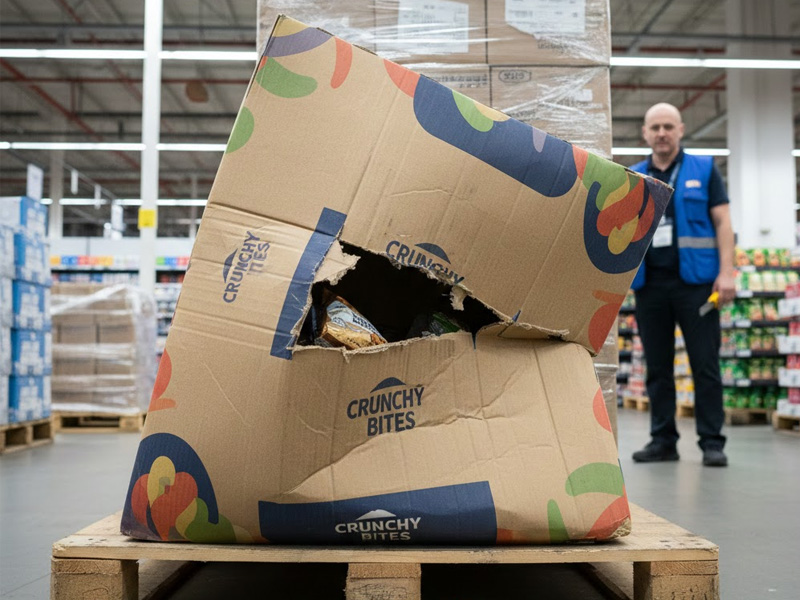
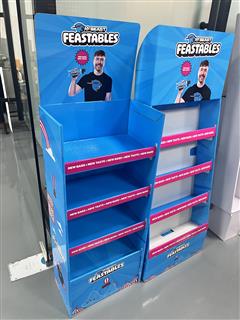
Ever walked through a retail aisle and seen a display box that looks like a raccoon attacked it? It’s frustrating. You spent months perfecting your product, only for the Shelf Ready Packaging (SRP) to fall apart before it even hits the shelf.
Here’s the thing: Most SRP designs are failing long before the customer sees them. Whether you’re selling high-end snacks or emerging consumer brands, your secondary packaging is either too weak to survive the truck or too tough for a tired retail clerk to open without a knife.
Let’s talk about why your current boxes are letting you down and how we, as your manufacturing partner, can actually fix it.
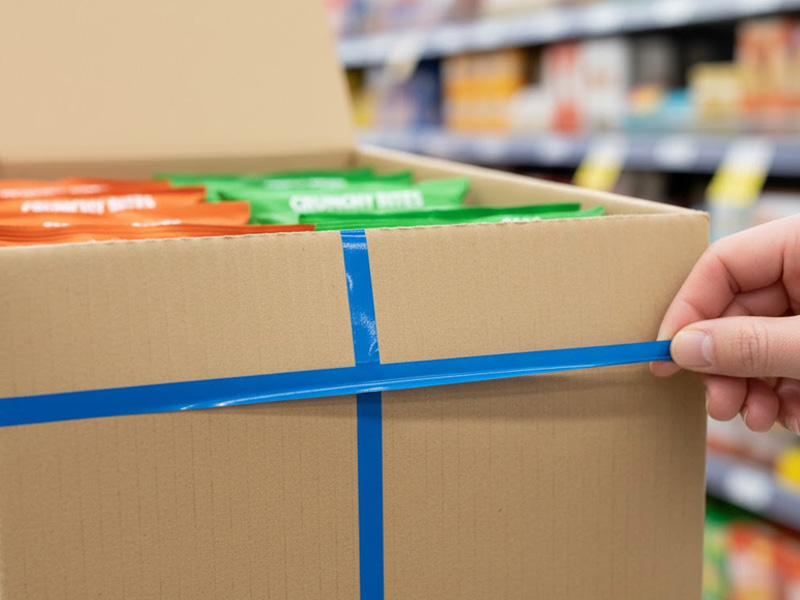
The short answer is that perforation lines (those little dots you tear) naturally rob your cardboard of 5% to 30% of its vertical strength. It’s a physics nightmare. You need the box to be sturdy enough to stack ten-high on a pallet, but "weak" enough to tear open by hand. Most suppliers get this balance wrong. In long-haul logistics, the bottom boxes on a pallet take the most heat. Because the tear line creates a built-in "fault line," the box often buckles under pressure. By the time it reaches Walmart or a local grocer, the packaging is already crushed, making your brand look cheap and neglected.
Yes, but it requires more than just punching holes in paper. We use a "Double Reinforcement" strategy. Instead of just relying on the cardboard, we apply a high-tensile Tear Tape on the inside of the perforation.
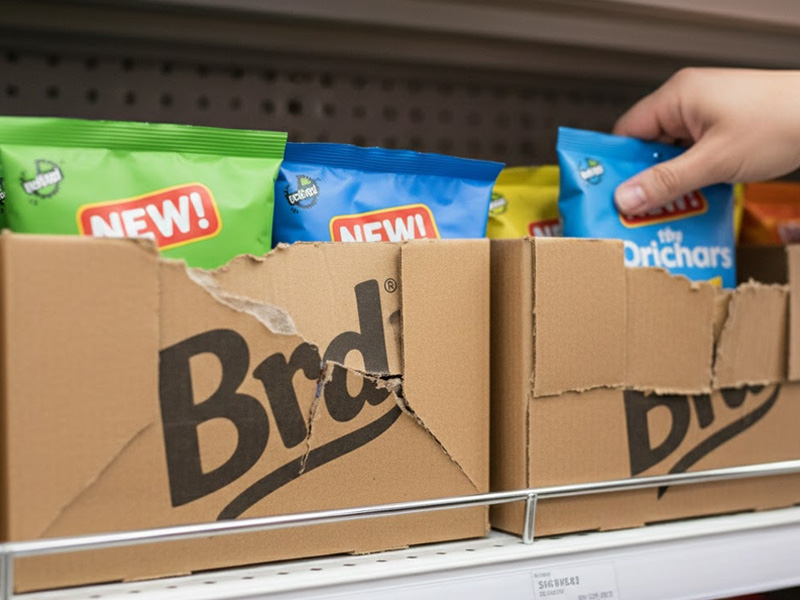
If your SRP covers more than 1/3 of your primary packaging, you are effectively paying to hide your own brand. We see it all the time. A brand designs a beautiful box, but the front lip is so high that customers can’t see the flavor, the logo, or the "New!" callout on the actual product inside. Even worse, if the tear line is poorly placed, it might literally cut your logo in half when opened. That’s a branding disaster.
We solve this with a "Low-profile Die-cut" design. We calculate the exact height of your product—say, those custom push pop containers—and ensure the front wall of the SRP sits just low enough to keep the product secure but high enough to show off the label.
Pro Tip: If your front lip is too high, the clerk might just rip the whole front off anyway, leaving a messy, unfinished edge that ruins the "premium" vibe you're going for.
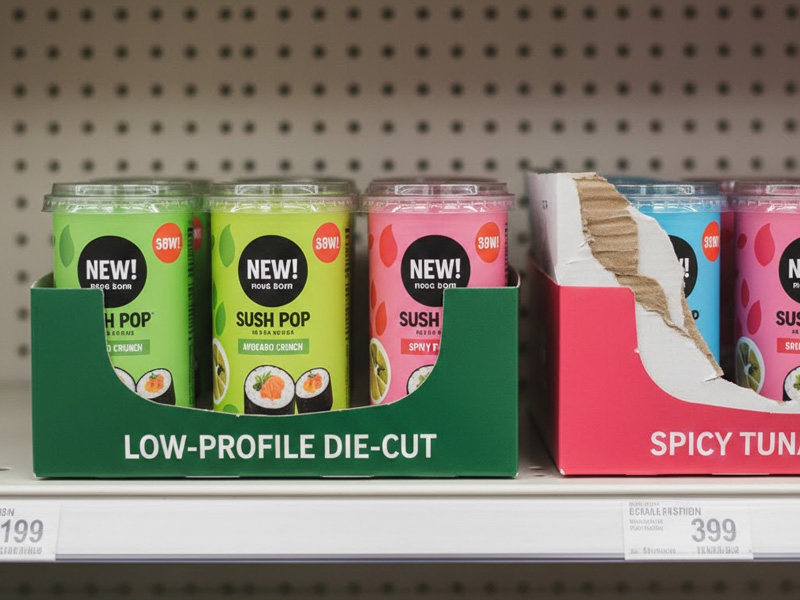
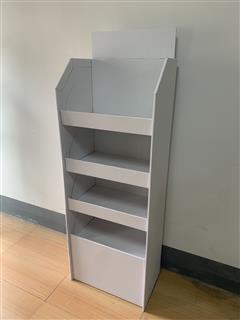
Empty space is a brand killer. When the first five items sell, customers are greeted with a vast, blank "white wall" of raw corrugated cardboard inside the box. It looks unfinished. It looks like an afterthought. Plus, if the edges are jagged and white-cored, the whole display starts to look like trash within hours.
We recommend Internal Visual Compensation. By printing your brand colors or a witty slogan on the inside walls of the SRP, the display stays "on-brand" even when it’s half-empty.
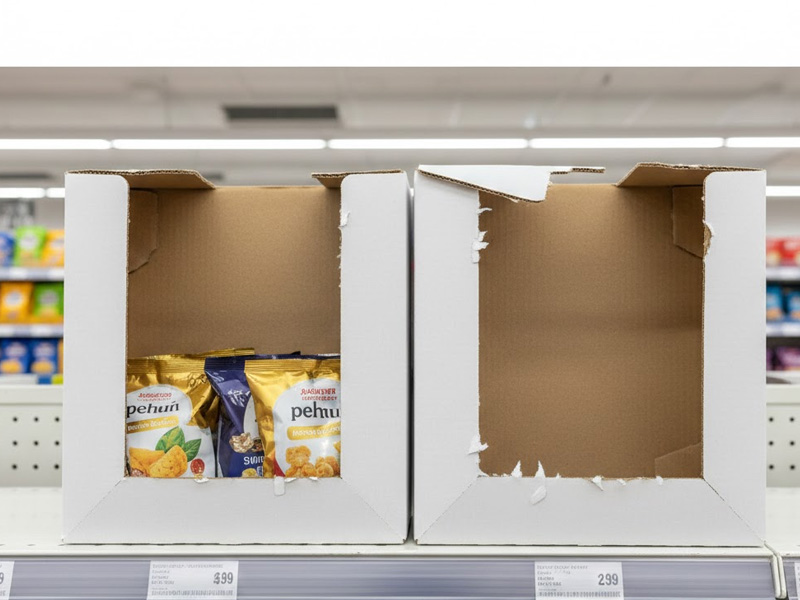
Standardized boxes often lead to "hidden" costs like FBA rejection fees or wasted shelf space. Let's be honest: SRP usually costs 15% to 20% more than a standard shipping case because of the specialized die-cutting and higher paper weight required to keep it upright. If your box doesn't perfectly fit the specific shelf requirements of Amazon FBA or major retailers like Target, you’re throwing money away on "dim weight" air or, worse, repackaging fees.
We don't start with the box; we start with the shelf.
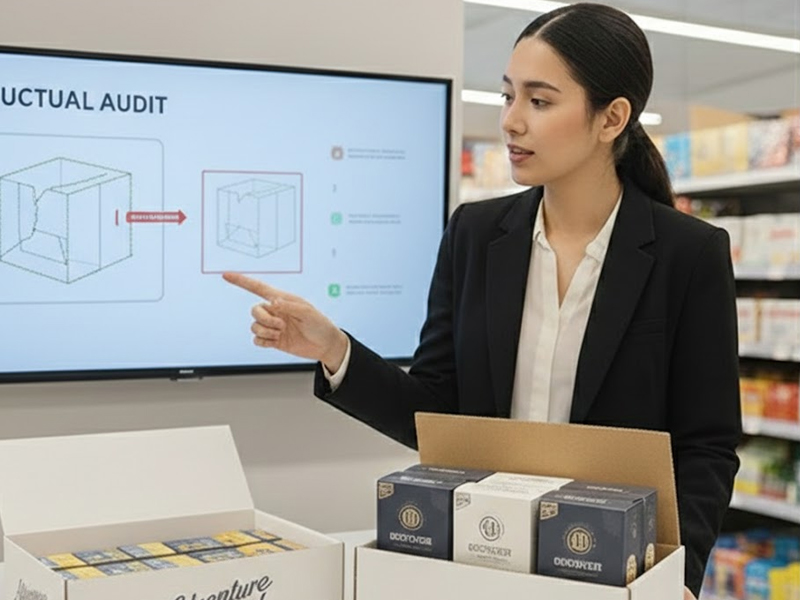
If you're looking for the "Cheat Sheet" to share with your team, here it is:
Does your current packaging survive the "shipping test" only to fail the "shelf test"? It's a common headache, but you don't have to settle for jagged edges and crushed corners. Whether you're scaling up for a big-box launch or just want your custom containers to arrive looking as good as they did in the factory, let's talk about a structural audit.
Drop a comment or send over your current specs—I'd love to tell you exactly where your "fault lines" are hiding.
Would you like me to analyze your current box dimensions to see if we can optimize them for standard retail shelf depths?


Links