Holidaypac
 Jul 29,2026

 If you're sourcing custom paper bags for your brand, you've probably already discovered how confusing this category can get. Every supplier uses different terminology, quotes different minimum order quantities, and promises different lead times — and if you've been burned before by inconsistent quality or a factory that "went dark" after taking a deposit, you know exactly why this matters.
This guide is written from the other side of the table: as a paper bag manufacturer, we get the same sourcing questions every week from retail brands, restaurants, cosmetics companies, and e-commerce sellers. Below, we break down every major bag type, how to choose the right size and material, and — most importantly — what actually separates a dependable custom paper bag factory from a reseller who is just drop-shipping your order.
With single-use plastic bag bans now active across a growing number of U.S. states and similar regulations expanding across the EU and Asia-Pacific, paper bags have shifted from a "nice-to-have" branding upgrade to a compliance necessity for many retailers. At the same time, buyers are under more pressure than ever to control landed cost, protect lead times against tariff and freight volatility, and prove sustainability claims with real certifications rather than vague "eco-friendly" marketing language.
That combination — regulatory pressure plus cost pressure — is exactly why getting the sourcing decision right matters so much this year.
 Main Types of Custom Paper Bags
Not all paper bags are built the same way, and choosing the wrong structure is one of the most common (and expensive) mistakes buyers make. Here are the styles that cover the vast majority of retail, food service, and e-commerce use cases.
SOS ("Self-Opening Sack") bags have a flat, reinforced bottom and a self-standing structure, making them ideal for grocery, bakery, pharmacy, and takeout use. They're typically made from kraft paper and can be produced with or without handles. Their main advantage is load-bearing strength relative to cost — a good default choice when durability matters more than a premium look.
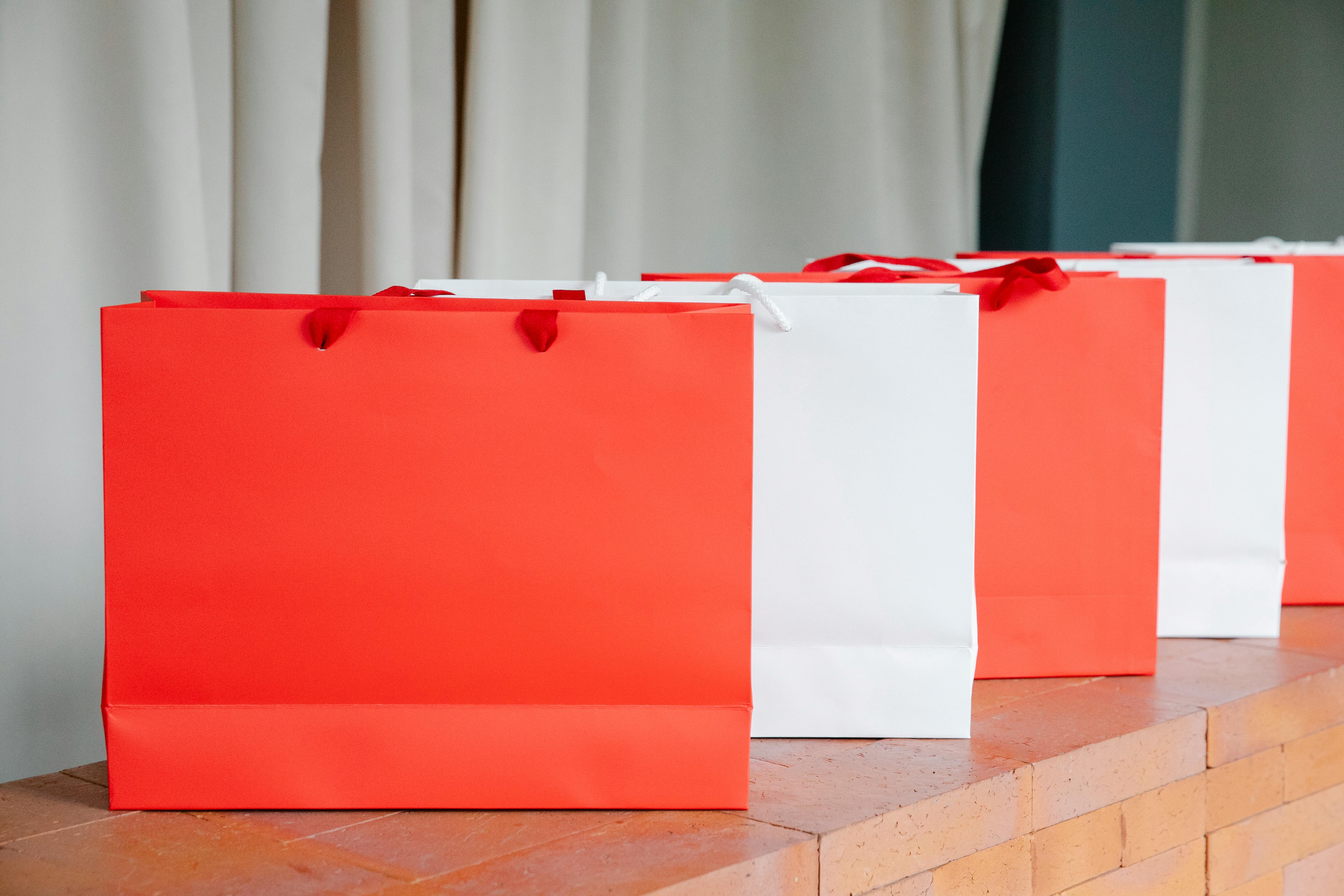
Euro tote bags feature a folded, reinforced top edge and rope or ribbon handles, giving them a more polished, boutique-style appearance. They're the go-to choice for apparel, cosmetics, gift shops, and mid-to-high-end retail brands that want a bag that feels premium without the cost of rigid packaging.
"Gusset" refers to the folded panel on the side or bottom of a bag that allows it to expand. Gusseted bags are more versatile for bulkier or irregularly shaped products and are common in food packaging (bread, produce, bulk snacks) as well as retail merchandise bags where extra volume is needed.
Window paper bags have a die-cut or film-laminated cutout that lets customers see the product inside without opening the bag. These are popular for bakery items, cosmetics, and gift packaging, where visual appeal at the point of sale drives purchase decisions.
This is one of the most practical decisions buyers face. Twisted paper handles are more decorative and slightly more durable per unit cost, while flat (die-cut) handles are faster to produce and more economical at high volumes. If your priority is unit cost and speed, flat-handle bags usually win; if branding and shelf appeal matter more, twisted handles are worth the small premium.
Sizing mistakes are one of the top reasons buyers reorder — and reordering means paying twice for tooling, samples, and freight. Before finalizing a size, measure:
A reliable factory should offer either standard stock sizes for fast turnaround or fully custom dimensions for brands with unique product shapes. If a supplier only offers a handful of fixed sizes with no custom option, that's often a sign you're dealing with a trading company reselling stock inventory rather than an actual manufacturer.
 Paper Bag Materials and Weight (GSM), Explained
Material choice affects durability, print quality, cost, and sustainability claims — all things a buyer needs to defend internally when justifying a purchase order.
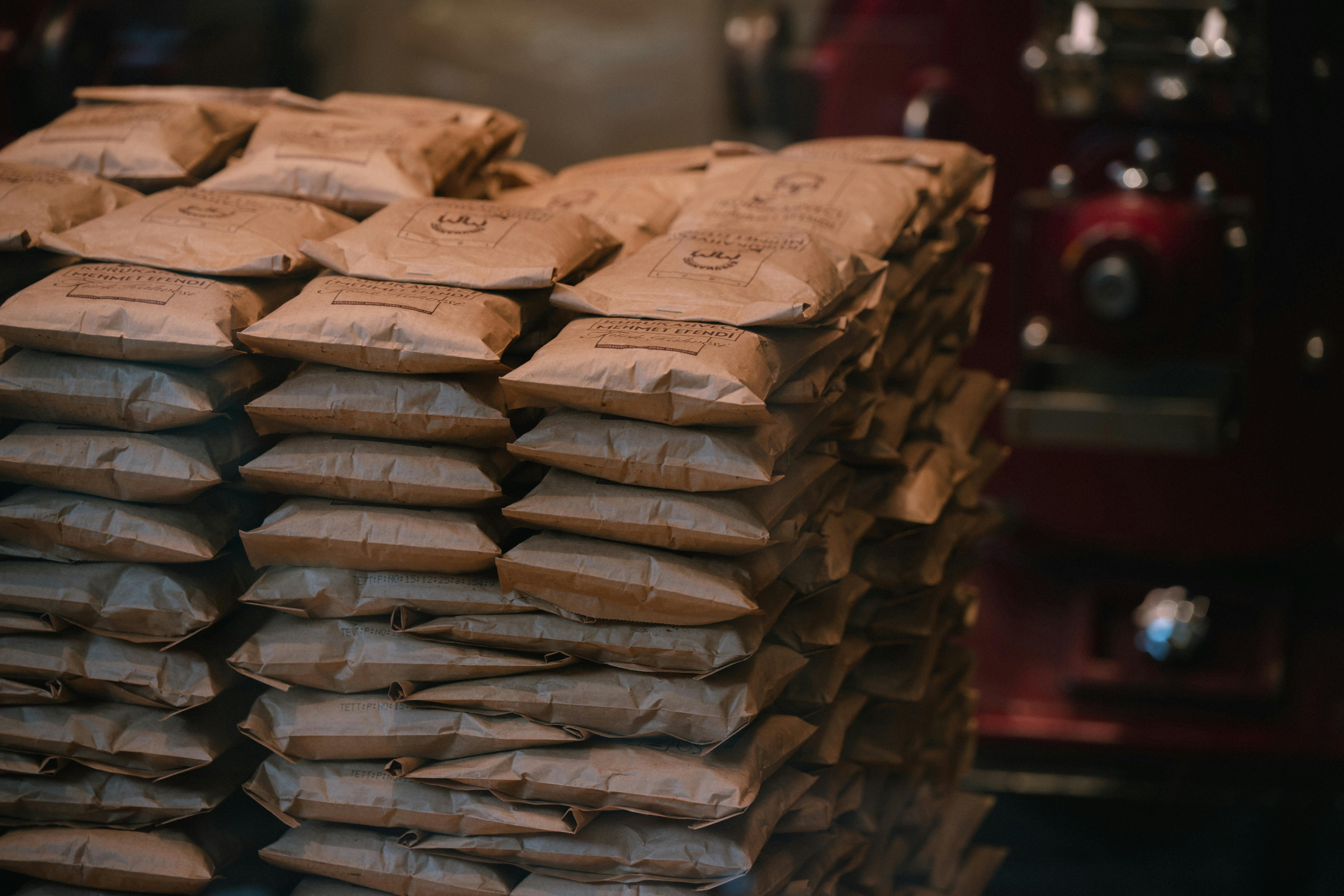
Kraft paper (brown or white): The most common and cost-effective option, typically available from 80gsm to 150gsm+ depending on load requirements. Higher GSM means more durability but also higher cost and freight weight.
Coated art paper: Smoother, glossier finish that reproduces detailed print graphics and photography well. Common for premium retail and cosmetic brands.
Recycled and FSC-certified paper: Increasingly requested by retailers who need to back up sustainability claims with actual certification, not just marketing copy — important if your own customers or compliance teams ask for documentation.
Alternative fibers (e.g., sugarcane-based paper): A newer option for brands prioritizing biodegradability and reduced tree-fiber sourcing.
A transparent factory will tell you the exact GSM, recycled content percentage, and certification status of your paper — not just call it "eco-friendly" without backup documentation.
Custom paper bags are used across a wide range of sectors, each with slightly different priorities: retail and boutique stores (branding and shelf presentation), restaurants and cafés (grease resistance, handle strength for takeout), e-commerce and D2C brands (unboxing experience, right-sized fit to reduce void fill), cosmetics and luxury goods (premium finishes, rigid handles, structured bottoms), and grocery and bakery (load-bearing strength, food-safe materials).
This is the part most guides skip — but it's usually the actual decision point for buyers. If you're evaluating suppliers, these are the pain points worth pressure-testing before you commit:
Minimum order quantity (MOQ) flexibility. Many factories advertise low MOQs but only for stock designs — fully custom printing often requires a much higher minimum. Ask specifically what the MOQ is for your exact spec, not just their lowest advertised number.
Real production capacity, not just a sales office. A lot of "manufacturers" online are actually trading companies that subcontract to different factories per order, which makes quality inconsistent between runs. Ask for factory videos, production certifications, or a virtual tour before placing a bulk order.
Sampling and proofing process. A dependable factory should provide physical pre-production samples (not just digital mockups) before mass production, so you can verify color accuracy, material feel, and structural integrity in hand.
Lead time transparency, including freight. Quoted "production time" often excludes shipping — and with ongoing tariff and freight volatility, buyers need a landed-cost timeline, not just a factory-gate timeline.
Quality control documentation. Ask what QC checks are performed (burst strength, handle pull tests, print color matching) and whether you'll receive inspection reports or photos before shipment.
Pricing transparency. Per-unit pricing should clearly break out material, printing method, tooling/plate fees, and shipping — vague all-in quotes make it hard to compare suppliers apples-to-apples.
We built Holidaypac specifically to remove the guesswork described above. As a direct custom paper bag factory rather than a trading intermediary, we control material sourcing, printing, and quality control in-house, which means the sample you approve is the same production line and material batch your bulk order ships from.
For buyers evaluating suppliers, here's what that translates to in practice: flexible MOQs across both stock and fully custom designs, transparent per-unit cost breakdowns with no hidden tooling surprises, physical pre-production samples before any bulk commitment, documented quality control (including burst strength and handle-pull testing) with inspection reports provided before shipment, and FSC-certified and recycled paper options with real certification documentation for buyers who need to prove sustainability compliance.
If you're comparing factories right now, we'd rather earn the order by answering your hardest sourcing questions directly than by having the lowest headline price.
What is the typical MOQ for custom paper bags?
It varies by bag style and printing method, but fully custom printed bags typically start between 500–1,000 units at most factories, including Holidaypac. Stock designs with logo-only customization can sometimes go lower.
How long does production take?
Standard production typically runs 10–20 business days after sample approval, not including shipping. Always ask your supplier to quote landed lead time, including freight, separately from factory production time.
Are custom paper bags more expensive than plastic bags?
Per-unit cost is usually higher than basic plastic bags, but many regions now restrict or ban single-use plastic checkout bags, making paper bags a compliance requirement rather than an optional upgrade — and the branding value often offsets the cost difference for retail-facing businesses.
Can I get paper bags in a fully custom size?
Yes, reputable manufacturers can produce fully custom dimensions, though this usually requires a higher MOQ than stock sizes due to tooling and die-cutting setup.
What's the most durable paper bag material?
Higher-GSM kraft paper (120gsm and above) generally offers the best strength-to-cost ratio for retail and food service use, while coated art paper is chosen more for print quality than load-bearing strength.
Ready to compare quotes or request a physical sample? Get a Free Quote from Holidaypac


Links