Holidaypac
 Nov 01,2026

Holidaypac packaging design guide
Gift boxes with handles combine product presentation and carrying convenience. For food brands planning seasonal gifts, the most useful design decisions are the ones that connect appearance with product fit, comfortable handling and a clear opening sequence.
This guide uses photographed gift packaging as visual references to explain what buyers should review before commissioning an original design. The printed brand marks belong to the depicted brands; these photographs are not presented as verified Holidaypac manufacturing projects or customer endorsements.
What should you check first?
Confirm the contents and filled weight, then compare the box shape, handle attachment, opening sequence and protective packing. Approve these details on a physical sample before finalising decorative finishes.
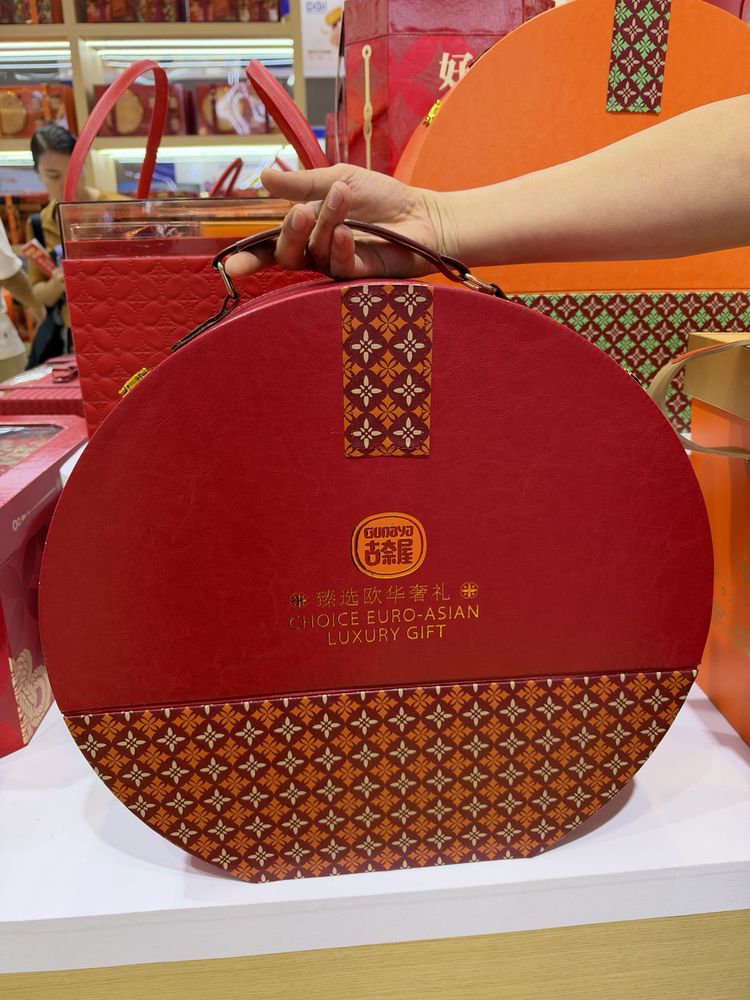
1. Choose a shape around the food assortment
Start with the packed products, including their individual containers, rather than the outside dimensions of an attractive sample. Record each item's size, weight and orientation. A tea-and-snack set, a confectionery selection and a jar-based hamper can need very different internal layouts.
A rounded outline creates a distinctive front view, but its widest outside measurement does not describe the rectangular space available inside. Ask for a layout drawing showing the actual product positions, partitions and clearance. Compare that arrangement with a conventional rectangular option before approving the visual concept.
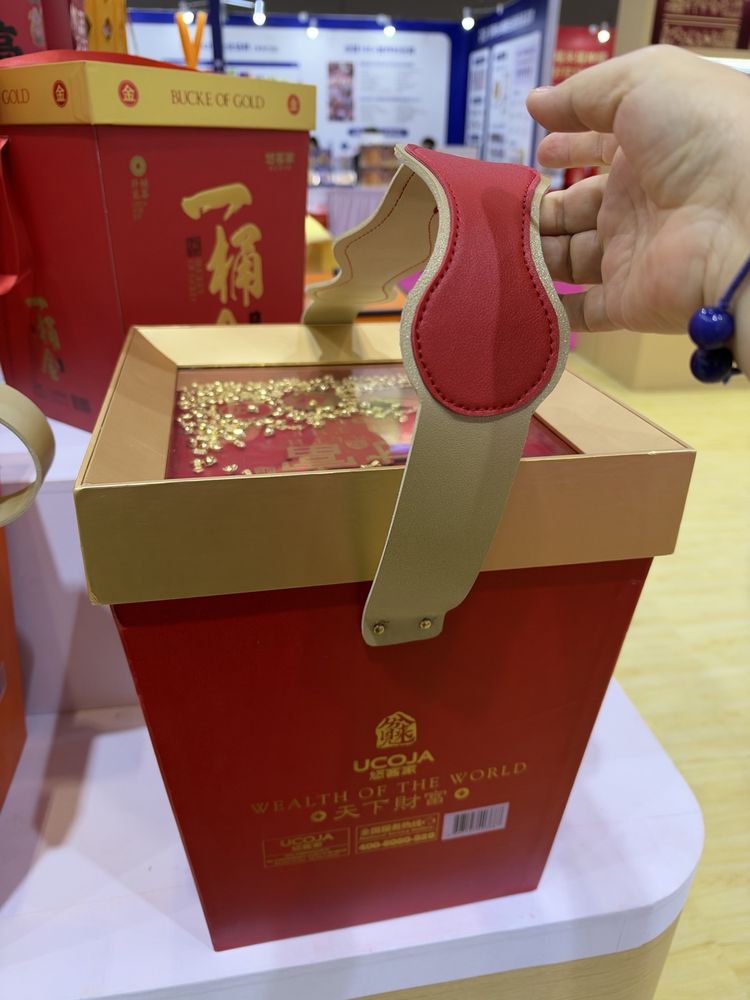
2. Specify the handle and its attachment together
For gift boxes with handles, the grip is only one part of the carrying system. The attachment points, surrounding board, base and closure all need to work with the filled pack. A wide strap may feel different in the hand from a narrow ribbon; neither proves a particular load rating.
Review a sample loaded with the intended contents. Check grip comfort, tilting, movement at the attachments and whether the handle obstructs the opening. Ask the supplier to agree a relevant carrying test and acceptance criteria. Do not approve a heavy food gift set using an empty display sample alone.
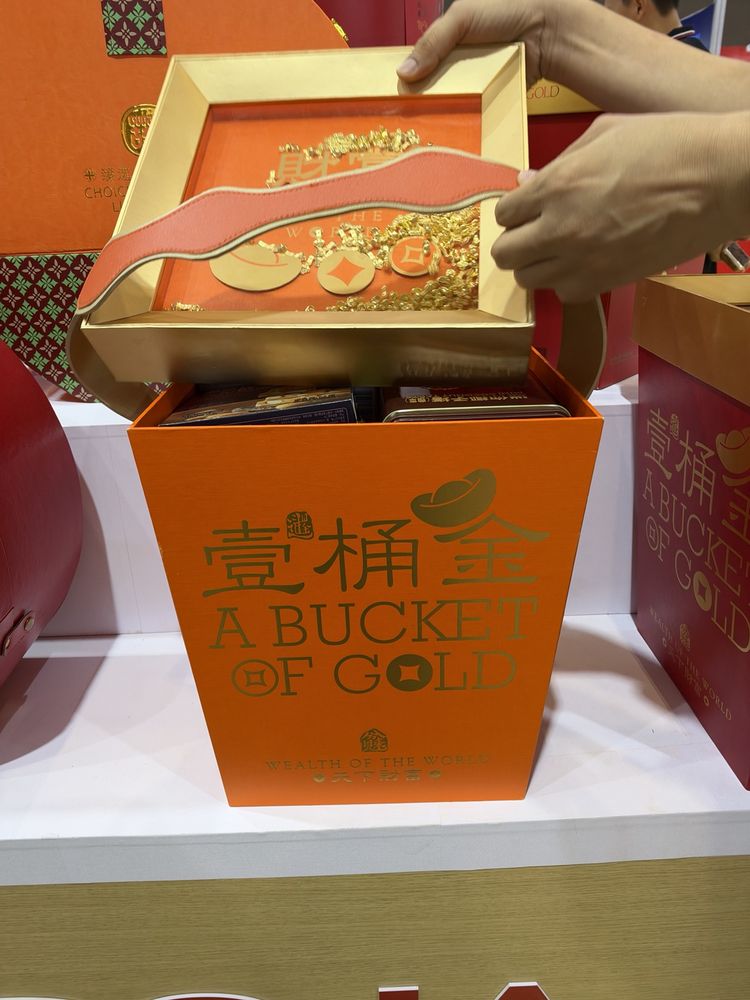
3. Map the opening sequence before adding decoration
Food gift packaging should let the recipient understand what to lift, release or remove. The orange example illustrates why the lid and strap must be reviewed together: a prominent carrying element can occupy the same space as the opening action.
Walk through the full sequence with a prototype: put the box down, move the handle, open the lid, remove the first item and close it again. Also ask the packing team to fill the sample. A presentation that looks impressive but is awkward to assemble may add avoidable work during a seasonal launch.
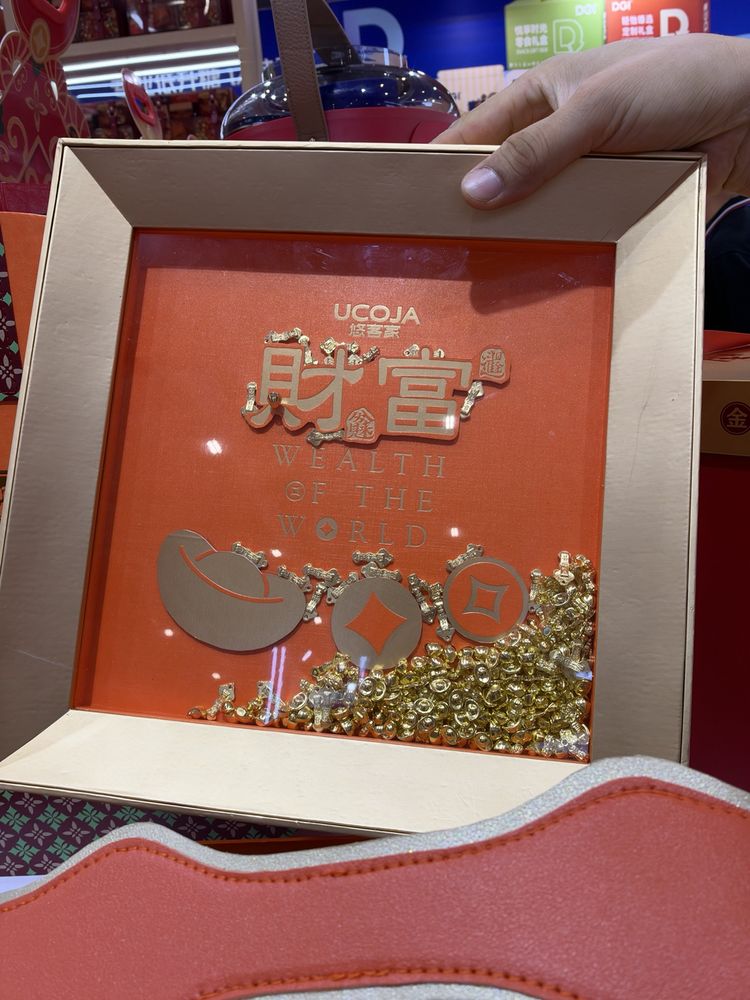
4. Decide what a clear panel is meant to show
A transparent panel can reveal products or display a separate decorative composition. These are different design decisions. In the photographed lid, the visible artwork and decorative pieces form the presentation itself; the photograph does not establish the panel material or a food-contact function.
If your brief calls for a product window, show the supplier exactly which item should remain visible. Request a sample review for glare, scratches, product movement and the appearance of the pack when partly emptied. Keep decorative elements separate from the food-contact specification.
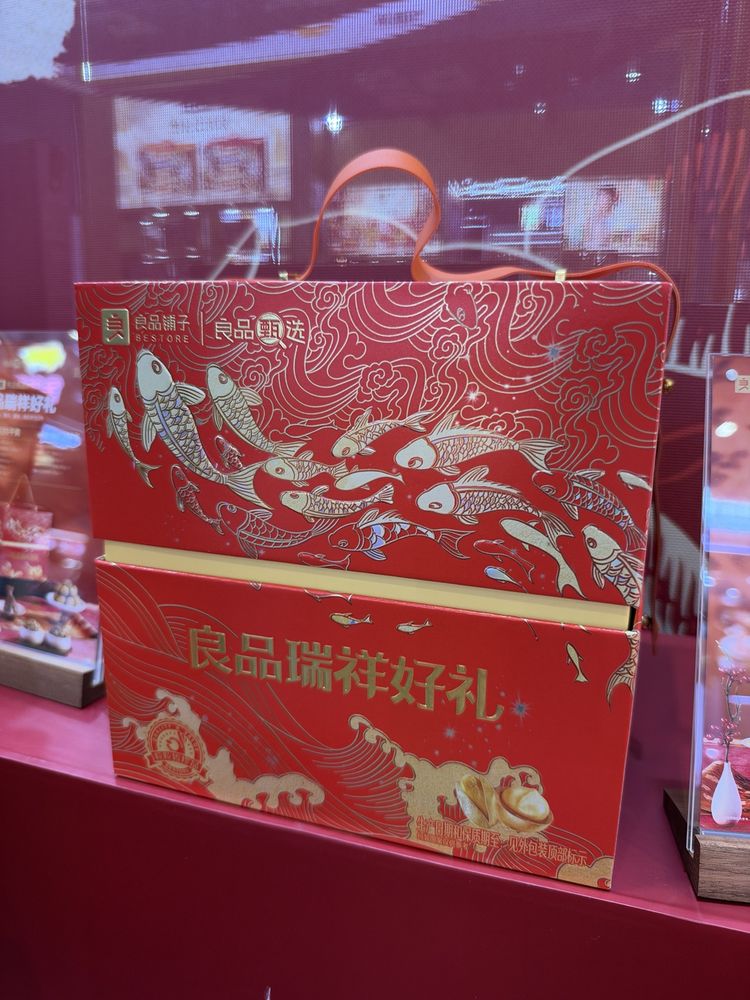
5. Build a clear hierarchy for festive artwork
Chinese New Year packaging can combine strong colour, cultural motifs and gifting messages. The design question is how these elements work at the intended viewing distance. In a crowded display, a detailed pattern and several large messages may compete for attention.
Choose one main message, then assign secondary roles to patterns, product information and gifting copy. Review an actual-size printed proof, including side panels. For export collections, confirm the intended language and audience rather than assuming that one visual treatment communicates equally well in every market.
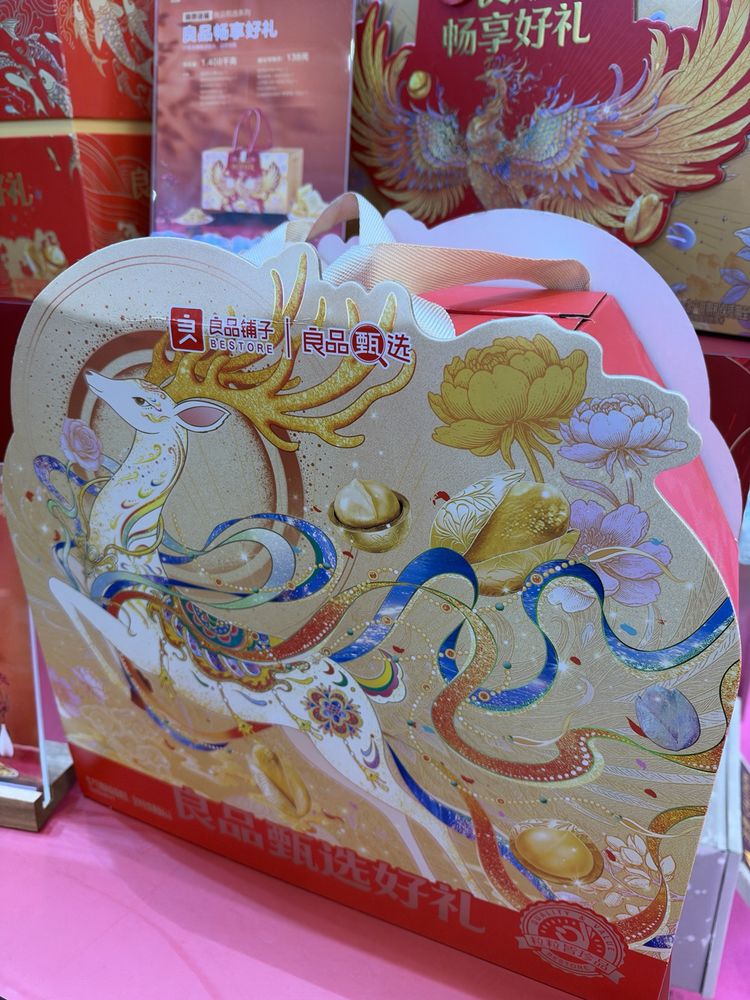
6. Check the practical cost of a shaped front
A decorative cut-out can create an individual silhouette while leaving a simpler product container behind it. The deer example offers a useful starting point for discussing this approach, without needing to copy its branded artwork.
Inspect projecting edges, attachment areas and the space needed around the assembled pack. Include the protective outer carton in the review. A front panel that is satisfactory on a display table may require a different packing arrangement for distribution. Use an original illustration and confirm the approved cutting outline before production.
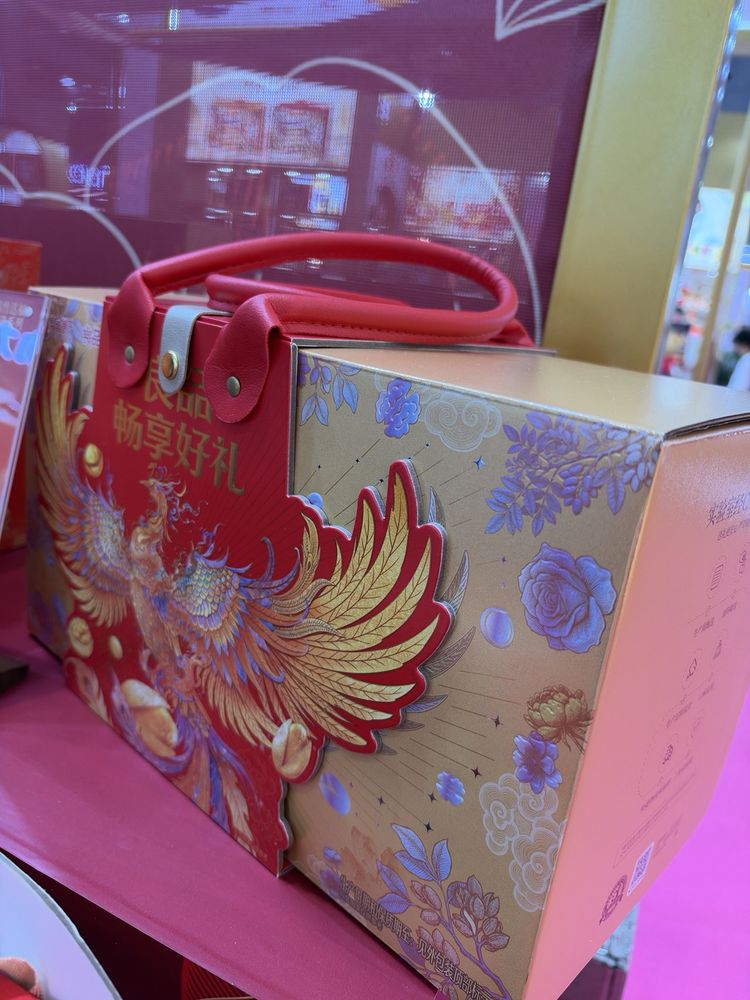
7. Review the design from the side as well as the front
Luxury gift packaging is often approved from a front-facing image. The phoenix example shows why an angled view matters: the handle, projecting artwork and side panel occupy different planes.
Check where fingers fit, whether handles fold down, and whether the artwork interferes with packing or opening. Ask for front, side, top and open views of the proposed sample. Use the same approved version for structural review and artwork approval so that a late graphic change does not conceal an attachment or fold.
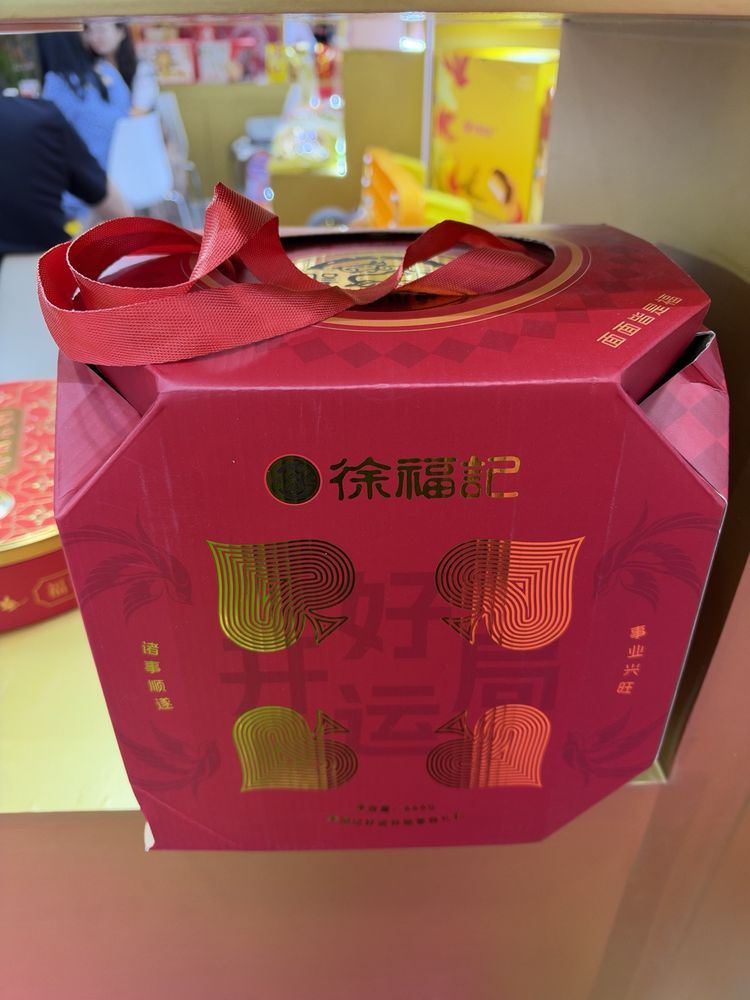
8. Compare the complete pack, including distribution
A faceted gift box can offer a recognisable outline, but shape alone is not a purchasing specification. Compare candidates using the same contents, packing method and delivery route.
Review product protection, packed dimensions, units per outer carton and the amount of assembly required. If material reduction or easier separation is a priority, include those goals in the brief and ask for a component breakdown. Mixed handles, panels and decorative finishes need assessment; a paper-based appearance alone does not demonstrate recyclability.
A practical brief for your packaging supplier
| Information to provide | Decision it supports |
|---|---|
| Product list, individual pack sizes and total filled weight | Internal layout, base and handle review |
| Retail, hand-delivered or shipped gifting format | Presentation and protective packing requirements |
| Preferred shape, opening method and handle style | Structural prototype and assembly review |
| Artwork, languages and finish references | Print proof and visual hierarchy |
| Food-contact arrangement and destination market | Identification of the components requiring supporting documentation |
| Order quantity, delivery destination and required launch date | Project-specific quotation and scheduling discussion |
Frequently asked questions
Which handle is best for a food gift box?
There is no universal choice. Compare grip comfort, attachment design, filled weight and how the handle affects opening. Confirm suitability with the actual packed sample rather than selecting by appearance alone.
Does a decorative gift box need to touch the food?
Not necessarily. Food may sit in separate inner packs. Specify which components touch food and request documentation appropriate to those components and the destination market. A decorative outer box does not establish food-contact suitability.
Are the photographed designs available as Holidaypac products?
They are presented here as design references. Contact Holidaypac with your own artwork, product requirements and preferred structure to discuss an original packaging project; the photographs do not establish availability or a manufacturing relationship with the brands shown.
Can a handled gift box be used for parcel delivery?
Do not assume that a presentation box is sufficient for parcel distribution. Review protective outer packaging and appropriate testing for the packed products and intended shipping route.
Develop your original gift packaging with Holidaypac
Holidaypac is a custom paper packaging and cardboard display manufacturer founded in 2010. We approach a new brief by connecting product needs with a clear, purposeful design. Our philosophy, “From nature. Back to nature.”, is a starting point for discussing material choices and unnecessary components; environmental claims must be supported for the actual specification.
Send your product dimensions, filled weight, quantity, target market and preferred visual direction. Use the examples above to explain the features you like, then develop a structure and artwork that belong to your own brand.
Discuss your gift packaging with Holidaypac