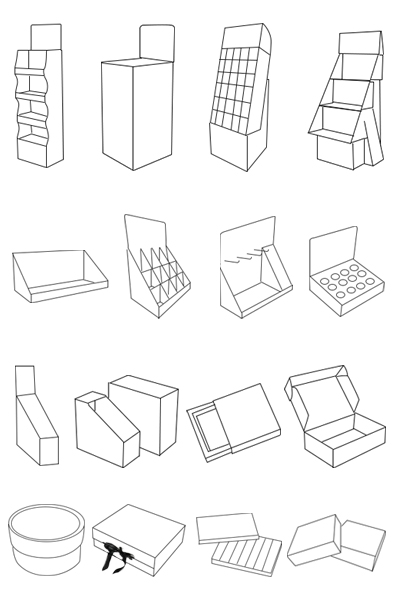
Welcome to Holidaypac Cardboard Display and Packaging Factory!
Blog

Snack cardboard displays: why they matter more than you think - Holidaypac

Holidaypac Nov 17,2025

Snack cardboard displays: why they matter more than you think


If you sell snacks in a store, at a trade show, or in a pop-up booth, snack cardboard displays are one of the simplest tools you can use to get more people to actually pick something up and buy it.


When I say snack cardboard displays, I mean those freestanding or countertop stands, dump bins, pallet displays, and branded boxes made from corrugated cardboard that hold chips, candy, protein bars, nuts, and other grab-and-go products. They sit in high-traffic spots and quietly do the job of a sales assistant:

  • Catch the eye
  • Explain what’s special
  • Make it easy to grab and go

Studies on in-store displays show that when you move snacks out of regular shelves and into well-designed displays, you can significantly increase impulse purchases and total sales.


In this guide, I’ll walk you through:

  • Types of snack cardboard displays you can actually use
  • How to design them so they don’t collapse or look messy
  • Marketing strategies for stores, events, and trade shows
  • Real benefits, real challenges, and where the trends are going

I’ll keep it practical, so you can read this and immediately get ideas for your next rollout or campaign.


What exactly are snack cardboard displays?

Let’s start with a simple definition.

Snack cardboard displays are temporary or semi-permanent structures made from cardboard that present snacks in a focused, branded way. They’re a type of POP display, which means Point-of-Purchase display – any unit placed where customers decide what to buy, usually inside the store rather than outside.


Why cardboard?

  • It’s cheap compared to metal, wood, or acrylic
  • It’s light, so staff can move it without calling the warehouse
  • It’s easy to print on, so your logo, colors, and message stand out
  • It can be recycled or made from recycled material

Because of this mix of low cost and high flexibility, snack cardboard displays are popular in:

  • Supermarkets and convenience stores
  • Club stores and cash-and-carry
  • Trade shows and food fairs
  • Seasonal pop-up shops and events

Think of them as physical “ads” that also hold product.


Types of snack cardboard displays for stores and events


There isn’t just one style. Different snack cardboard displays work better in different places. Let’s break down the main types you’re likely to use.
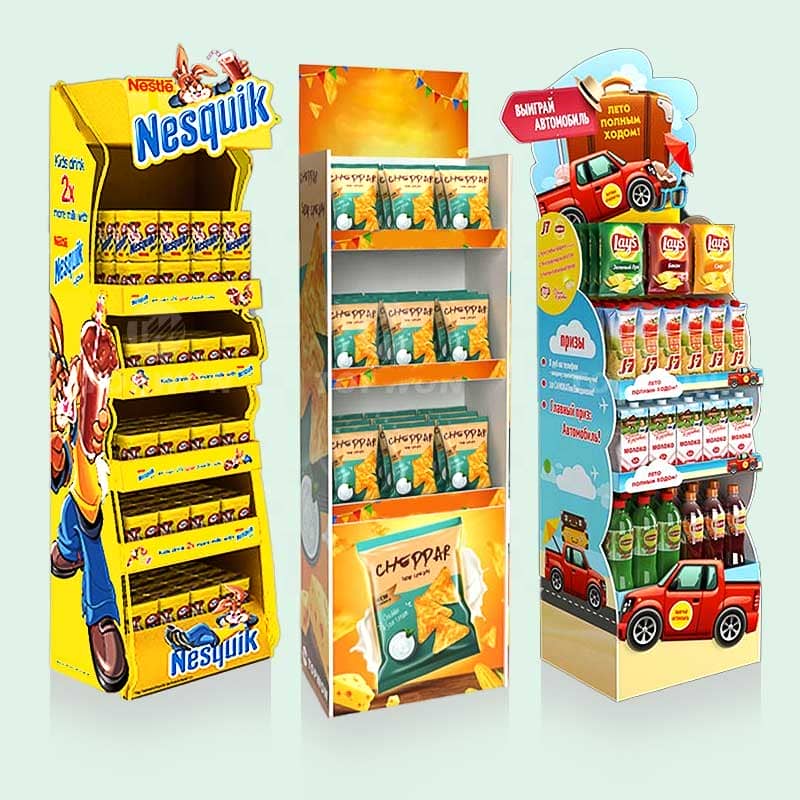
 

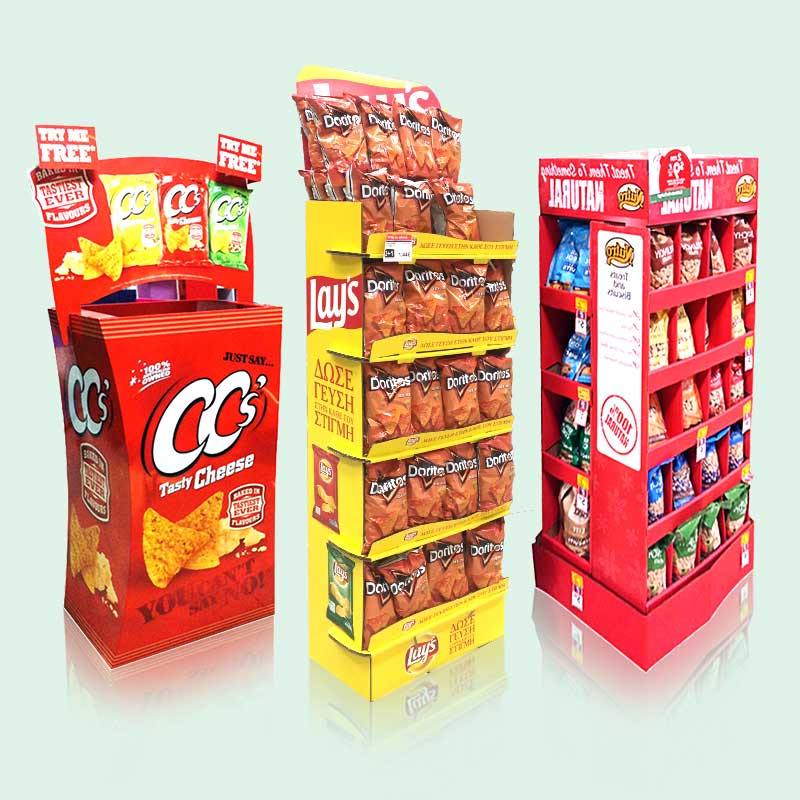
snack cardboard Floor displays

1. Floor displays


Floor displays are tall, freestanding structures you place in the aisle, at the end of a gondola, or near the entrance.

They usually have:

  • Multiple shelves or “buckets” of snacks
  • A big header with branding
  • Side panels for graphics and messaging

Why floor displays work

  • High visibility. Because they stand on their own, they interrupt shoppers’ walking path and catch attention from a distance.
  • Room for story. You have enough space for a hero image, a slogan, and maybe a quick benefit like “High Protein” or “No Added Sugar”.
  • Perfect for launches and seasonal offers. New flavors, limited editions, and holiday packs all look more important on a dedicated stand.

If you and I walk into a supermarket and see a bold, full-color stand loaded with chips in a new flavor, it feels special compared to a few bags squeezed into the snack aisle.
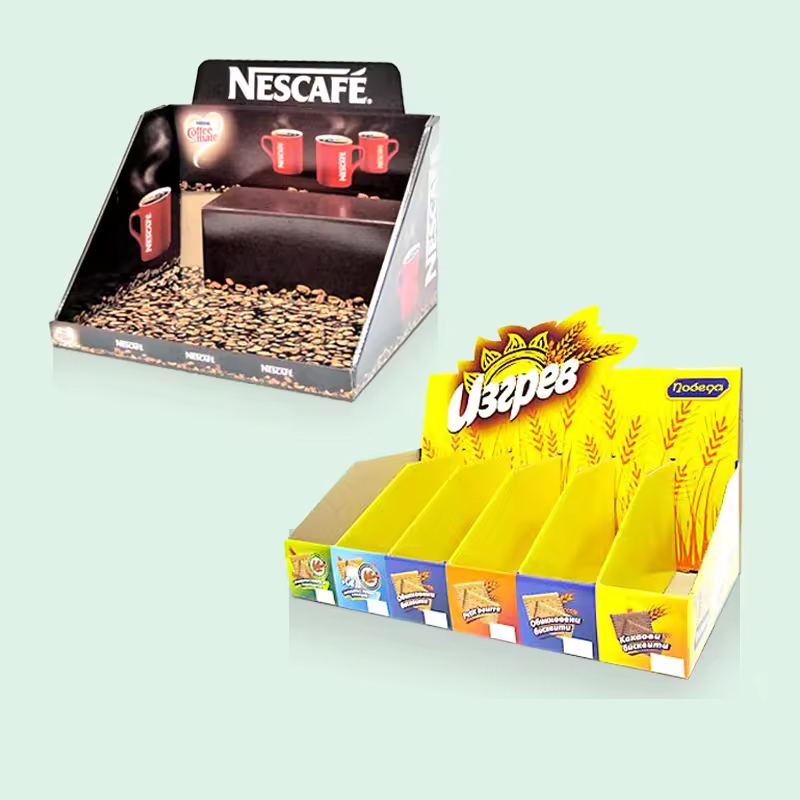
 

snack cardboard Counter displays - Holidaypac

2. Counter displays


Counter displays are small units that sit on checkout counters, service desks, or coffee bars.

They’re designed for impulse buying – quick, low-risk purchases people add at the last second.

Typical products here:

  • Mini chocolate bars
  • Mints and gum
  • Small bags of nuts or trail mix
  • Single protein bars, cookies, or energy shots


Why counter displays are powerful

  • Zero extra floor space. You turn unused counter space into selling space.
  • Long viewing time. Customers often wait in line, staring at the counter. Your display is right in front of them the whole time.
  • Perfect for upselling. If you place snacks that match what people already buy (coffee + cookie, energy drink + protein bar), you make it easier to say “yes” to one more item.

If you run a small store or café, a few well-chosen counter displays can make a surprising difference in daily revenue.
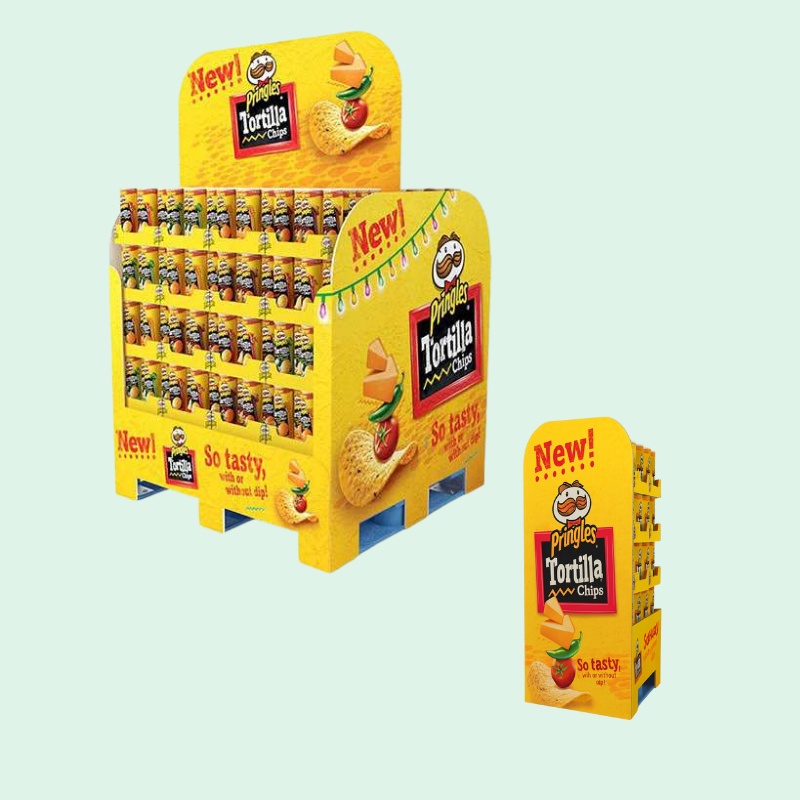


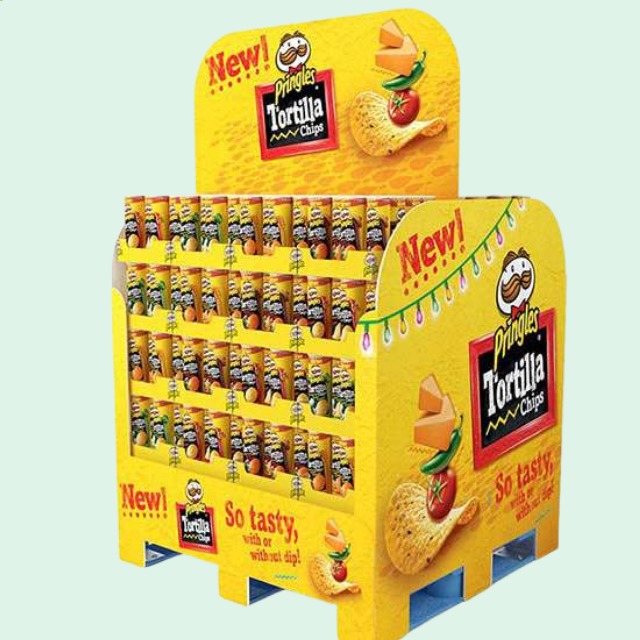
snack cardboard Pallet Display - Holidaypac

3. Pallet displays


Pallet displays sit on a full or half pallet and are common in big retail chains and club stores.

Sometimes they’re pre-packed at the factory, wrapped, and shipped “ready-to-sell” so store staff only need to cut the wrap and roll it into position.

Why brands love pallet-style snack cardboard displays:

  • Bulk impact. A whole pallet of snacks instantly signals “value” or “stock up now”.
  • Easy logistics. One pallet in, one big visible block of product on the floor.
  • Great for promotions. Large price tags and big graphics communicate deals clearly, even from across the aisle.

If your snack line includes big family packs or multipacks, pallet displays are often the best way to show them.
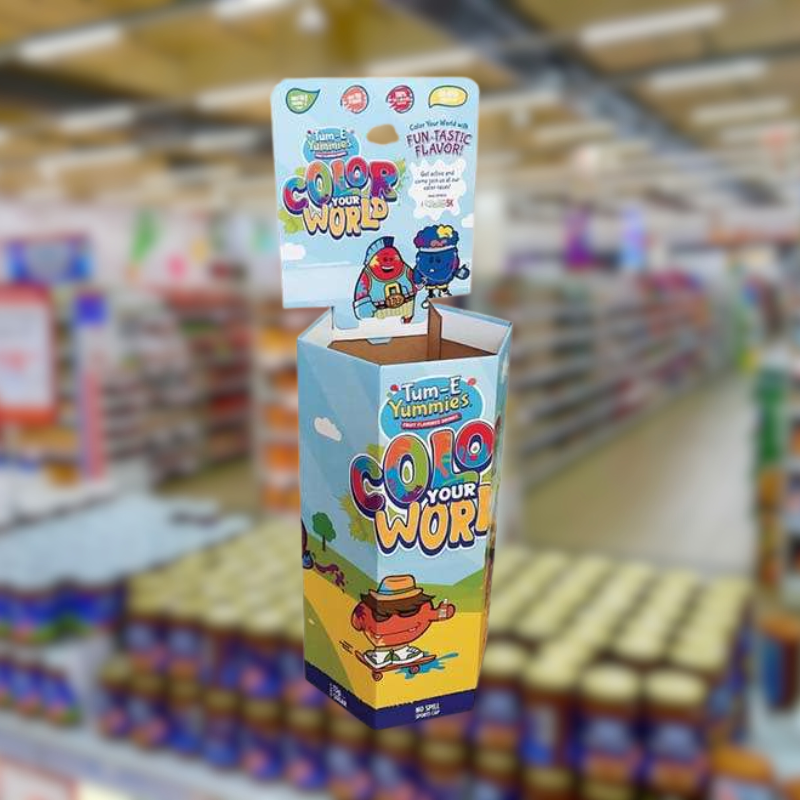
 

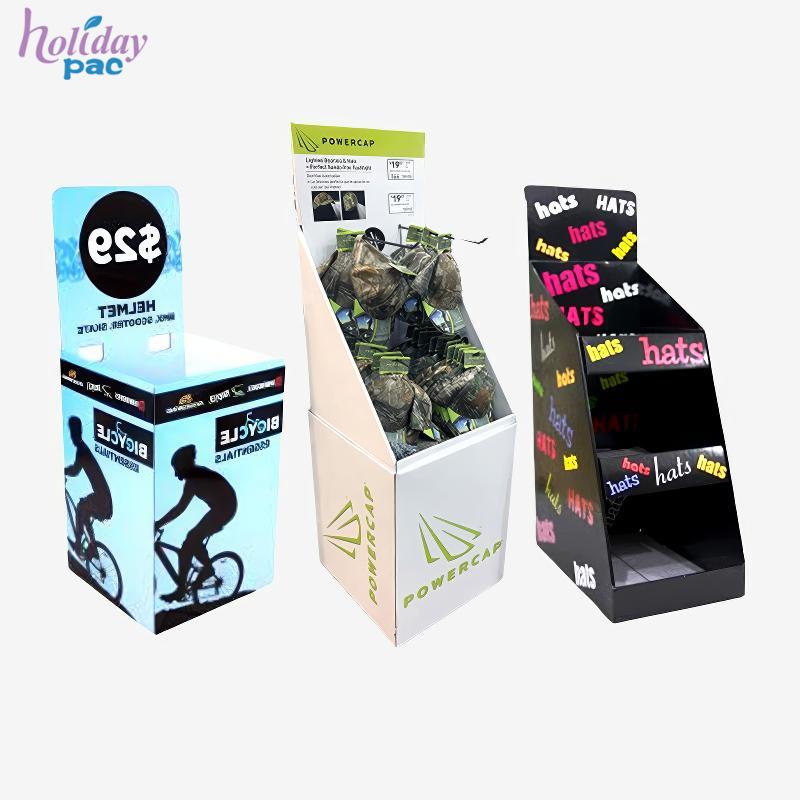
snack cardboard Dump Bin - Holidaypac

4. Dump bins


A dump bin is an open bin or box where snacks are literally “dumped” in a loose way.

It looks a bit messy on purpose.

Why? Because that “treasure hunt” feeling can trigger bargain-hunter behavior. Customers dig around, feel like they’re discovering deals, and often end up grabbing more than they planned.

Dump bins work well for:

  • Clearance or discounted snacks
  • Limited flavor trials
  • Small packs at low price points

The key is to keep the bin from looking too messy or empty. An over-stuffed bin can look chaotic, and an almost empty one looks abandoned.


5. Event displays and pop-up stands


For trade shows, festivals, and food fairs, brands often use event-focused snack cardboard displays. These might be:

  • Branded back walls and towers
  • Sampling stands with shelves
  • Small PDQ units (PDQ = “Pretty Darn Quick” or “Product Displayed Quickly”, a ready-to-display tray or box) for handouts or giveaways

At events, you need to stand out in a crowded hall. Cardboard displays help because:

  • They’re light to ship and easy to assemble on site
  • You can customize them for that specific event theme or season
  • They can double as storage and display at the same time

If you attend food trade shows, having a clean, well-branded snack cardboard display system makes your booth look more professional and more inviting.


6. Digital add-ons


Not all displays are “just cardboard” anymore.

Some brands combine snack cardboard displays with digital screens, tablets, or projected content.

This can be as simple as:

  • A tablet looped with short snack videos
  • A small screen showing recipes or pairing ideas
  • A QR code that links to a discount, game, or loyalty program

Digital elements help when:

  • Your snacks have a story (origin, health benefits, sustainability)
  • You want to collect data through sign-ups or scans
  • You need to change promotions often without reprinting everything


How to design snack cardboard displays that actually work


Now let’s talk about design.

A nice mockup on a screen is one thing.
A real unit standing in a busy store is another.

To make snack cardboard displays work in real life, you and your team need to think about both structure and visuals.


Start with clear objectives


Before you design anything, ask a few simple questions:

  • What is this display for?

                New launch?

                Seasonal promotion?

                Everyday visibility?

  • What do I want shoppers to do?

                Try a new flavor?

                Trade up to a bigger pack?

                Add one more item at checkout?

  • Where will it stand?

                Near the entrance?

                In the snack aisle?

                At the counter?

                At an event booth?

This might sound basic, but it’s easy to skip. When the goal is fuzzy, the design usually ends up fuzzy too.


Structural design: strong, stable, simple


Structural design means how the display is built: the shape, the supports, the way the shelves slot together.

For snack cardboard displays, structure needs to:

  • Hold weight without sagging
  • Survive shipping and handling
  • Be easy for staff to assemble and refill

Many brands run load-bearing tests and basic stress tests on sample units to check that shelves don’t bow and joint areas don’t tear when fully stocked.


If you’re working with a display supplier, ask them for:

  • A physical sample, not just a 3D render
  • Clear assembly instructions (ideally step-by-step photos or a QR video)
  • A realistic maximum load per shelf

Simple usually beats complicated.
A display that can be built in 5 minutes without tools is far more likely to be used correctly in real stores.


Visual design: colors, hierarchy, and clarity


Visual design is everything shoppers see:

  • Colors
  • Brand logo and product photos
  • Headline and supporting text
  • Price communication

Research shows that consistent use of brand colors and simple, strong visuals help customers find and remember products more easily.

Here’s a practical framework you can use:


1. One clear hero message


At the top, have one short line that answers:
“Why should I care?”

Examples:

  • “Protein-Packed Snacks for Busy Days”
  • “New Spicy Flavor – Limited Time Only”
  • “Better-For-You Snacks Under 100 Calories”

2. Clean product photography


Show the actual pack and, if possible, the snack itself. People want to see:

  • Portion size
  • Texture (crispy, chewy, crunchy)
  • Flavors (nuts, chocolate, fruit)

3. Smart color choices


Match your brand, but also think about the store:

  • High contrast between background and product
  • Seasonal colors for holiday or event themes
  • Avoid colors that blend into the store fixtures too much

4. Readable from a distance


At least:

  • Big headline on the header
  • Medium product name on shelves
  • Small fine print only where necessary

If I squint at the display from 3–5 meters away and still get the main message, it’s probably strong enough.


Functionality and ease of use


Design isn’t just about shoppers. It’s also about staff.

A good snack cardboard display is:

  • Fast to assemble
  • Easy to restock
  • Not painful to move around

In retail environments where labor is tight, complex displays often end up mis-built or half-empty. Simple designs that “just work” get better compliance and better sales.

Think about details like:

  • Can staff refill without bending too low or reaching too high?
  • Are the shelf lips high enough to stop packs falling off, but not so high that products are hidden?
  • Does the footprint leave enough room for trolleys and traffic?

When you do your first pilot, listen to staff feedback. They see what really happens during busy hours.


Using snack cardboard displays in your marketing strategy


Snack cardboard displays don’t live on their own.

They’re part of your broader marketing plan, both in stores and at events.


In-store strategy: placement, bundles, and promotions


Here are some practical ways to plug displays into your in-store marketing:


1. Place displays where people naturally pause


Research on in-store displays shows that locations like entrances, aisle ends, and main walkways drive more attention and interaction.

Good spots:

  • End caps near related categories (chips near drinks, nuts near beer)
  • Next to promotion islands (game nights, movie nights, back-to-school)
  • Near checkout for small, easy-to-add items

2. Use them to tell a simple story


Examples:

  • “Game Night Snacks” – chips, dips, popcorn all together
  • “Office Fuel” – bars, nuts, and drinks in one stand
  • “Kids’ Treat Corner” – smaller packs, bright colors, clear prices

3. Tie in price promotions


You can use snack cardboard displays to highlight:

  • Multi-buy offers (2 for $5, 3 for the price of 2)
  • New flavor trials (intro price)
  • Loyalty card deals

Clear, large price communication helps reduce hesitation and triggers action.


4. Cross-merchandise


Put snacks in displays near products that match:

  • Chips near beer and soft drinks
  • Protein bars near sports drinks or fitness equipment
  • Sweet snacks near coffee machines

This feels natural to shoppers and increases basket size.


Events and trade shows: turning displays into magnets


At events, snack cardboard displays help you do three things:

  1. Stand out visually in a crowded hall
  2. Organize samples and stock neatly
  3. Communicate your brand in seconds to people walking past

You can:

  • Use tall towers or back walls as a giant “business card” for your brand
  • Set up sampling stations with trays integrated into the display
  • Print QR codes that link to digital catalogs, recipes, or B2B inquiries

Live elements like short demos, tasting sessions, or small games around the display make people stop and give you time to talk.

Real-time engagement and measurement

If you want to go a bit deeper, you can treat displays as mini “labs”.

Some ideas:

  • Track how long people spend near the display (dwell time)
  • Measure sales with and without a display in the same store
  • Test different messages or colors in different locations

Retailers and brands that keep testing and adjusting their displays based on real data see more stable improvements over time, not just during one promotion.

You don’t always need fancy tech. Even simple store audits and sales comparisons before and after a display rollout can tell you a lot.


Benefits of snack cardboard displays you can’t ignore


Let’s recap the main reasons snack cardboard displays are such a common tool in retail and events.


1. Cost-effectiveness


Cardboard is relatively cheap.

Compared with metal racks or custom wooden fixtures, you can:

  • Produce more units for the same budget
  • Change designs more often (seasonal graphics, limited campaigns)
  • Run small tests without a huge investment

This is especially helpful for smaller brands or for short-term promotions.


2. Lightweight and portable


Because displays are light, you can:

  • Ship them flat-packed
  • Move them easily inside the store
  • Use them for events, then reuse the same structures in other locations

This flexibility means you’re not locked into one layout. If a display works better near the entrance than in the back aisle, staff can simply roll or carry it over.


3. Customizable and on-brand


Snack cardboard displays can be fully printed with:

  • Brand colors and logos
  • Product photography
  • Seasonal graphics
  • QR codes and simple infographics

Consistent branding across packaging, displays, and digital channels helps shoppers recognize you faster and remember you longer.

You can also create:

  • Different layouts for small stores vs big stores
  • Co-branded displays for key retail partners
  • Special versions for health-oriented, premium, or discount channels

4. Boosting impulse buying and product visibility


A big part of snack sales is impulse.

When you move products from crowded shelves into focused, well-positioned snack cardboard displays, you:

  • Pull them into the shopper’s central field of view
  • Reduce the “search time” needed to find them
  • Make it easier to grab a pack and move on

Research on in-store displays shows that eye-level and checkout placements are particularly effective at driving unplanned purchases, especially for small, affordable items like snacks.

5. Versatility in different marketing contexts


Snack cardboard displays are at home in:

  • Grocery chains
  • Small convenience stores
  • Gas stations
  • Trade shows and food fairs
  • Pop-up events and seasonal kiosks

You might use the same basic structure with different prints:

  • “Summer BBQ Snacks” in June
  • “Back-to-School Lunchbox Ideas” in September
  • “Holiday Treats” in December

That keeps your in-store presence fresh without starting from zero every time.

6. Environmental benefits (when done right)


Many snack cardboard displays are made from recyclable or recycled board.

When combined with water-based inks and minimal plastic lamination, they can be a more sustainable alternative to plastic or metal fixtures.

Eco-conscious shoppers notice this.

If your brand has strong sustainability messaging, aligning displays with that promise helps reinforce credibility. Just make sure you’re honest about what’s actually recyclable in the local context, so it doesn’t feel like greenwashing.


Common challenges with snack cardboard displays (and how to handle them)


Of course, snack cardboard displays aren’t perfect. Let’s look at the main problems and how you can reduce them.


1. Durability and damage


Cardboard can get:

  • Bent
  • Torn
  • Soft in humid conditions

Heavy packs, frequent restocking, or rough handling during shipping can damage weak points like shelf edges and joints.

What you can do:

  • Use corrugated board with the right strength for the load
  • Reinforce high-stress areas (bottom shelf, corners, header joint)
  • Run basic tests before mass production
  • For long-term or outdoor displays, consider mixing cardboard with plastic or metal in critical parts

2. Balancing cost and sustainability


Clients often say, “We want it eco-friendly, but we also want it cheap.”

This can be tricky.

Recycled or certified board, eco-friendly inks, and plastic-free finishes may cost a bit more. If price pressure is very high, brands sometimes slip back into less sustainable options, which can confuse customers who expect greener choices.


My suggestion:

  • Decide what sustainability level is non-negotiable
  • Communicate clearly with your supplier
  • Use simple icons or small messages on the display to explain your choices


3. Psychological triggers vs over-promising


Snack cardboard displays often use psychological triggers like:

  • Scarcity (“Limited Time Only”)
  • Urgency (“This Week Only”)
  • Social proof (“Best-Seller”)

These tools can work, but if you use them too aggressively or without real backing, shoppers may stop trusting you.


Aim for honest triggers:

  • Actual limited editions
  • Real best-seller data
  • Genuine time-bound offers

Also, keep the message simple, but not empty. If the display only shouts “New! Amazing! Best!” without saying why, it can feel like noise.

4. Competition and display clutter


In some supermarkets, everywhere you look there’s another display shouting for attention.

This display overload can make it hard for any one unit to stand out.

Ways to stand out without shouting:

  • Use a clean, minimal design when others are busy and loud
  • Focus on one product or one clear story instead of trying to show everything
  • Use unusual shapes (within structural safety limits)
  • Tie into a strong, relevant theme (health, local ingredients, global flavors, etc.)

5. Logistics and setup problems


Even the best design fails if:

  • The store never sets it up
  • Staff assemble it incorrectly
  • Products don’t arrive on time

A common headache is poor communication between brand, display supplier, and retailer about dimensions and setup. That leads to rework and wasted cost.

To reduce this:

  • Share clear technical drawings and photos
  • Provide short assembly guides or QR video links
  • Confirm the exact location with the retailer before production
  • Where possible, ship “ready-to-sell” pre-packed units that need minimal setup

Future trends shaping snack cardboard displays


The world of snacks is changing, and displays are changing with it.


Health and wellness snacks front and center


More people are looking for snacks that feel “better for me” – higher protein, less sugar, more natural ingredients, plant-based options.

Snack cardboard displays will reflect that by:

  • Highlighting clean labels and key benefits (“10g Protein”, “No Artificial Colors”)
  • Using lighter, fresher color palettes and natural imagery
  • Grouping “better-for-you” ranges together so shoppers can see the options at a glance

If you work with health-focused snacks, your display should look different from a pure candy island.


Global flavors and local stories


Snacks with global flavors – think Korean spices, Mexican chili-lime, Japanese matcha – are growing more common. At the same time, local origin stories still matter.

Snack cardboard displays can:

  • Use maps, small icons, or short lines of copy to show origin
  • Group global flavor ranges under one theme
  • Connect local ingredients with global style (“Local peanuts, world-class chili spice”)


More interactive and sustainable designs


Retail display trends point toward:

  • Interactive elements like AR filters, games, or recipe ideas triggered by QR codes
  • Sustainable materials with clearer messaging about recycling and responsible sourcing

Cardboard is naturally well-placed here. You can:

  • Keep the main structure in cardboard
  • Add small digital touchpoints rather than giant screens
  • Print simple guides like “Fold here and recycle” or “This display is made from X% recycled board”


Technology integration and personalization


Looking ahead, we’re likely to see more tech around snack cardboard displays:

  • Digital shelf labels synced with your display
  • Small screens that change content by time of day (morning vs evening snacks)
  • AI-driven recommendations in apps linked to QR codes on the display

You don’t need to do everything at once. But even simple steps like QR codes for recipe ideas or loyalty sign-ups can make your display do more than just hold product.


Flexible, modular solutions


Retailers and brands want flexibility.

Instead of one rigid design, many are moving toward modular snack cardboard displays where:

  • Shelves can be repositioned
  • Headers can be swapped for different campaigns
  • Units can be combined to form larger islands or split into smaller stands

This helps you reuse base structures while updating the look for each season or retailer.


A simple checklist for your next snack cardboard display

To wrap up, here’s a practical checklist you can use the next time you plan snack cardboard displays for stores or events.


1. Objective

  •  Do I know the main goal of this display?
  •  Do I know exactly where it will stand?

2. Structure

  •  Has the display been tested for weight and stability?
  •  Can staff assemble it quickly without tools?
  •  Are there clear instructions or a QR code video?

3. Visuals

  •  Is there one clear headline that explains why the snack is special?
  •  Can I understand the main message from 3–5 meters away?
  •  Are product images clear and appetizing?
  •  Are colors consistent with my brand but still visible in the store?

4. Shopper experience

  •  Can shoppers reach products easily?
  •  Is the display placed where people naturally pause?
  •  Does the layout encourage impulse buying without feeling pushy?

5. Operations

  •  Is restocking simple during busy hours?
  •  Have I aligned on size and location with the retailer or event organizer?
  •  Do I have a plan to measure sales or engagement?

6. Sustainability

  •  Is the material choice aligned with my brand’s sustainability promises?
  •  Is it clear how the display should be disposed of or recycled?

If you walk through this checklist and adjust based on what you learn in real stores, your snack cardboard displays will get better with each rollout.


They’re not just pieces of printed board.
They’re quiet, hard-working sales tools.


And when you design them with intention, they can make a real, measurable difference to how many snacks customers pick up, try, and come back to buy again.

Crafting with Heart Guided by Nature

Crafting with Heart Guided by Nature

I am Cassie as the founder of Holidaypac.Over 20 years journey in global trade and in packaging industry I have been guided by a single inquiry: How can we balance commercial utility with the vitality of nature? Inspired by the wisdom of Zhuangzi "All things and I are one" I established our mission: "Born from Nature Returning to Nature." To us packaging is not merely an industrial product but a cultural vessel. We weave the soulful aesthetics of Eastern tradition with Western functional minimalism allowing ancient wisdom to breathe within modern commerce.

Click To Share

Your OEM/ODM Cardboard Display and Packaging Supplier from China

Table of Contents

Contact Us

Holidaypac Packaging and Display Co.LTD Facebook link twitter youtube linkedin Pinterest Instagram Tiktok
Xiamen Holiday Paper Product Co.,Ltd

Contact us

Please fill out the form below and we will get back to as soon as possible

Send Email Chat with Whatsapp