QSR · Drive-Thru · Ghost Kitchen
Fast Food Boxes Built for the Speed of Service
From the first burger off the grill to the last fry handed through the drive-thru window, fast food packaging has roughly 90 seconds to arrive at the counter, survive the bag-flip, and reach the guest still hot, still tidy, and still on-brand. Holidaypac engineers fast food boxes for that exact 90-second window — auto-lock bottoms that snap shut one-handed, grease-resistant coatings that keep kraft fibres clean, and stack geometry that lets a line cook grab and close without looking. Two factory lines run dedicated QSR tooling, with offset, flexo and digital print all under one roof.
Auto-Lock Bottom Grease-Resistant Coating Microwave-Safe Options PFAS-Free Available Bag-Friendly Geometry MOQ from 1,000 pcs
Featured Fast Food Box Range
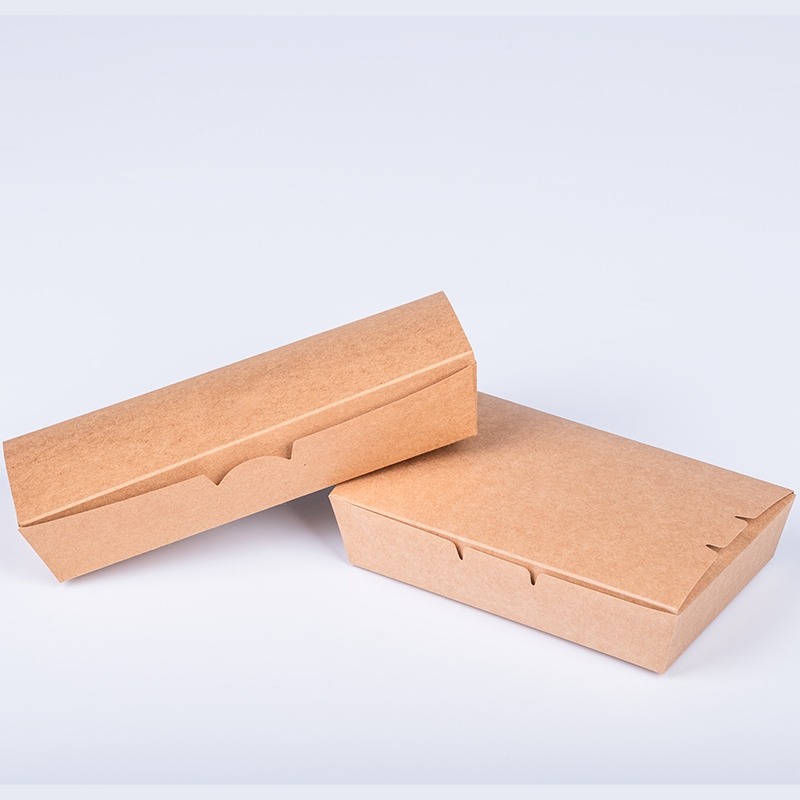
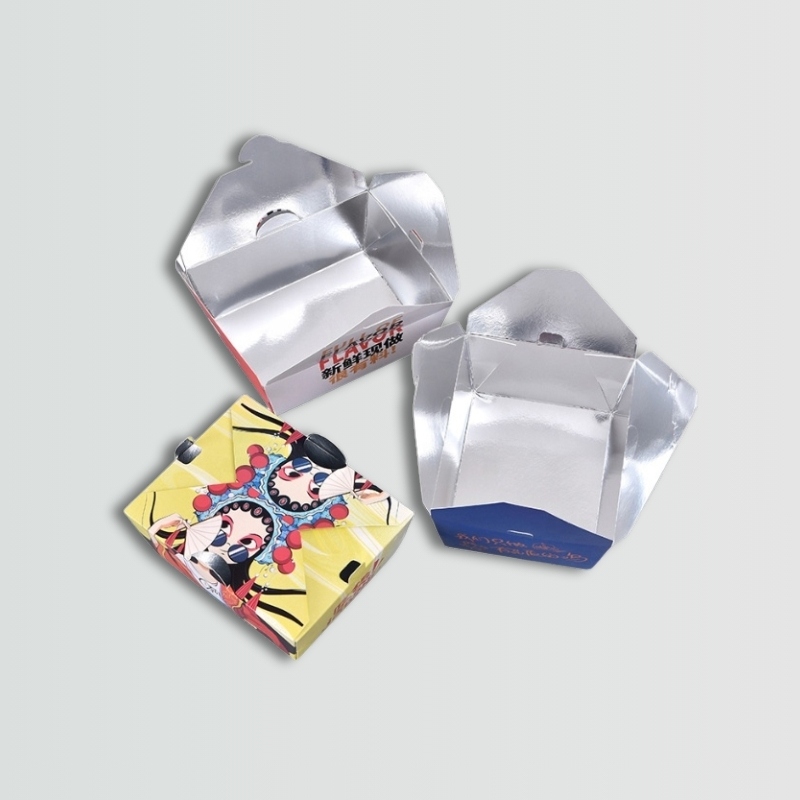
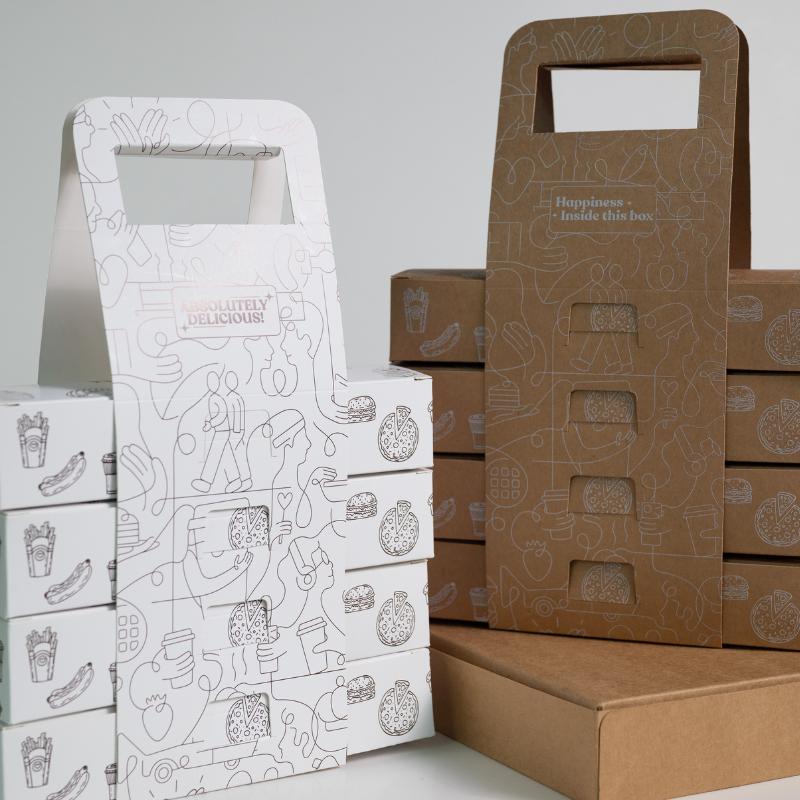
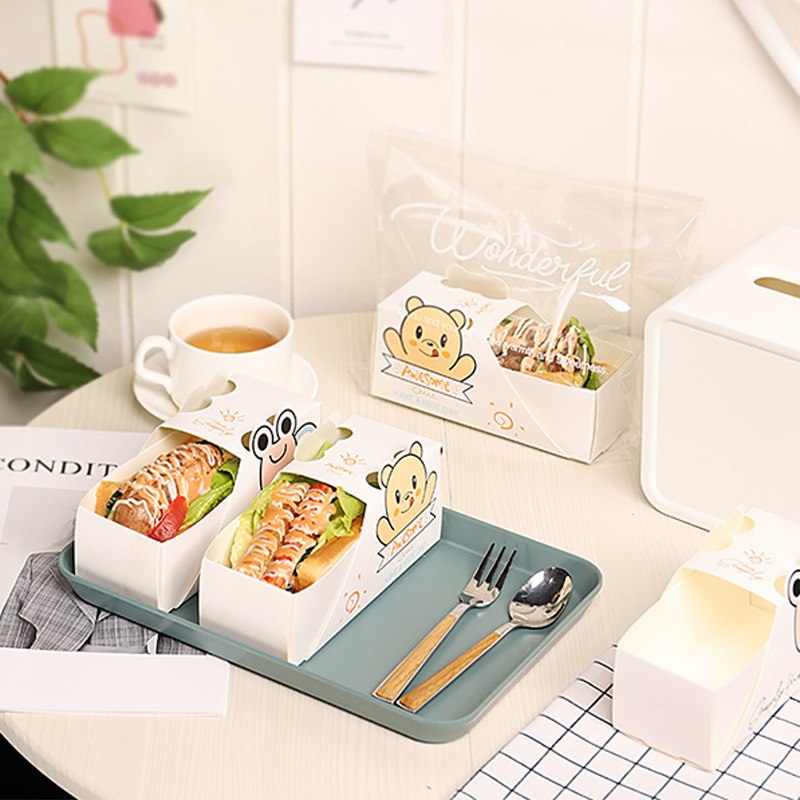
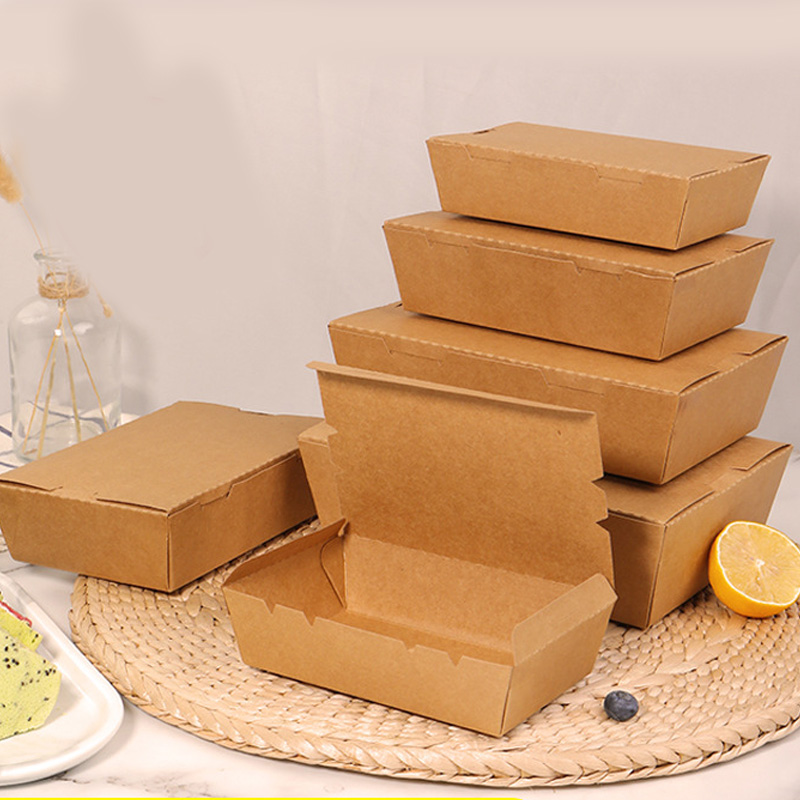
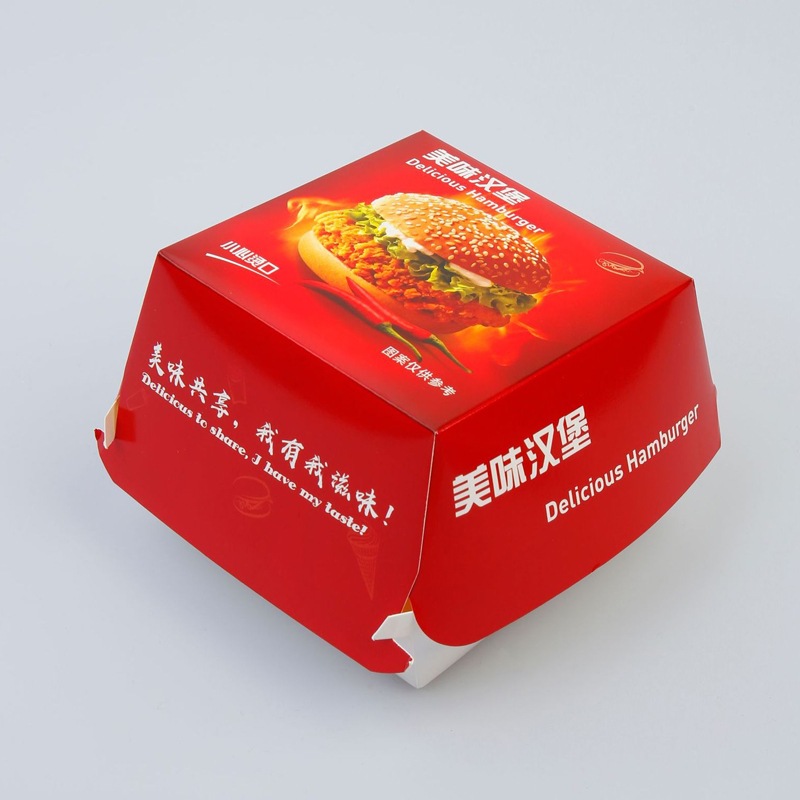
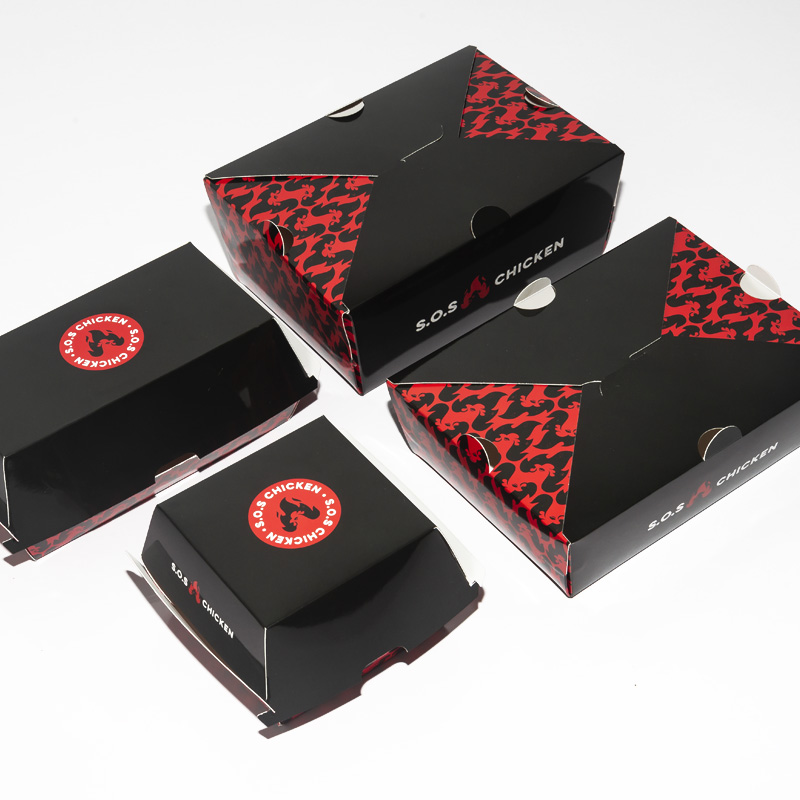
Eight working SKUs that QSR chains, ghost kitchens, food trucks and delivery brands order on repeat. Click any image to view substrates, coatings, dieline options and live MOQ pricing.
Four Engineering Choices That Survive the Bag
A fast food box is judged inside a paper bag, not on a styled tabletop. Every Holidaypac fast-food spec is tested in a real bag-drop rig before it ships.
01
Aqueous Coating, PFAS-Free
Water-based grease barrier replaces older fluorochemical liners. Passes Kit 5 oil-resistance and stays food-contact safe in California, New York, Washington and EU markets.
02
Auto-Lock Crash Bottom
Snaps closed one-handed during a 90-second rush. No tape, no glue dot, no fold-and-tuck — the line cook keeps a hand free for tongs.
03
Microwave-Safe Spec
Kraft + aqueous build with no metallic foil sticker. Customers reheat leftovers without sparks, and your brand earns a second meal moment at home.
04
Bag-Friendly Geometry
Footprint matched to common 8x4x10 and 12x7x17 takeout bags. Three boxes nest sideways, fries clip in vertical, drink stays upright. No crushed lid on arrival.
Inside the Holidaypac Fast-Food Workshop
Nine real production stories from the lines that print and die-cut your fast food boxes every day. Skim them — you will spot the difference between a packaging supplier and a packaging partner.
1. The 90-Second Test, Run Every Friday
Each Friday afternoon, the QA team in our Dongguan plant clears the staff canteen and stages a mock drive-thru. A timer starts the moment a tray of hot food leaves the simulated kitchen window. The box has to be folded, filled, bagged, dropped from waist height into a delivery bag, carried 30 metres, and opened — all in under 90 seconds without a fry escaping or a lid popping. Specs that fail get pulled from the next sample run. It is the most low-tech rig in the building, and it has caught more design flaws than any laboratory tester.
2. Why We Killed Off Fluorochemical Coatings in 2023
Two years before California's AB 1200 took effect, we discontinued PFAS-based grease barriers across the entire fast-food range. The switch was painful — aqueous coatings cost more, dry slower, and demand a different press setup. But the math was clear: customers exporting to North America, the EU and Australia were going to be blocked from shelf in 2024 anyway. Today every Holidaypac fast food box is PFAS-free by default. Compliance documentation is filed in your account before the first carton ships.
3. The Burger Clamshell That Took 11 Prototypes
A US ghost-kitchen brand wanted a clamshell that opened flat for plating photos but closed firm enough to survive a 30-minute Uber ride. Eleven dielines later, we landed on a hinge with a 0.4 mm crease offset and a friction-fit tab that snaps without glue. The brand now ships 280,000 units per month and reports a 73% drop in lid-pop complaints. The dieline lives in our library and is shared with any client running a similar burger build.
4. Why Fry Cups Need a Wider Top, Not a Wider Base
It seems counter-intuitive, but a wider mouth on a fry cup matters more than a wider base. Customers grab fries from the top with a thumb-and-finger pinch — if the opening is too narrow, knuckles bruise the cup wall and the print scuffs in the bag. Our standard fry-cup template carries a 12 mm flare at the rim. It costs nothing on the diecut and saves your brand from looking creased on arrival.
5. The Drive-Thru Stack Test
On every QSR project, before we approve mass production, we stack 40 filled boxes the way a kitchen actually stacks them — not the neat lab pyramid, but the lopsided real-world tower a Friday-night closer leaves on the warming shelf. The box has to hold its shape under the lopsided load for at least 12 minutes (the longest realistic dwell time before service). If it sags more than 4 mm, we add a flute upgrade or a corner reinforcement. Most customers never see this test. They just notice their boxes do not collapse.
6. Replacing Plastic Clamshells, One SKU at a Time
Ghost-kitchen and delivery-only brands now lead the global shift away from PP and EPS clamshells. We have helped 41 brands across 14 countries make the switch in the last 18 months. The replacement spec is almost always the same: virgin or recycled kraft, aqueous lining, auto-lock base, soy-based ink. Cost lands within 4–7% of the plastic original; sustainability story lands worth far more on the brand front.
7. The Microwave-Safe Question Nobody Asks Until It Is Too Late
Half the meals sold in fast-food boxes get reheated at home. If a single foil sticker, hot-stamp foil logo or metallic ink is sitting on that lid, the customer sees sparks in their kitchen. The story spreads on TikTok within hours. Holidaypac flags every metallic finish during artwork review and offers a microwave-safe spec sheet with each quote. It takes one extra step in pre-press. It saves your brand from a 200,000-view embarrassment.
8. The Bag Geometry Conversation We Have With Every QSR
Before we cut tooling, we ask for a sample of the takeout bag the box will live inside. A 12x7x17 standard bag treats a 9-inch box very differently from a 7-inch box. We measure the diagonal, simulate three-box loading, and recommend a footprint that nests cleanly. Customers who send the bag spec save themselves the cost of a second tooling cycle. We have shipped tooling once and only once for 96% of clients onboarded since 2023.
9. The Holidaypac Brand Promise on Fast Food
Holidaypac is a brand-value factory, not a price-list factory. On fast food specifically, that means: we publish the bag-drop result, the Kit-test number, the basis weight, the coating chemistry and the recyclability claim before you order — not after. We invite QSR buyers to walk the line. We share the dieline source files at the end of the project so you are never tooling-locked. Speed of service is your brand promise to your guest. Speed of decision is our brand promise to you.
12 Questions Fast Food Buyers Ask Before Ordering
Pulled directly from the last 200 enquiries logged by our fast-food account team. If your question is not here, our quote page has a free-text field — we read every line.
Are Holidaypac fast food boxes PFAS-free?
Yes. Every fast-food SKU we run today uses an aqueous (water-based) grease barrier. We discontinued fluorochemical coatings in 2023, two full years ahead of the California ban. Migration test certificates ship with each order at no extra charge.
What is the smallest order I can place?
Standard MOQ is 1,000 pieces for stock dielines and 3,000 pieces for custom shapes. Burger clamshells, fry cups, snack boxes and takeaway boxes all run at 1,000 pieces with full-colour print. Sample lots of 50–100 pieces can be quoted for tasting events or pop-ups.
Will the kraft surface bleed grease through to the bag?
No, provided the spec is correct. Our standard fast-food kraft carries a Kit 5 grease rating with the aqueous coating, which holds back canola, peanut and beef tallow oils for over 30 minutes. For deep-fried products longer than that (e.g. fried chicken family bucket), we recommend the Kit 7 upgrade at +6%.
Can I print on the inside of the box?
Yes. Inside-print is increasingly common for QSR brands using the lid as a brand moment. We use food-safe soy-based inks rated for direct food contact under EU 1935/2004 and FDA 21 CFR 175. Coverage above 60% adds a small ink-cost surcharge.
How does the auto-lock bottom compare to a glued seal?
An auto-lock crash-bottom snaps shut in under one second with no glue, no tape and no second hand. A glued seal is stronger but takes 4–6 seconds to assemble per box and adds adhesive cost. For drive-thru speed, auto-lock wins. For heavy wet items over 1.5 kg, glued seal still has its place.
Are these boxes microwave-safe?
The kraft + aqueous base spec is microwave-safe up to 110 °C / 230 °F. The constraint is decoration: any metallic foil stamp, holographic finish or metallic ink will spark. We flag this during pre-press and recommend a microwave-safe-only finish kit on request.
What turnaround can I expect from artwork to delivery?
Standard lead time from approved artwork is 14–18 days for offset-printed runs of 5,000–50,000 pieces, plus shipping. Express slots (10 days) open most months and carry a 12% surcharge. Re-orders of an existing dieline can ship in 9–11 days.
Do the boxes nest cleanly in standard takeout bags?
Yes, when we know your bag size in advance. Send us the bag dimensions during quoting and we will recommend a box footprint that nests three-up in a 12x7x17 bag or two-up in a 8x4x10. We have nest-tested 14 of the most common bag specs used across North America, the EU and Australia.
Can the same box take a hot burger and a cold salad?
Technically yes, but we recommend a dual-spec strategy. A burger box vents steam through micro-perfs in the lid; a salad box needs a sealed lid to stop dressing leakage. Running one SKU for both leaves one of them under-served. Most QSR brands carry two dielines and switch by menu item.
Will the colour match my brand exactly?
Pantone-matched colour is standard on offset and flexo runs at no extra fee. Spot colours are mixed in-house and read on a spectrophotometer to within Delta-E 2.0. Digital reprints carry a slightly wider tolerance (Delta-E 3.5) and are best for short runs under 3,000 pieces.
Are sample boxes free?
Plain-stock samples in any of our standard fast-food dielines are free, including international air freight on the first request. Custom-printed pre-production samples carry a flat tooling fee that is fully refunded against your first production order.
What sustainability claims can I print on the box?
You can print “recyclable,” “PFAS-free,” “FSC-certified” (when FSC stock is selected), and “made from XX% recycled content” with full backing documentation. We do not encourage “compostable” claims unless industrial-compostable certification (BPI, OK Compost) is in place — that is a separate spec and a separate certificate.
Fast Food Packaging Glossary — Buyer Cheat Sheet
- Auto-Lock Bottom
- A diecut base that snaps shut with one motion. Saves 4–6 seconds per assembly during peak service. Standard on most Holidaypac kraft fast-food boxes.
- Aqueous Coating
- A water-based grease barrier replacing older fluorochemical liners. PFAS-free, recyclable, food-contact safe. Standard since 2023.
- Kit Test (Kit 1–Kit 12)
- The TAPPI grease-resistance scale. Higher numbers resist more aggressive oils. Most QSR kraft runs at Kit 5; deep-fried family-bucket spec runs at Kit 7.
- Bag-Drop Test
- An internal Holidaypac test where a filled box is dropped from waist height inside a takeaway bag, three boxes deep, and inspected for crush, lid-pop and seam-burst.
- Crash Lock / Crash Bottom
- Industry alias for auto-lock bottom. Same construction, different name in different markets.
- Delta-E
- A numerical measure of colour difference. Lower numbers mean closer match. Holidaypac offset specs run at Delta-E 2.0; digital at Delta-E 3.5.
- Friction-Fit Tab
- A small diecut tab that holds a clamshell lid against a slot in the base. No glue required. Standard on Holidaypac burger clamshells with under-0.1% pop-rate in bag-drop testing.
- Soy Ink
- Vegetable-derived printing ink with low VOC emissions, food-contact safety and clean de-inking in fibre recovery. Standard across our fast-food range.
- Crash-Lock Glued Bottom
- A hybrid spec for heavy items above 1.5 kg — auto-lock geometry plus a single glue line for added shear strength. Adds roughly 4% to unit cost.
- Inside-Print
- Decoration applied to the inner face of the box, visible to the customer at unboxing. Increasingly used by ghost-kitchen and delivery-only brands as a brand moment.
- Bag-Drop Pop-Rate
- The percentage of boxes whose lid opens during the bag-drop test. Holidaypac fast-food specs hold pop-rate under 0.1% across 500-drop cycles.
More Field Notes from the Fast-Food Floor
Six additional pieces of operational reality we share with every QSR buyer who tours the plant.
10. Why Ghost Kitchens Order Differently
A ghost-kitchen brand has no signage, no shop window, no human touchpoint with the guest. The box is the brand. We see ghost-kitchen orders ask for inside-print, custom belly-bands, branded thank-you cards tucked into the lid, and QR codes linking to a feedback survey or a TikTok unboxing prompt. Compared with a brick-and-mortar QSR ordering the same volume, ghost kitchens spend roughly 18% more on packaging decoration — and they recoup it in repeat-order rate. We have built a fast-food template stack specifically for this market: same dielines, two extra print stations, faster turnaround, smaller MOQs.
11. The Single Question That Saves Most Customers $5,000
“What is the heaviest item that ever goes in this box?” Nine out of ten new fast-food clients answer with the meal type, not the gram weight. We dig deeper. A double-patty burger with two slices of cheese, one top bun, a paper liner and four ounces of fries is roughly 540 g. A chicken family bucket can hit 2.8 kg. The flute spec, the basis weight and the bottom construction must serve the heaviest item, not the average. Customers who answer this one question accurately almost never re-tool. Customers who guess often pay for a second cutting plate three months in.
12. The Truth About “Eco” Inks on Fast Food
Soy-based and vegetable-oil-based inks now print every fast-food job we run. The performance difference is invisible on the press, the cost difference is under 2%, and the recyclability story is real — soy inks de-ink cleanly in standard fibre recovery streams. What they do not do is make the box compostable on their own. A box is “industrial compostable” only when the substrate, coating, ink and adhesive are all certified together. We will tell you when the spec qualifies and when it does not. The honest answer protects your brand from a greenwashing complaint.
13. Why We Show You the Bag-Drop Video
Every new fast-food sample ships with a 20-second bag-drop video filmed on the QA bench. You see the box loaded, bagged, dropped from 1.0 m onto a hard floor, lifted, carried 30 m, and re-opened. The video is shot from two angles. There is no music, no edit, no voiceover. We send it because the only honest way to prove a fast-food box works is to show the box working. If a buyer ever asks for a louder marketing video, we politely send the boring bench video instead.
14. The Hidden Cost of a Lid That Pops Open
A lid that opens halfway during delivery costs the brand far more than the box. Industry data suggests a single “food spilled in bag” complaint reduces a delivery customer's lifetime value by an average of $43 USD. Multiply that by a 0.6% pop-rate across 10,000 monthly orders and the spec change pays for itself inside the first quarter. We hold our friction-fit and auto-lock specs to under 0.1% pop-rate in the bag-drop test, measured across 500 sample drops per dieline cycle.
15. The Holidaypac Re-Order Protocol
A re-order on an existing fast-food dieline lands at a guaranteed 9–11 working day lead time provided no artwork change is requested. We hold tooling for active customers free of charge for 24 months from last order. After 24 months we contact you before the tool moves to long-term storage; you choose whether to keep it active, archive it, or update it. No customer has ever lost a tool without warning. That sentence sounds small; in this industry, it is unusually rare.
Bring Your Fast Food Brand to Holidaypac
Send us your dieline, your bag size, and one photo of the food on the customer's tray. We will come back inside two working days with a costed sample, a bag-drop video, and a sustainability claim sheet you can put straight on the box.
Get a Costed Fast-Food Sample



;)
;)
;)