Holidaypac
 Jun 18,2026

By Cassie - Founder of Holidaypac | 20-Year Expert in Paper Packaging & Displays
|
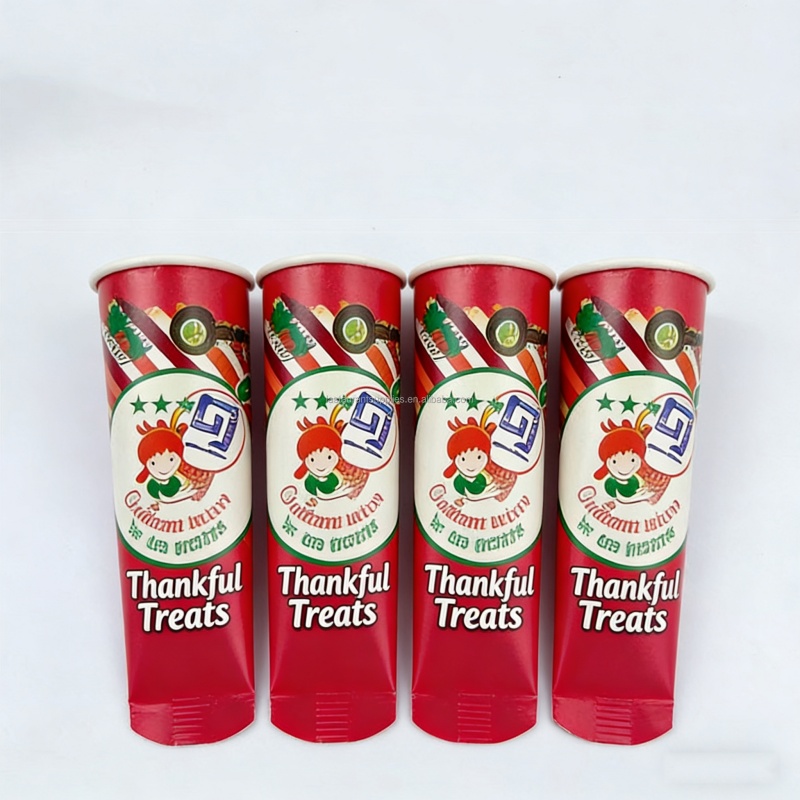
Holidaypac factory guide for frozen dessert brands The Manufacturing Process of Leak-Proof Lids for Ice Cream Paper TubesFor ice cream brands, a lid is not a small accessory. It is the final seal between frozen dessert, retail handling, delivery movement, freezer moisture, and the customer's first impression. A lid that looks good but loosens in transit can create sticky cartons, product waste, complaint photos, and a loss of trust. This buyer guide explains how Holidaypac manufactures leak-proof lids for ice cream paper tubes, from material selection and tooling to fit testing, finishing, quality control, and export packaging. |
 |
A reliable leak-proof lid for an ice cream paper tube is made by matching the lid structure, paper tube rim, coating barrier, and production tolerance as one system. Holidaypac controls this through food-grade material selection, mold and die design, rim dimension checks, lid fitting tests, freezer-condition simulation, printing and finishing control, carton protection, and batch inspection before shipment.
When a buyer sources ice cream paper tubes, the first questions are usually about size, printing, MOQ, unit price, and lead time. Those are important, but the real performance risk often appears at the lid. Ice cream is a difficult product for packaging because it moves between filling lines, cold rooms, distribution cartons, retail freezers, delivery bags, and consumer hands. Temperature changes can create condensation. Handling can compress the tube rim. A lid that is even slightly loose may open during transport; a lid that is too tight may deform the tube or frustrate customers.
For a purchasing manager, the cost of lid failure is larger than the cost of the lid itself. Leakage can stain outer cartons, create hygiene concerns, slow warehouse handling, damage product photography, and increase returns. A dessert brand may also lose the premium feeling it tried to build with custom graphics. This is why Holidaypac treats the lid as part of a complete frozen dessert packaging system, not as a generic cap bought at the end of production.
Most lid failures come from five sources: incorrect lid material, unstable lid shape, poor rim tolerance, weak barrier selection, or lack of testing under realistic cold-chain conditions. A beautiful sample made by hand may pass a desk inspection, but bulk production requires repeatable measurements. Holidaypac's factory team checks the paper tube diameter, rim roundness, lid depth, lid inner diameter, friction fit, coating behavior, and carton pressure before confirming a mass-production structure.
This practical approach fits the way Google now rewards helpful, reliable, people-first content: buyers need real manufacturing insight, not vague advertising. For brands comparing suppliers, understanding the process makes quotation discussions faster and reduces the chance of hidden risks.
The first step in manufacturing leak-proof lids is material selection. For frozen dessert packaging, a lid must be strong enough to hold shape at low temperature, flexible enough to fit the tube mouth, and safe for food-contact use according to the buyer's target market. Depending on the product concept, Holidaypac can develop paper lids, composite lids, metal lids, or other custom structures for ice cream paper tube packaging with a metal lid.
Food-contact packaging is regulated differently by market. In the United States, FDA information describes food packaging and its components as food contact substances when they are intended to contact food and are not intended to have a technical effect in the food. In the European Union, Regulation (EC) No 1935/2004 sets broad safety and inertness principles for food contact materials. Buyers should always confirm final requirements with their own compliance team, importer, laboratory, or legal adviser, especially when coatings, inks, adhesives, recycled fibers, or special barriers are involved.
From a factory perspective, the material decision affects much more than compliance paperwork. Paperboard stiffness affects lid memory. Coating selection affects moisture resistance. Adhesive selection affects edge stability. Ink and finishing choices affect odor control. A frozen dessert brand may want a soft matte surface, metallic highlight, or strong purple brand color such as Holidaypac's logo tone RGB(181, 139, 191), but those finishes must not weaken fit performance or create rubbing problems in cartons.
At Holidaypac, the material review begins with the customer's product type: hard ice cream, gelato, sorbet, frozen yogurt, push-up popsicle, or novelty dessert. The team asks about fill temperature, storage temperature, expected shelf life, filling method, whether the product is packed manually or automatically, and whether the lid will be removed and replaced by consumers. These details help the factory choose a practical material system before tooling begins.
A leak-proof lid is not created by making the cap tighter at random. It is created by matching geometry. The tube mouth, rolled rim, lid wall, lid depth, contact surface, and removal force must work together. If the lid is shallow, it may pop off when the carton is squeezed. If the lid is too deep, it may scrape the printed surface or become difficult to open. If the lid wall is too rigid, it may crack or resist natural paper movement. If it is too soft, it may lose grip after freezer storage.
Holidaypac's engineers review the tube diameter and expected tolerance before developing the lid tooling. For custom projects, the factory may adjust the paper tube wall thickness, inner diameter, top rim forming, and lid inner profile as one package. This is especially useful for brands building a premium line with custom food-grade ice cream container paper tubes, where the packaging must feel sturdy in hand while still being easy to open.
For push-up formats, the design challenge is different. The lid must protect the top surface, but the whole tube must also support the consumer's pushing motion. The paper wall, inner disc, top lid, and bottom movement should be tested together. For this reason, Holidaypac's paper push popsicle tube packaging is developed as a coordinated structure rather than a simple cylinder with a cover.
Good design also considers the customer's production reality. A lid that performs well when applied slowly by hand may not be suitable for a fast filling line. Holidaypac can adjust lid stackability, pickup behavior, edge consistency, and fitting force so the packaging works for both brand presentation and factory operation.
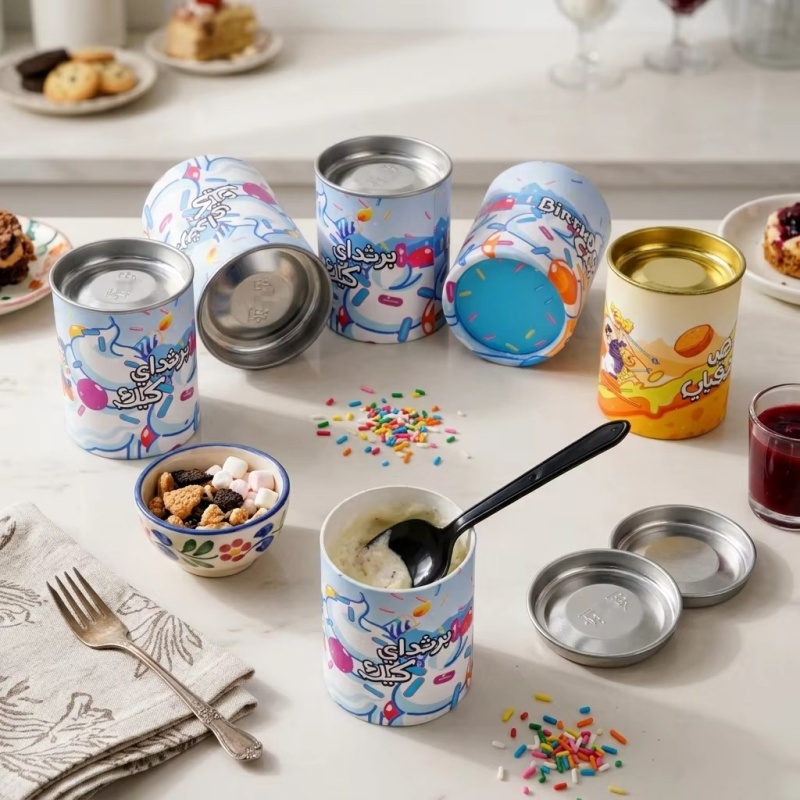
The manufacturing process begins after the buyer confirms the target tube size, capacity, lid type, artwork direction, and performance requirement. The first factory task is engineering translation: changing a buyer's idea into measurable specifications. Instead of only saying "leak-proof," the project sheet defines lid diameter, tube rim diameter, material thickness, coating, lid depth, opening force, visual finish, carton quantity, and inspection points.
For paper-based lids, forming tools are prepared to control shape consistency. For metal or composite lids, the lid profile and surface finish must be matched to the tube mouth. Tooling is checked before bulk production because small deviations can become big problems when tens of thousands of lids are packed. Holidaypac also confirms whether the lid needs embossing, debossing, foil, CMYK printing, Pantone printing, or a plain natural surface.
The paper tube body is produced through material cutting, printing, surface finishing, tube forming, edge processing, and inspection. For cylindrical packaging, printing requires careful artwork planning because the visible area wraps 360 degrees around the product. A buyer should provide dielines, logo files, color references, barcode placement, nutrition label requirements, and any mandatory claim text early in the project. Holidaypac can help review artwork for practical production risks such as small text, low contrast, metallic finish conflict, or critical graphics crossing the tube seam.
After forming, the tube mouth is checked because the lid can only be as reliable as the rim it fits. The rim must be round, smooth, and dimensionally stable. If the tube mouth is oval, rough, or uneven, even the best lid will struggle. Holidaypac pays attention to the top edge because this area is where leakage prevention, consumer touch, and visual quality meet.
During assembly and trial fitting, the lid is pressed onto sample tubes and removed repeatedly. The team observes whether the lid rocks, tilts, leaves marks, traps air, scratches print, or loses grip. When needed, tooling or material thickness is adjusted before approval. This step protects buyers from approving a beautiful sample that cannot be repeated in mass production.
Quality control for leak-proof lids should be practical. A frozen dessert brand does not only need a certificate in a file; it needs packaging that survives filling, storage, transport, shelf handling, and customer use. Holidaypac's inspection approach focuses on the conditions most likely to create buyer pain.
Dimension checks confirm that the lid and paper tube mouth remain within the agreed tolerance. Inspectors measure samples from production batches rather than relying only on the first approved sample. Fit checks test whether the lid closes evenly around the tube and whether the opening force feels suitable for retail use. Visual checks review printing, scratches, dents, stains, edge defects, and carton damage. Carton checks confirm that packing method protects the lid shape during export shipping.
For leak resistance, the test method depends on the final food and structure. Some projects require water-resistance checks, inversion checks, condensation checks, or freezer-condition simulations. The purpose is not to promise that every package can replace a sealed industrial container; the purpose is to confirm that the chosen lid structure is appropriate for the customer's real use. Honest testing language is important. Buyers should be cautious of any supplier that makes broad "100% leak-proof" claims without asking about filling line, storage condition, product viscosity, or handling method.
Holidaypac can support buyers with pre-production samples, bulk sample confirmation, photo and video updates, and inspection records. For international buyers, this reduces communication uncertainty. The buyer can check structure, artwork, lid feel, color direction, and carton packing before the full order leaves the factory.
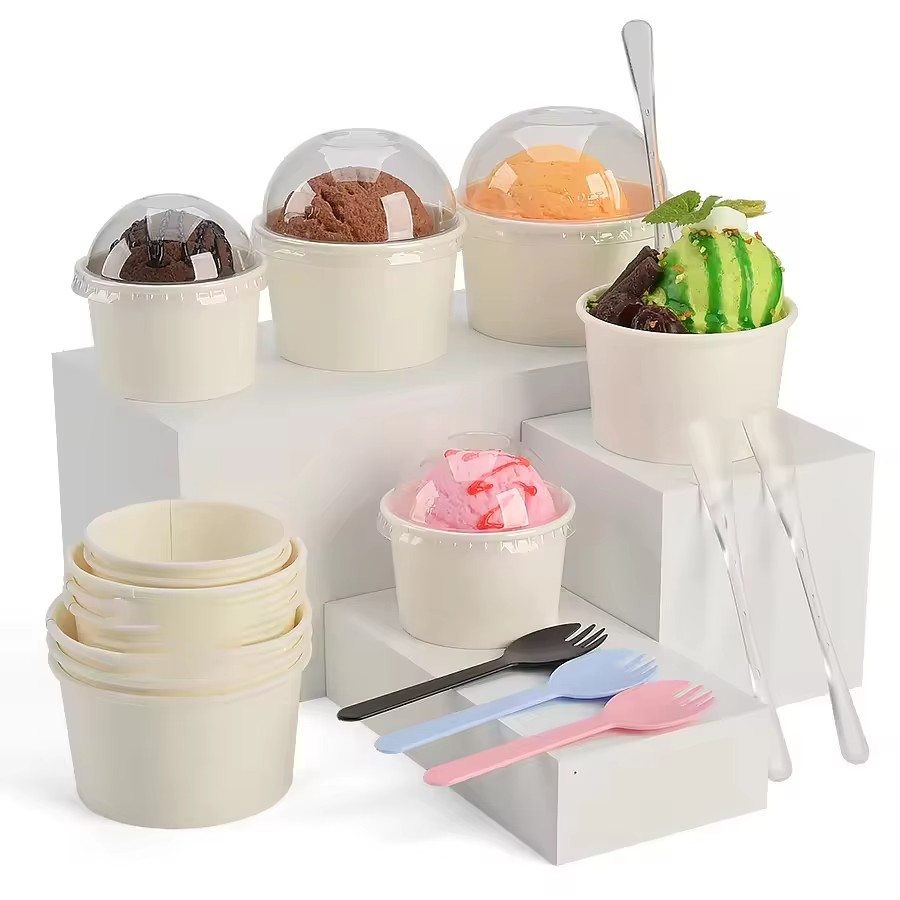
Procurement teams can save time by asking manufacturing questions early. Instead of only requesting "the lowest price for ice cream paper tubes," ask how the lid is matched to the tube, what tolerances are controlled, what material options are available, and what tests are recommended for your product. This changes the conversation from commodity pricing to risk control.
Useful questions include: What lid structures are available for my capacity? Can the lid be tested with my actual product or similar viscosity? What is the sample lead time? How many pieces are required for pre-production testing? Which coatings are suitable for frozen storage? Can the tube and lid be packed separately or assembled? What artwork file format is needed? What documents can be supplied for food-contact material review? What is the standard carton packing method for export?
If you sell through supermarkets, foodservice distributors, online delivery, or franchise stores, tell the supplier how the product moves. Packaging for a local gelato shop has different risk points from packaging for cross-border frozen logistics. Holidaypac's factory team can recommend options for frozen food box support packaging, outer cartons, and product protection so the tube lid is not forced to solve every shipping problem alone.
Holidaypac is a packaging factory, but Cassie Lan believes a factory should not think only in machines. Paper is simple, original, ancient, valuable, natural, and close to human daily life. Good packaging protects food, creates visual impact, carries culture, and gives consumers emotional value. This is why Holidaypac often says: Born from nature and return to nature.
For ice cream paper tubes, this philosophy becomes practical. The package must be accurate enough for industrial production, gentle enough for food contact, and beautiful enough to carry a brand story. A lid is a small circle of material, but it expresses balance: tight but not harsh, protective but easy to open, attractive but not wasteful. Cassie's understanding of Chinese traditional culture and Western market expectations helps Holidaypac develop packaging that feels calm, useful, and export-ready.
Ideas such as harmony between people and nature, timing, restraint, compassion, and pattern recognition are not mystical claims in the factory. They are design discipline. They remind us to choose materials carefully, avoid excessive decoration when it weakens function, listen to the buyer's real market, and create packaging that can serve both business and daily life.
Holidaypac supports OEM and ODM development for dessert brands, food manufacturers, distributors, and packaging buyers. Whether you need a new premium frozen dessert launch, a more sustainable paper tube upgrade, or a safer lid structure for existing products, our team can help turn your specification into a manufacturable package.
They can be made highly leak-resistant when the lid, tube rim, material barrier, and filling condition are designed together. The correct claim depends on product viscosity, temperature, storage, transport, and handling. Holidaypac recommends sample testing before mass production.
There is no single best material for every brand. Paper lids, metal lids, and composite structures can all work when matched to the tube and product. Buyers should compare appearance, food-contact requirements, freezer performance, recyclability goals, and budget.
Send tube size or target capacity, product type, filling and storage temperature, lid preference, artwork requirements, order quantity, destination market, and any required compliance documents. Photos or samples of your current packaging are also useful.
Yes. Holidaypac supports custom CMYK, Pantone-style color matching, matte or glossy finishes, foil stamping, embossing, debossing, and full 360-degree tube artwork. For brand colors such as Holidaypac purple RGB(181, 139, 191), physical proofing is recommended because paper, coating, and lighting affect the final visual result.
Most professional buyers request material information and food-contact documentation according to their sales market. Requirements vary by country and by material system, so buyers should confirm final obligations with their importer, testing laboratory, or compliance adviser.


Links