Holidaypac
  Oct 08,2026
A custom puzzle advent calendar box should be designed around the daily puzzle experience, not just the festive cover. Decide what the recipient opens each day, how the pieces stay separated and whether the order includes empty packaging or a fully packed set. Those decisions determine the compartment layout, artwork and sample checks.
For gift brands, puzzle publishers and seasonal retail buyers, the practical challenge is making the countdown work from the packing table to the final reveal. This guide explains how to prepare a clear packaging brief for a puzzle advent calendar.
1. Define the puzzle format first
Two useful formats are separate mini puzzles and daily sections of a larger jigsaw. In the first, each day provides a complete small activity. In the second, each day contributes to one final picture. Decide whether daily sections must join immediately or whether some pieces are intentionally held back.
Keep that decision in the written brief. Randomly dividing a larger puzzle into bags is different from planning connected daily sections. If a connected experience is promised, approve the piece-allocation map and test the sequence with the actual puzzle before designing the packaging around it.
| Format | Packaging priority | Sample check |
|---|---|---|
| Separate mini puzzles | One identifiable pack for each day | Each pack contains its complete intended puzzle |
| Sections of one larger puzzle | Reliable sequence and clear numbering | Each pack matches the approved assembly map |
| Mixed puzzle and activity set | Compartment sizes matched to different contents | Every item fits without affecting neighboring compartments |
2. Choose the countdown length and measure a filled daily pack
A 12-day and a 24-day layout create different packing requirements. Choose the length around the content and intended experience, then compare the resulting box footprint, number of inserts and filling steps. Do not assume that doubling the compartments leaves the overall package unchanged.
Measure a representative daily pack after its pieces are bagged or boxed. Include sealed edges, labels and any reference card. Loose puzzle pieces settle differently from an assembled puzzle, so the finished puzzle dimensions alone cannot establish the required compartment size.
Use the largest daily pack when reviewing fit, and check smaller packs for movement. Ask for usable internal dimensions, rather than relying only on the outer box size.
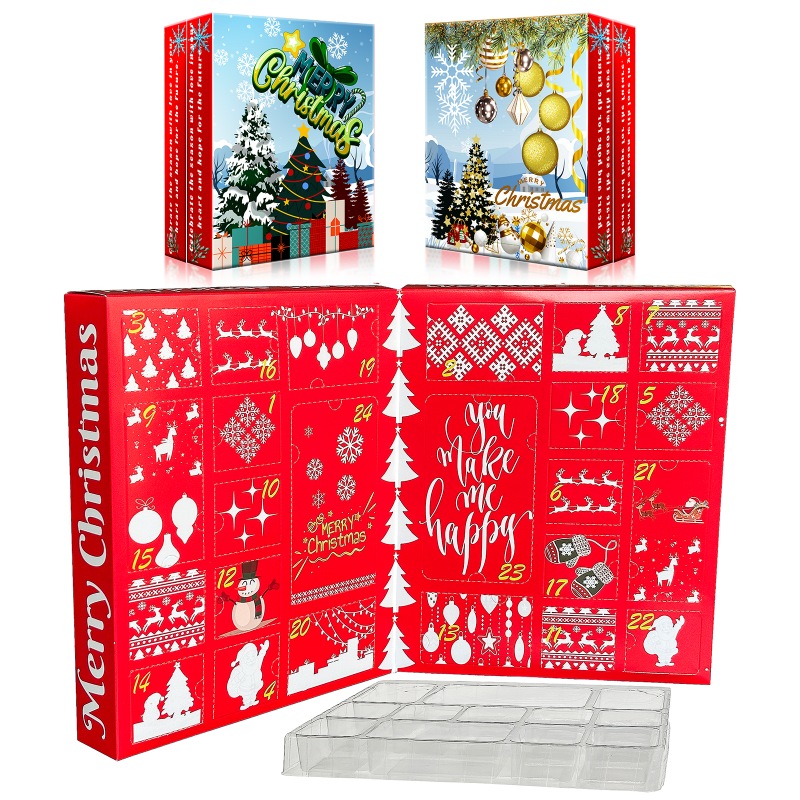
A starting point for the packaging discussion
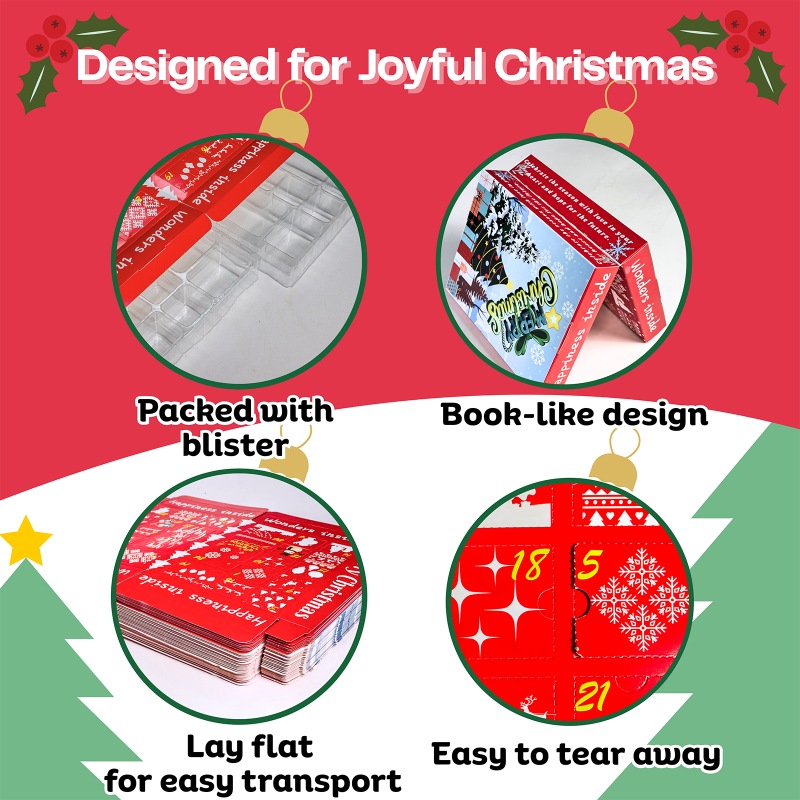
Holidaypac lists a book-style advent calendar box with 24 openings and custom printing options. Its opening format can help frame a structural discussion.
Existing Holidaypac calendar packaging shown as a structural reference. This image does not demonstrate a filled puzzle set; puzzle-pack fit needs separate approval.
3. Match doors, inserts and inner packs
Review the outer opening and the inner compartment as a pair. A pack may fit inside a cavity but still be difficult to pull through its door. Check finger access, sharp folds, divider movement and whether a torn opening exposes the next day’s contents.
Consider a separate numbered inner pack where loose pieces could migrate between compartments. Test the finished sample upright, flat and after ordinary handling. Any transport testing should use an agreed procedure suited to the packed product and shipment.
Ask which parts use paperboard, plastic or mixed materials. Specify the intended separation and disposal information before making environmental claims on the artwork.
4. Build one numbering map for artwork and packing
Create a master map linking the printed day number, compartment position and inner-pack identifier. Use the same revision for the box artwork, filling instructions and quality checks. A decorative arrangement of numbers still needs an unambiguous packing sequence.
Decide where the completed puzzle image appears. Some buyers want a reference picture; others want the final illustration to remain a surprise. Confirm that the cover, instruction card and product photographs support the same choice. Use artwork and character assets that you own or have permission to print.
Approve the opening sequence
Use a physical sample to review the relationship between the printed numbers and the compartments. The goal is a calendar that is understandable to both the filling team and the recipient.
This catalog image illustrates packaging, not a confirmed puzzle-piece specification.
5. Separate packaging supply from puzzle production
A quotation for custom advent calendar boxes does not necessarily include the jigsaws. Specify who supplies the puzzles, sorts the daily portions, seals the inner packs, fills the calendar and checks the finished set. Identify who resolves a missing or incorrectly packed portion before the order is approved.
Review one fully packed sample from the first opening to the last. Reconcile all daily packs against the packing list, inspect the final assembled puzzle where applicable, and confirm how the finished calendar fits its shipping carton.
6. Prepare a brief that suppliers can quote consistently
- Countdown length and separate-puzzle or progressive-puzzle format.
- Measured daily packs, piece allocation and reference samples.
- Preferred box structure, artwork, numbering map and instruction language.
- Scope: empty box, inserts, puzzle supply, sorting, filling and outer cartons.
- Order quantity, destination, intended retail presentation and required arrival date.
- Written sample-approval criteria and responsibility for each packing step.
Build the schedule backward from the required arrival date with the supplier. Allow for structural sampling, artwork approval, content preparation, filling and transport; use confirmed project timings rather than a generic seasonal delivery promise.
Explore Holidaypac’s advent and mystery box packaging, or send your puzzle-calendar brief to discuss the structure and supply scope. For retail placement, include the packed calendar dimensions when evaluating a counter display.
Frequently asked questions
What is a puzzle advent calendar?
A puzzle advent calendar reveals a puzzle activity in numbered daily compartments. It may contain separate mini puzzles or portions of one larger jigsaw, so the intended daily experience should be defined before designing the box.
Should I choose 12 or 24 compartments?
Choose the countdown length around the puzzle content, target audience and retail format. More compartments require more separate packs and filling checks; they do not automatically create a better experience.
Can an empty advent calendar box hold puzzle pieces?
Potentially, but the actual daily pack must fit the compartment and remain separated during handling. Test a filled sample, including seams, openings and dividers, before approving the structure.
Does custom packaging include the puzzles?
Not automatically. Ask the supplier to state whether the quotation covers empty packaging, puzzle production, sorting, filling or the complete set.
What information is needed for a custom quote?
Provide the countdown length, puzzle format, daily packed dimensions, artwork, order quantity, packing responsibilities, destination and required delivery date. Include a sample or measured daily pack where possible.