
Give each flavour its own facing
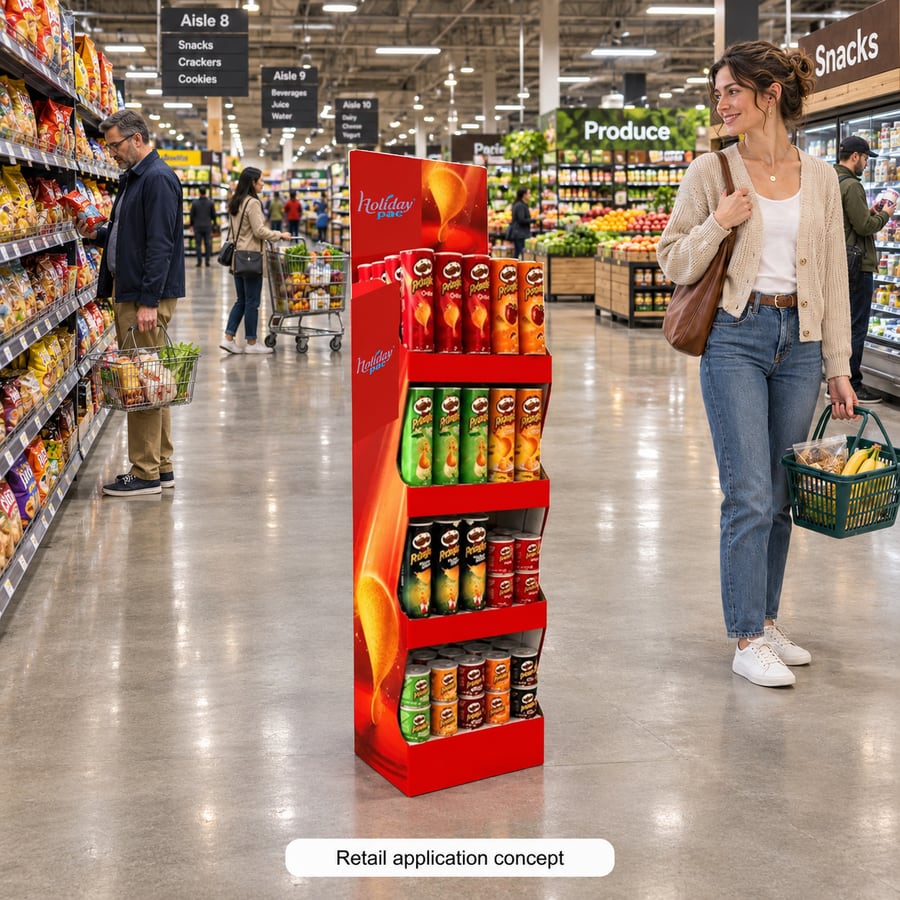
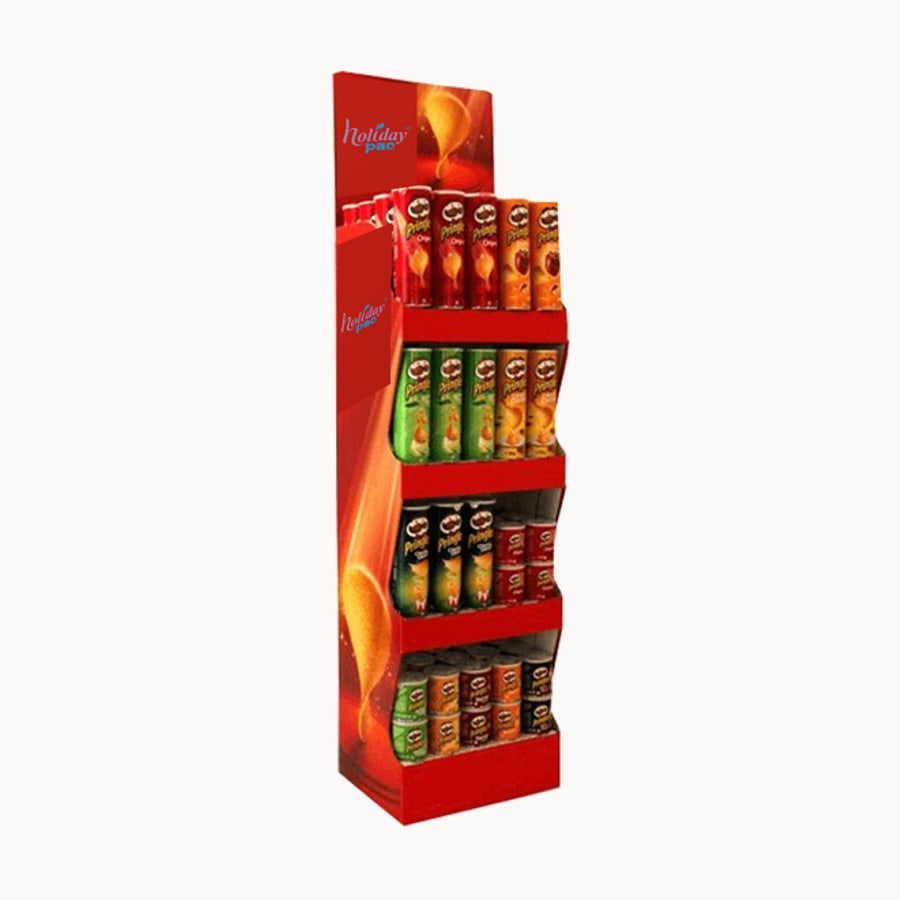
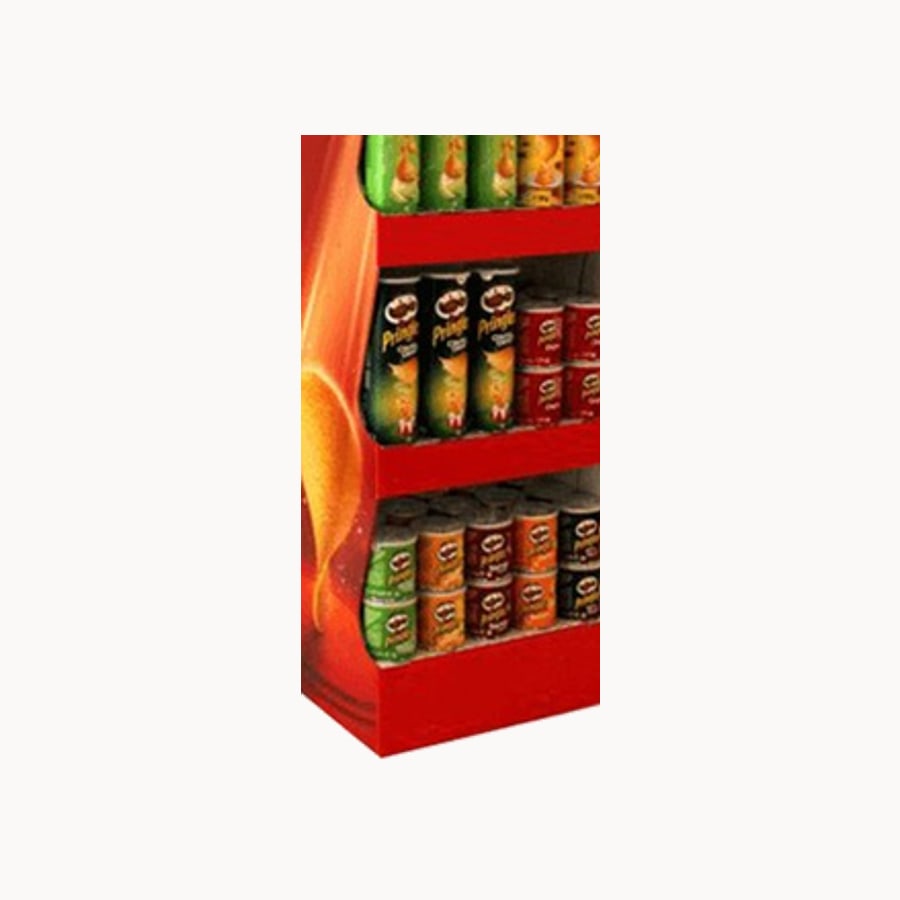
At the end of a grocery aisle, a shopper sees colour before reading a flavour name. The four open shelves of the HLD-S029 give a snack range several distinct rows. In the example, the merchandise is packed in tall cylindrical canisters. This is a useful starting point for a candy display stand carrying similarly shaped confectionery tubes. Soft pouches and small cartons behave differently and need their own fit test.
Start with the decision you want a shopper to make. If three flavours have similar artwork, place them side by side so the names can be compared at a glance. If there are two pack sizes, a separate row for each size may be clearer. Make a simple drawing of the proposed facings and repeat the arrangement with real packs before approving the shelf widths.

Plan for the widest lid, not just the tube
Stand two filled canisters together on a flat surface. If their lids or bottom rims are wider than their bodies, the rims set the spacing. Measure across the widest point and include any wrap seam, promotional sleeve or closure. Sending only a label drawing can lead to a shelf that looks right on paper but holds one fewer facing than expected.
Leave enough room to get a hand around a pack without tipping its neighbour. Try the pick at the front corner, in the middle and at the back of a nearly empty shelf. Check the distance between the shelf above and the lid: the space needed to lift the pack over the front lip may exceed the height of the canister itself.

Work from the stock plan to the footprint
Give the design team a stock target per store, the number of flavours and the expected refill interval. Distinguish the total stock for the promotion from the amount that must sit on display at one time. A frequent refill route may allow a shallower fixture; a remote aisle that staff visit less often may need a different balance of shelf depth and facing count.
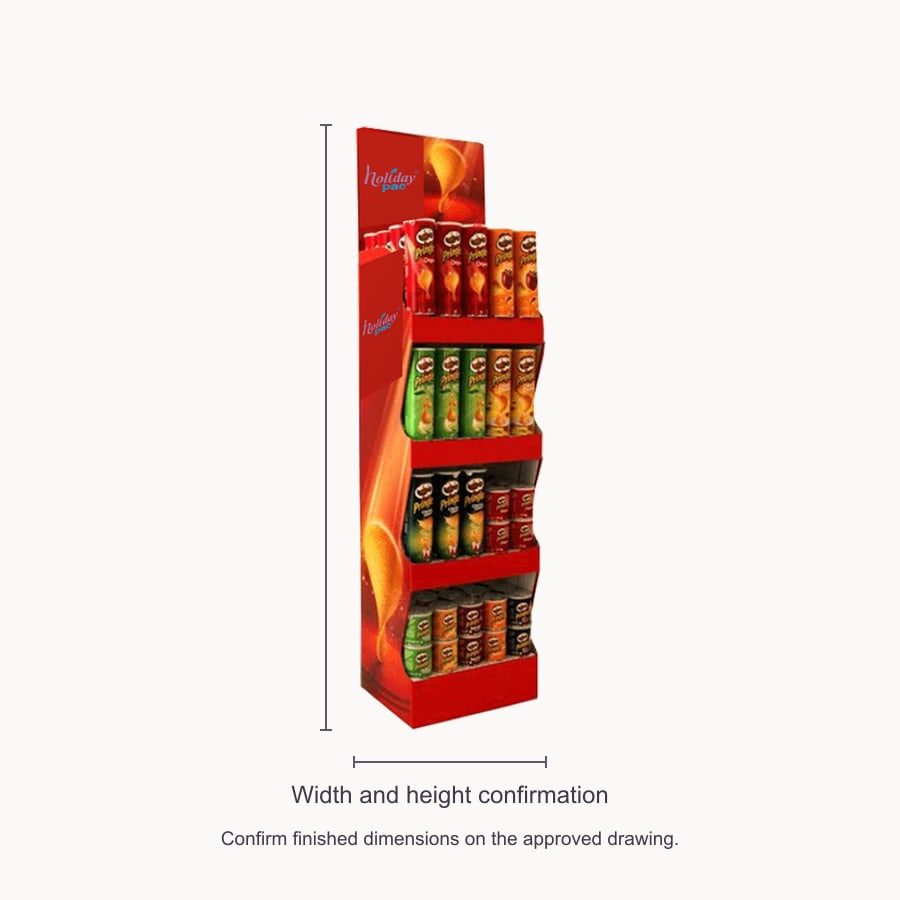
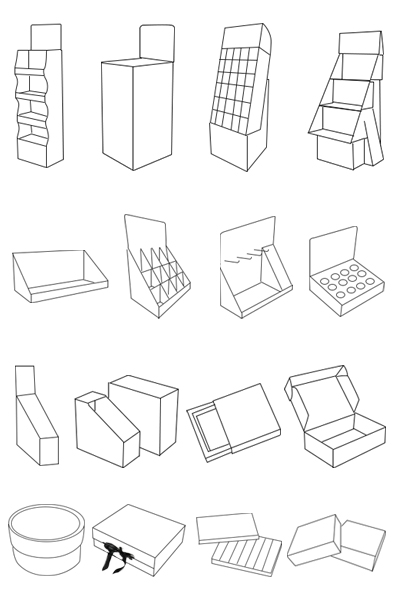
Measure the available floor space with the neighbouring fixtures in place. Include trolley access and the space a colleague needs when opening a refill carton. The diagram identifies width and height for confirmation. Ask for the overall depth, individual shelf clearances and usable shelf dimensions on the final drawing. No load rating is implied by the photograph.

Check the header with the top row full
The upright header gives the range a name above the top shelf. Print a paper mock-up at the planned size and stand it behind the tallest pack. Walk towards it from both ends of the aisle. If the cans hide the offer, move the message higher or shorten it before increasing the size of the whole fixture.
The shelf front provides another place to identify a flavour group or price. Keep the message on the display separate from information that changes frequently on individual packs. For a promotion spanning several stores, decide who supplies local price labels and where they can be placed without covering the artwork. Review those positions on the stocked sample.

Make the bottom row practical to refill
Ask someone who did not design the display to refill the bottom row from a shipping carton. Can they see which flavour is missing? Can they bring older stock forward without lifting all the cans out? Round packs turn easily, so a row that was loaded neatly can lose its front-facing labels after a few purchases. Build the facing and rotation steps into the store instructions.
Test with the heaviest intended packs in the proposed arrangement. Inspect the front lip, the shelf surface and the base after loading and after removing stock. If the assortment changes from tubes to pouches, check whether the pouches stay upright and whether their lower labels disappear behind the lip. Approve the new setup before the artwork goes to production.
Ordering HLD-S029
The existing specification lists cardboard, custom colour and size, and a minimum order of 100 stands. Send Holidaypac the filled pack dimensions, unit weight, stock plan, delivery destinations and campaign date. Specify whether displays and merchandise travel separately. Confirm the final schedule after the sample and artwork have been reviewed.
Buyer questions
Will this design also work for bagged candy?
A pouch can spread at the base or fold forward when its neighbour is removed. Try filled samples at full and low stock levels. Agree on any divider or front restraint before including bags in the same plan as canisters.
How many cans fit on each shelf?
The four-tier reference does not establish a universal count. Test the largest diameter and intended number of rows on a sample. Show the approved plan with the quote so purchasing and store staff are working from the same count.
What should stores receive with the display?
Provide the agreed assembly sequence, a photo of the stocked sample and an assortment map. Mark which shelf receives the heaviest pack and show where to put price labels. Confirm any retailer-specific labelling before packing.
Explore the Holidaypac food displays collection to compare other retail formats.


;)