Holidaypac developed a branded corrugated cardboard floor display concept for the Amos Peelrz fruit snack range. The project combined visible brand graphics, a multi-tier retail structure, printed artwork review, reinforcement details and dimensional checks so the finished display could present packaged products clearly at the point of sale.
On this page
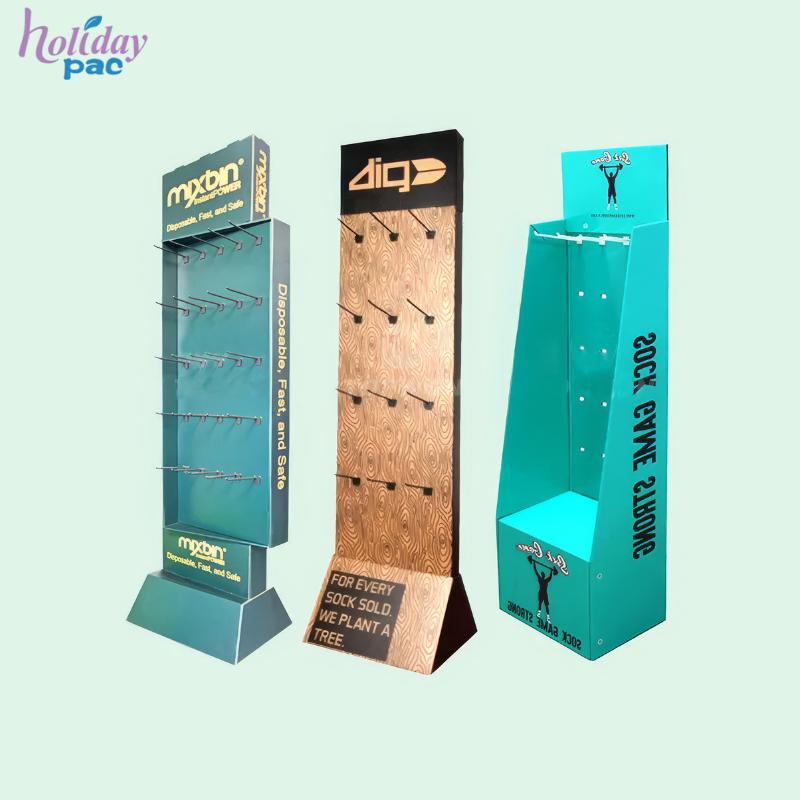
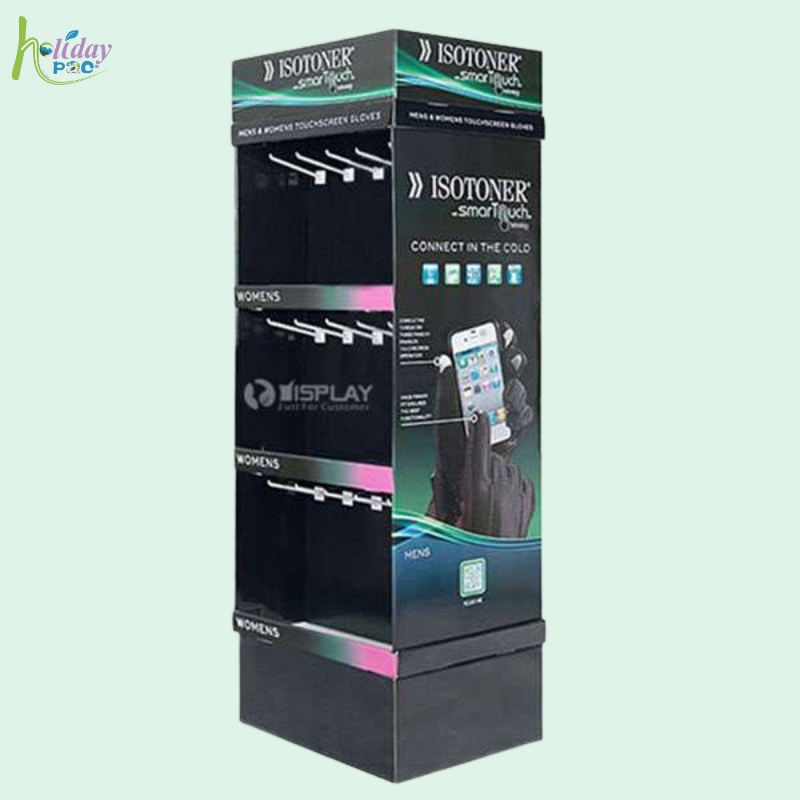
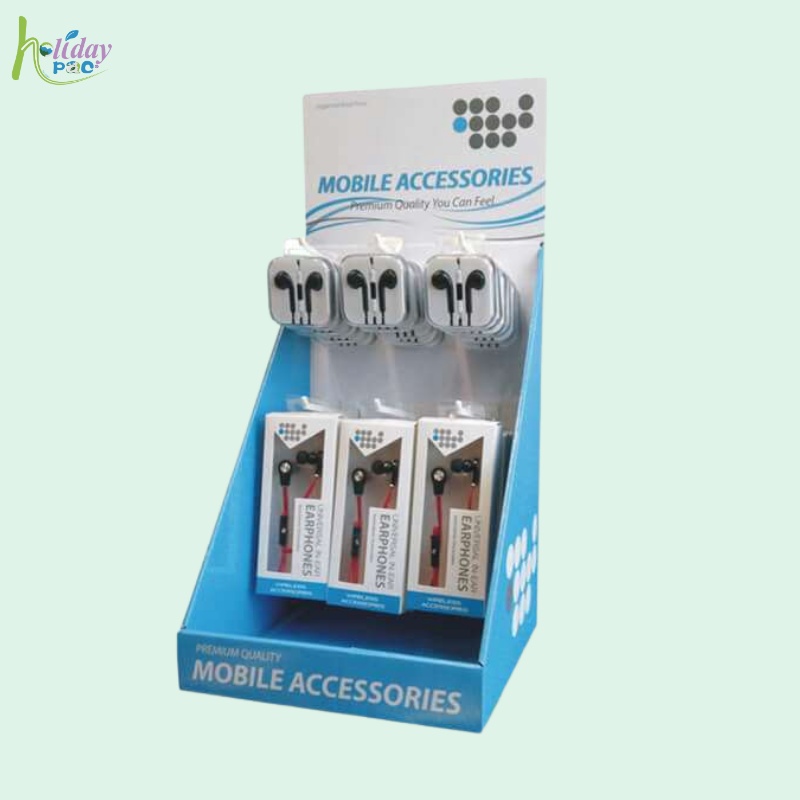
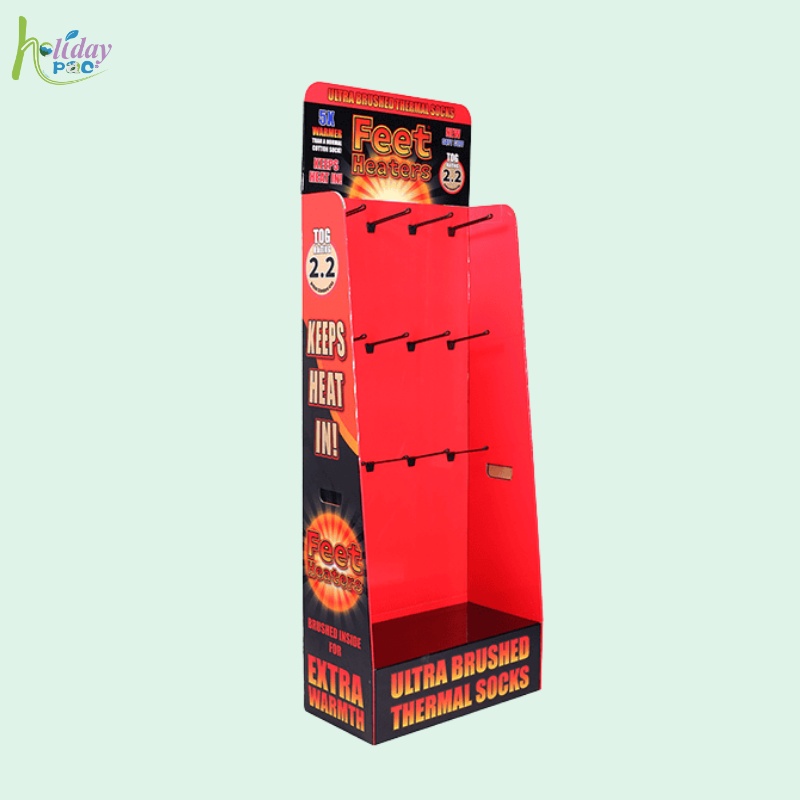
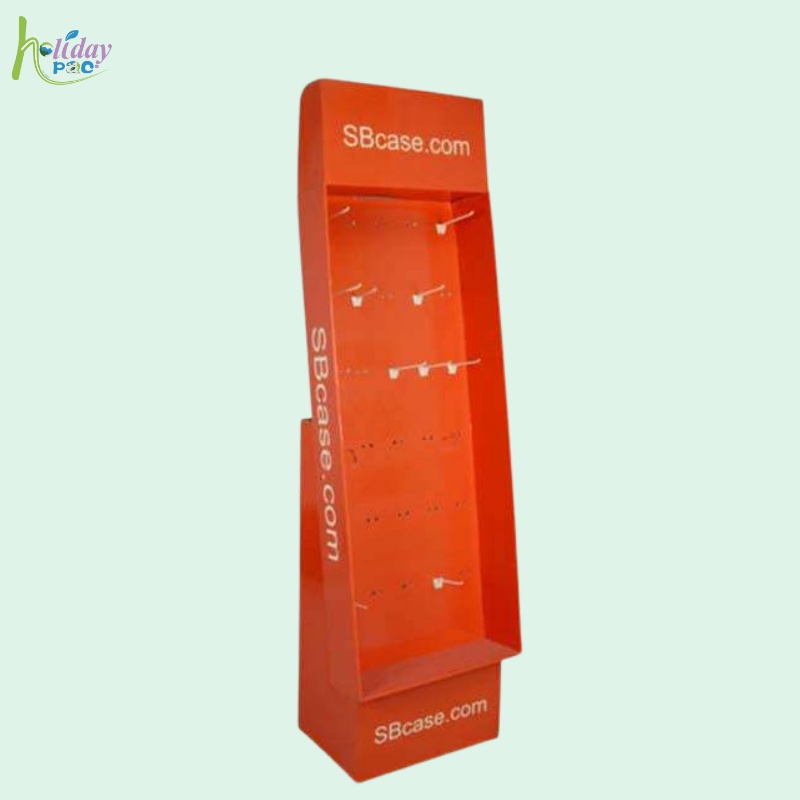
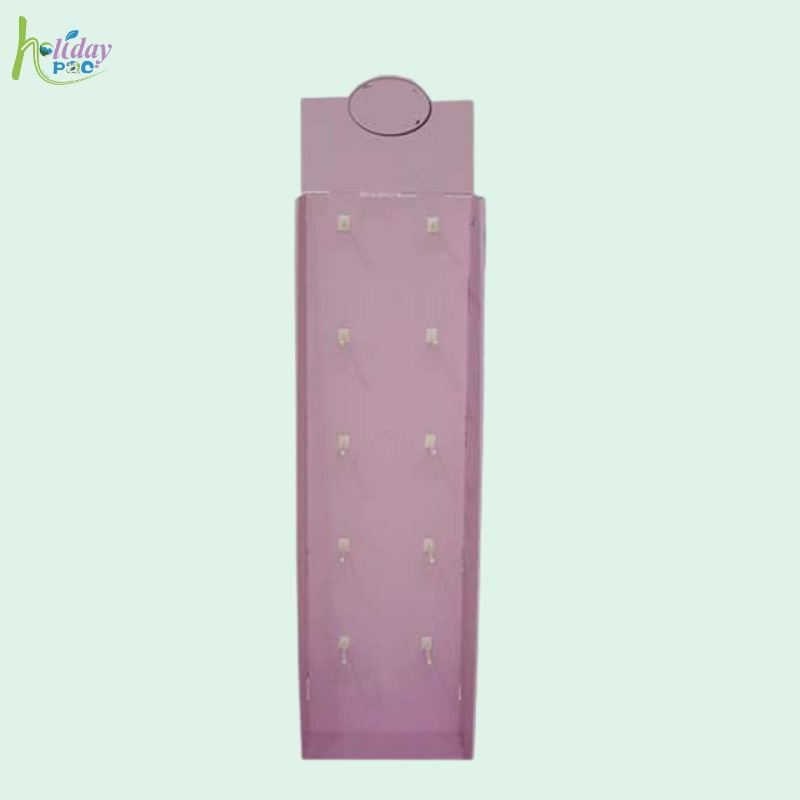
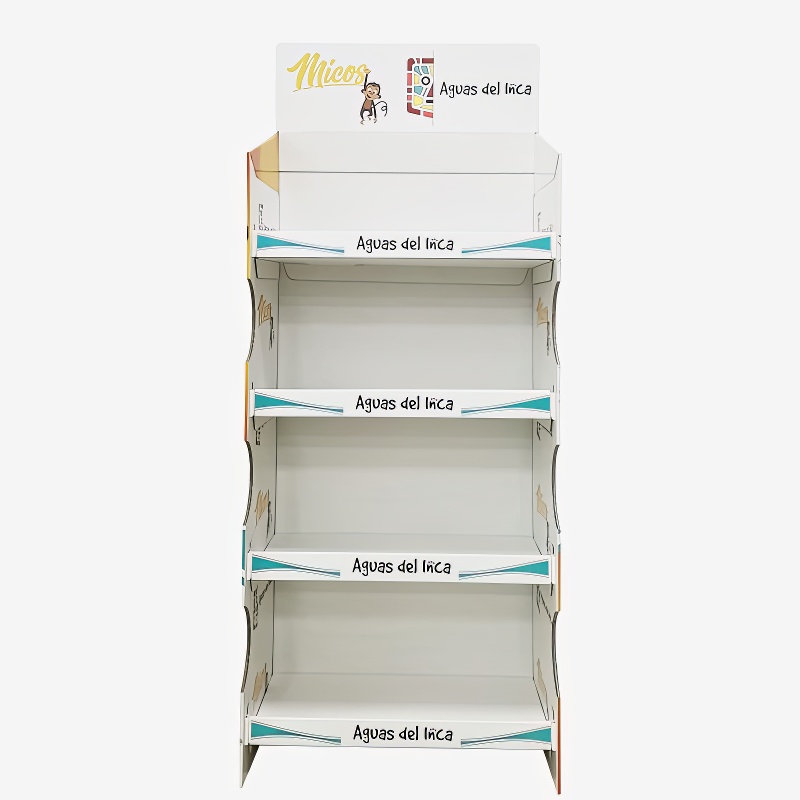
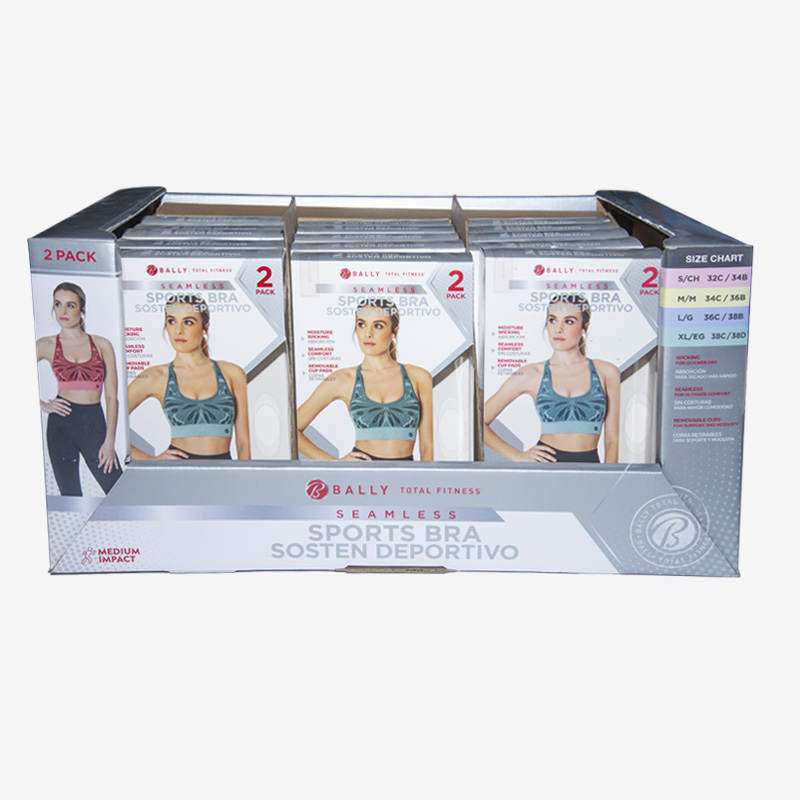
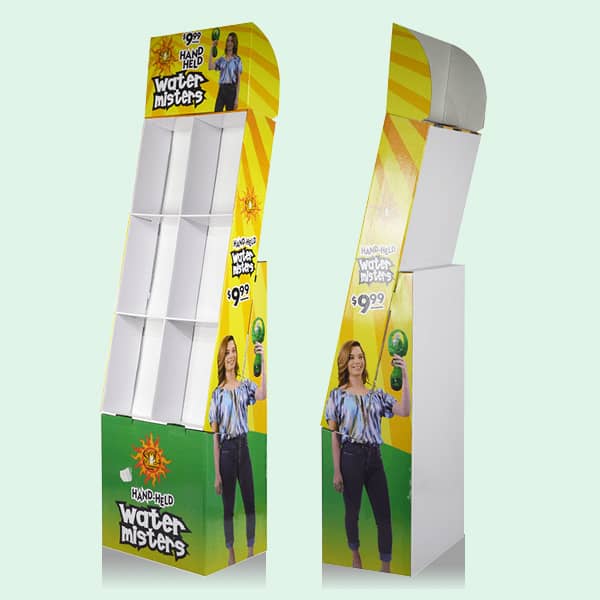
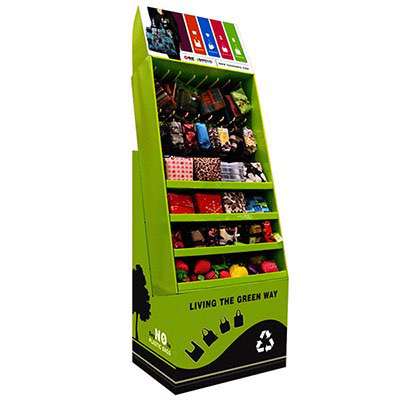
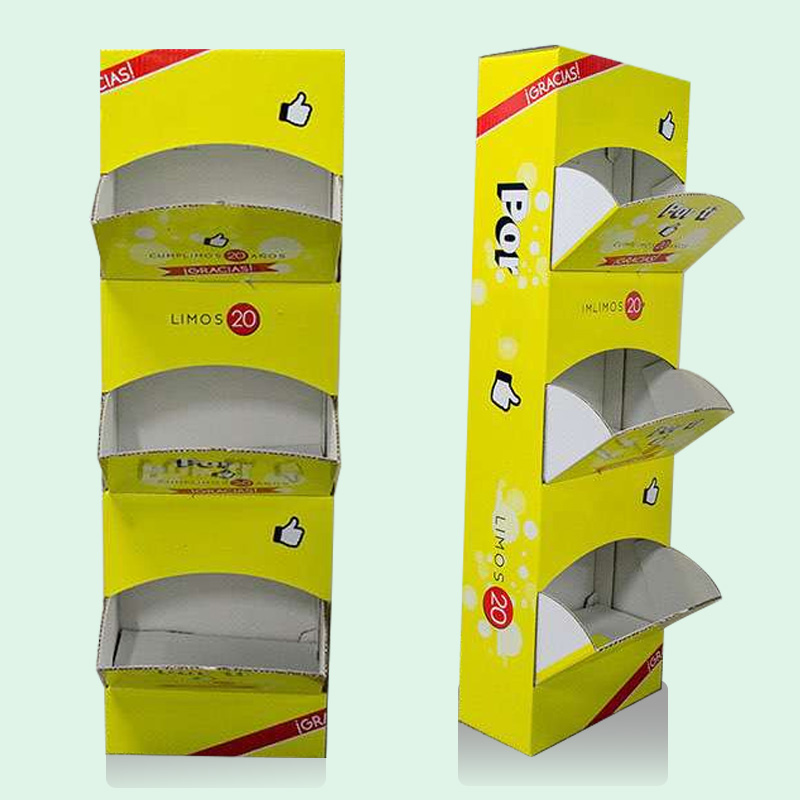
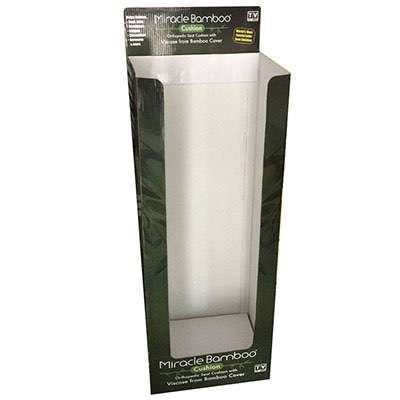
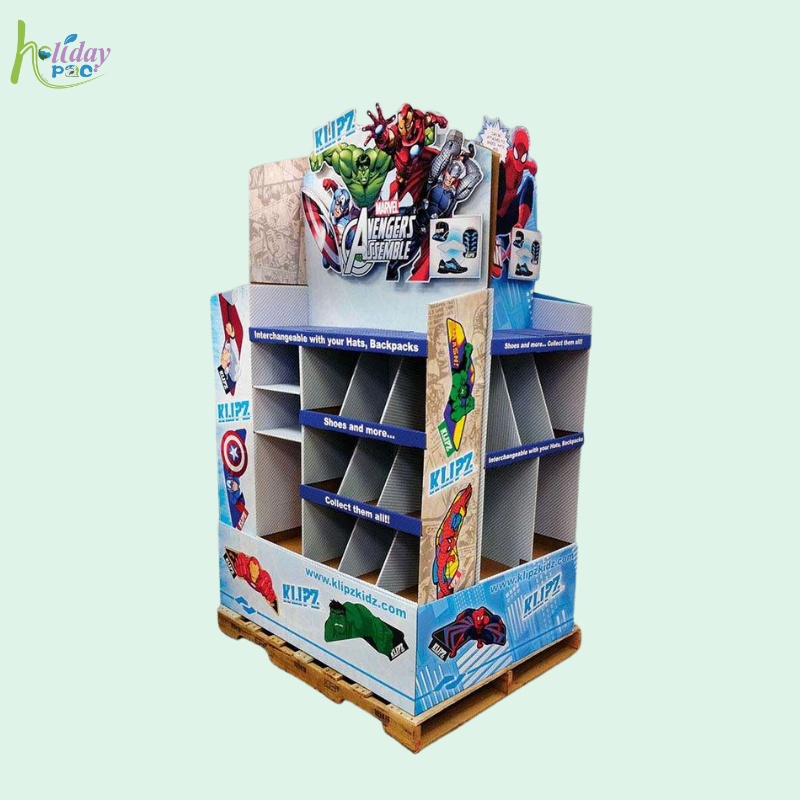
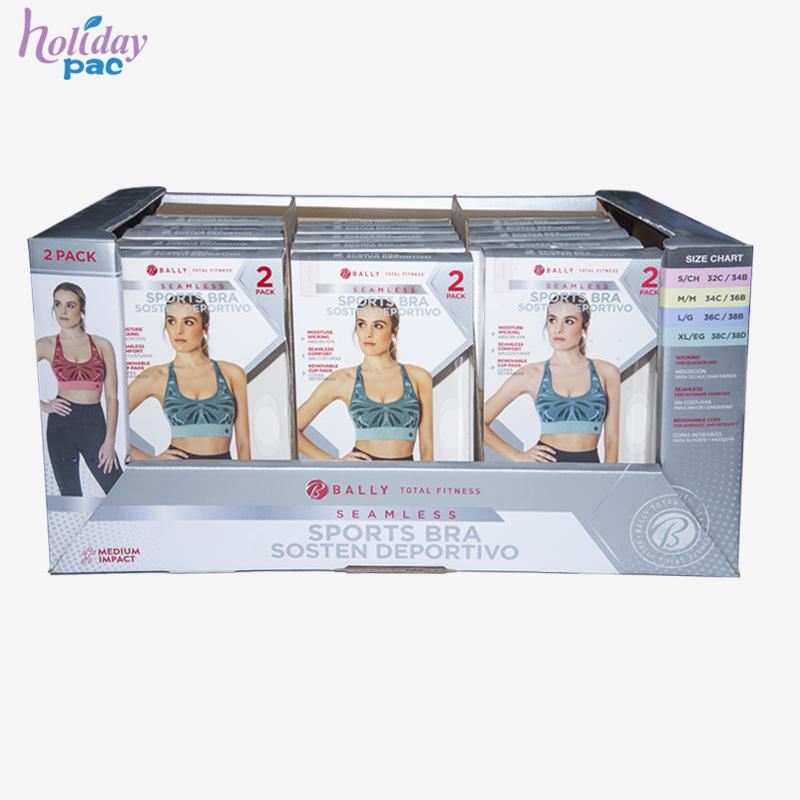
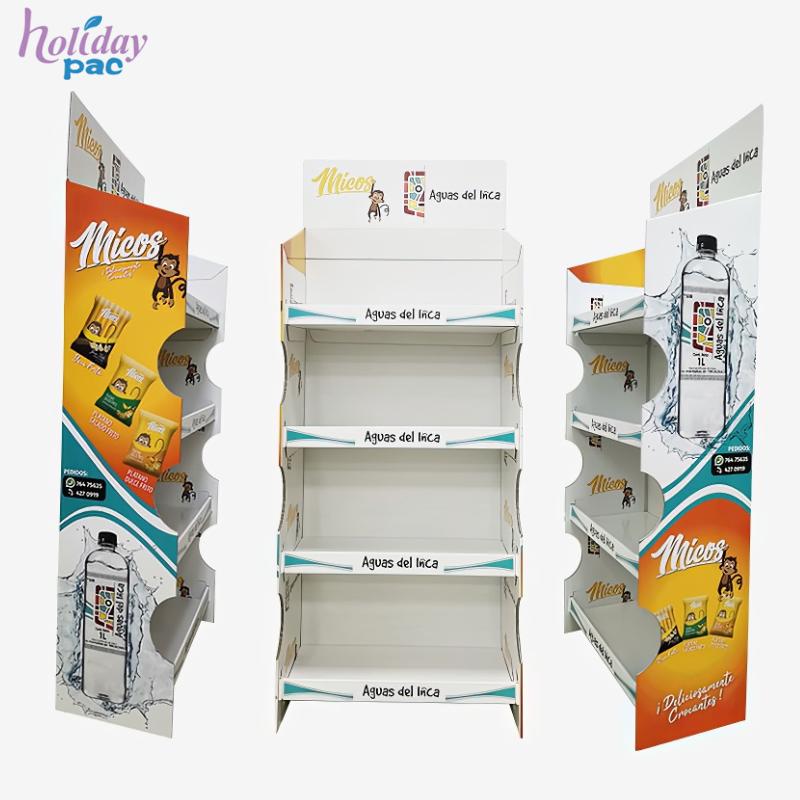
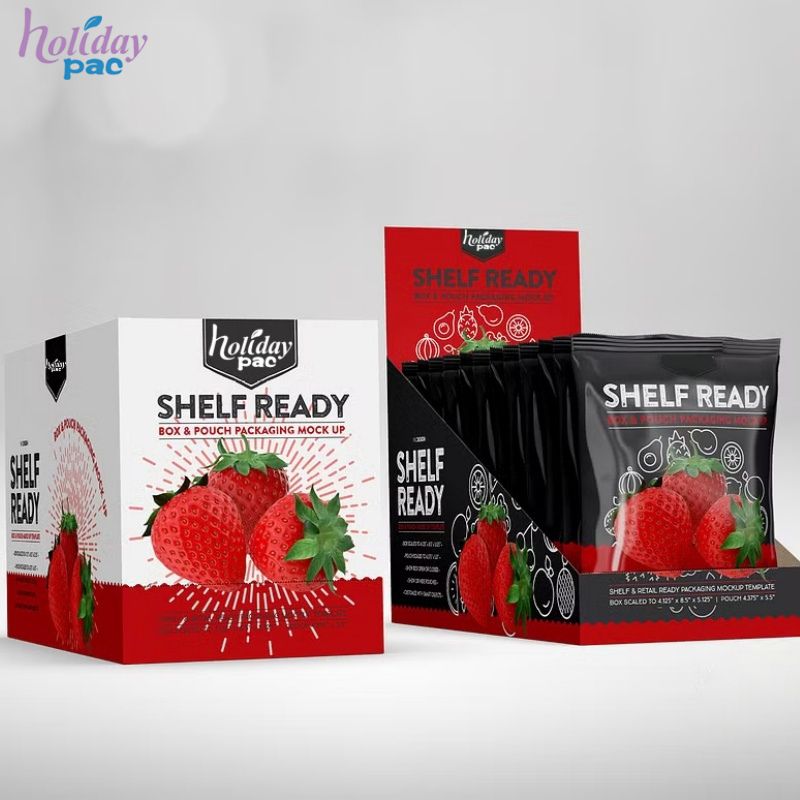
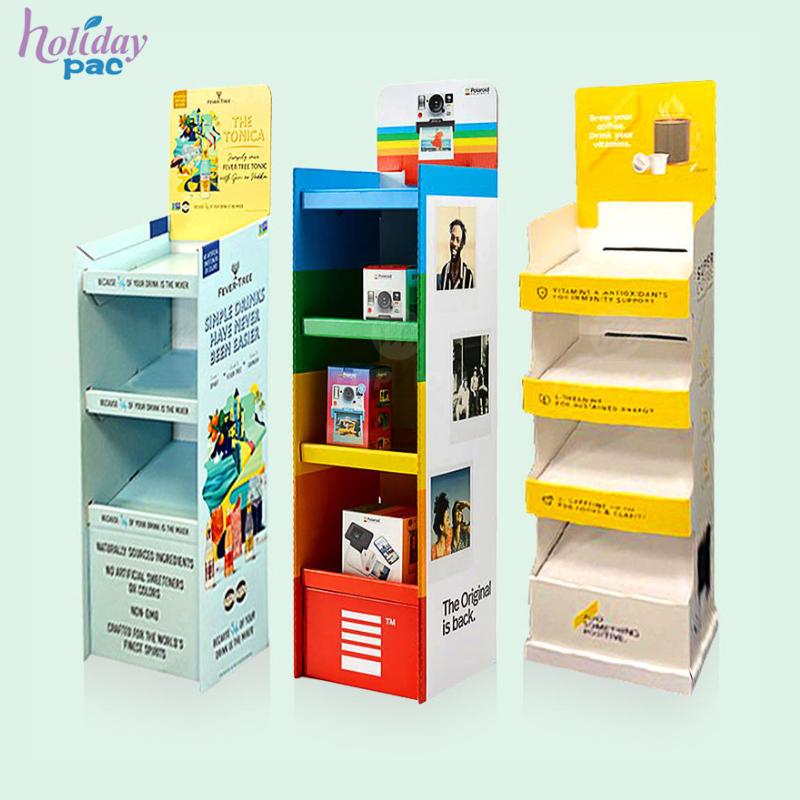
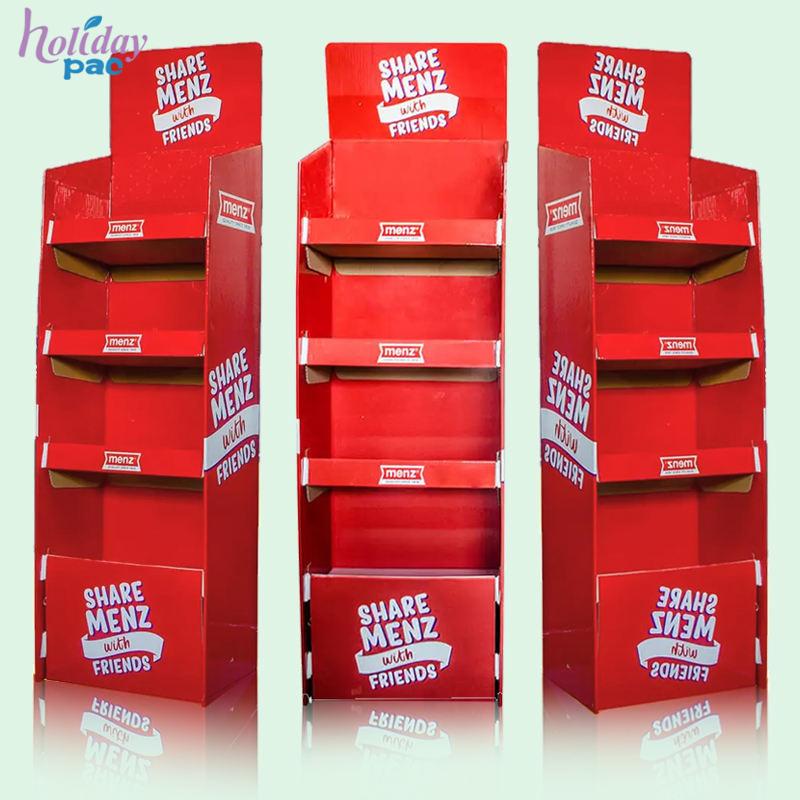
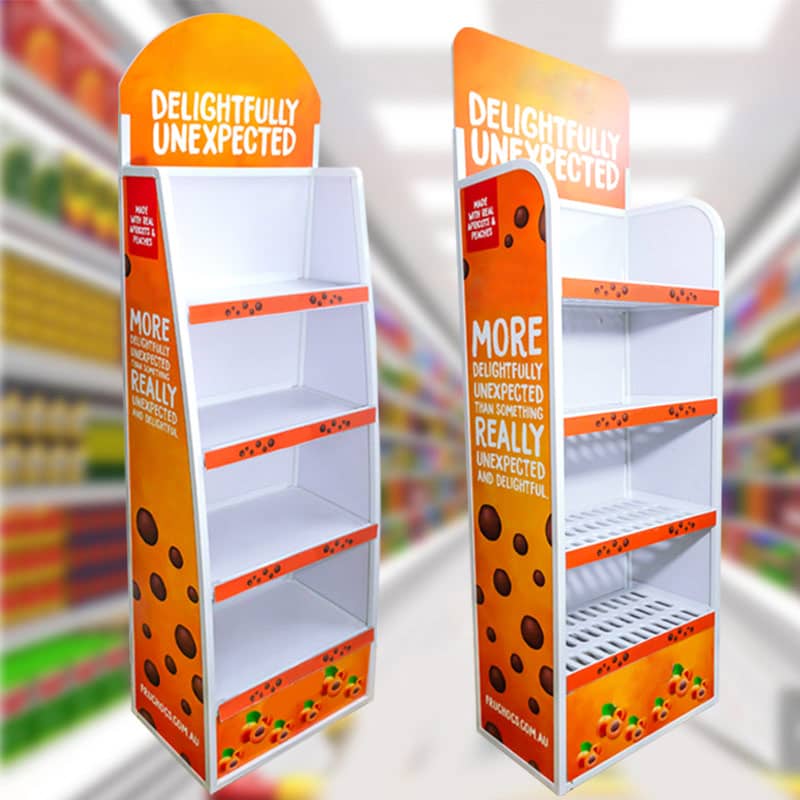
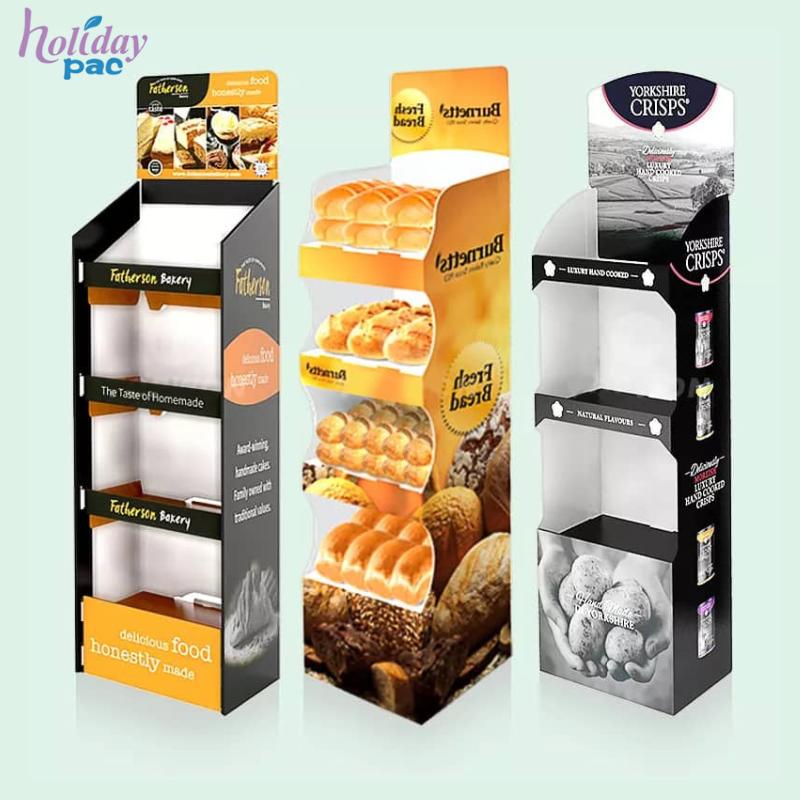
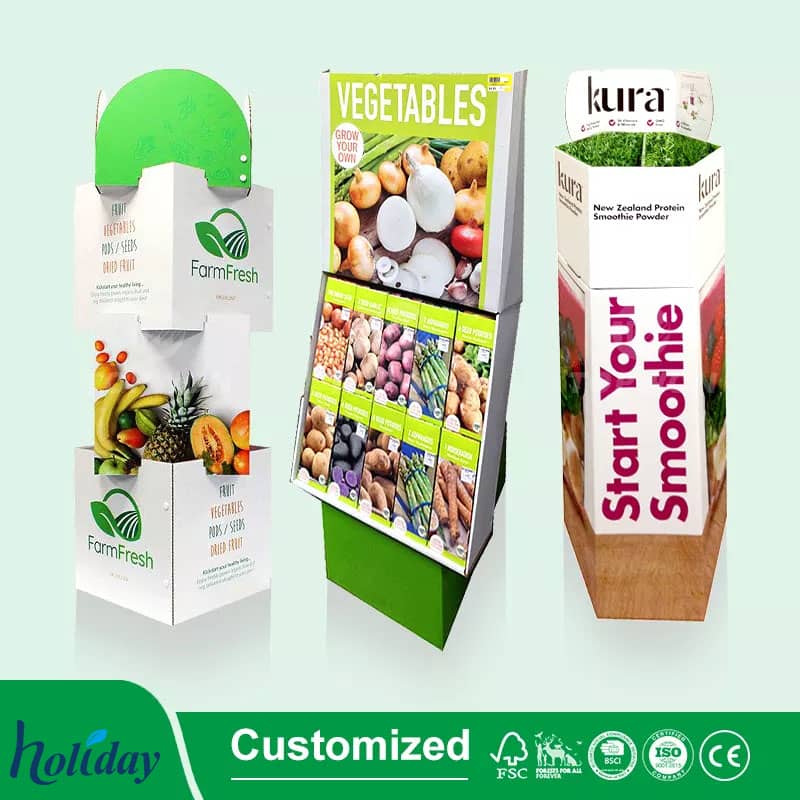
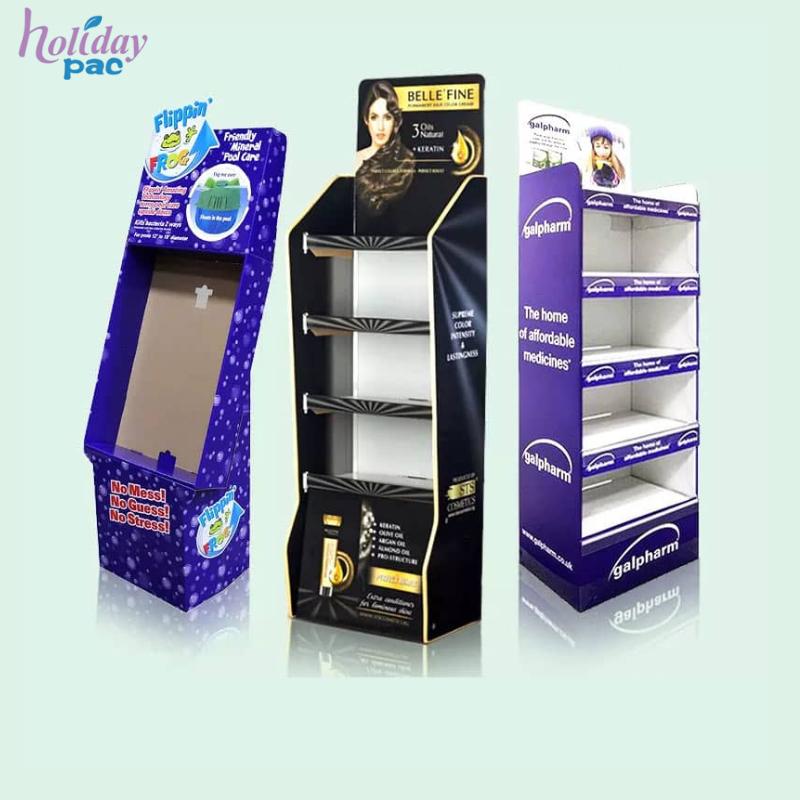
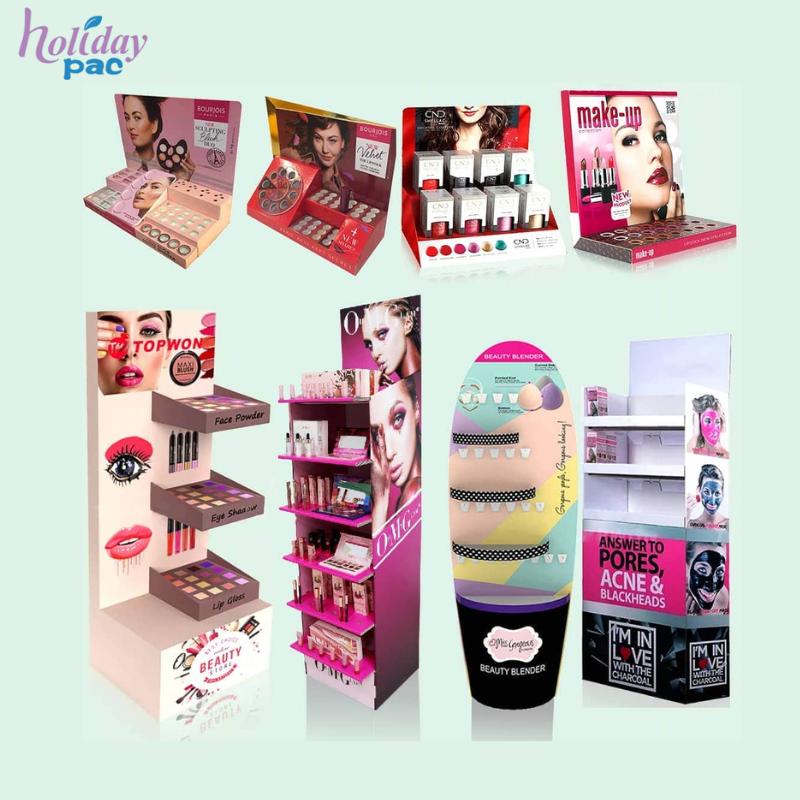
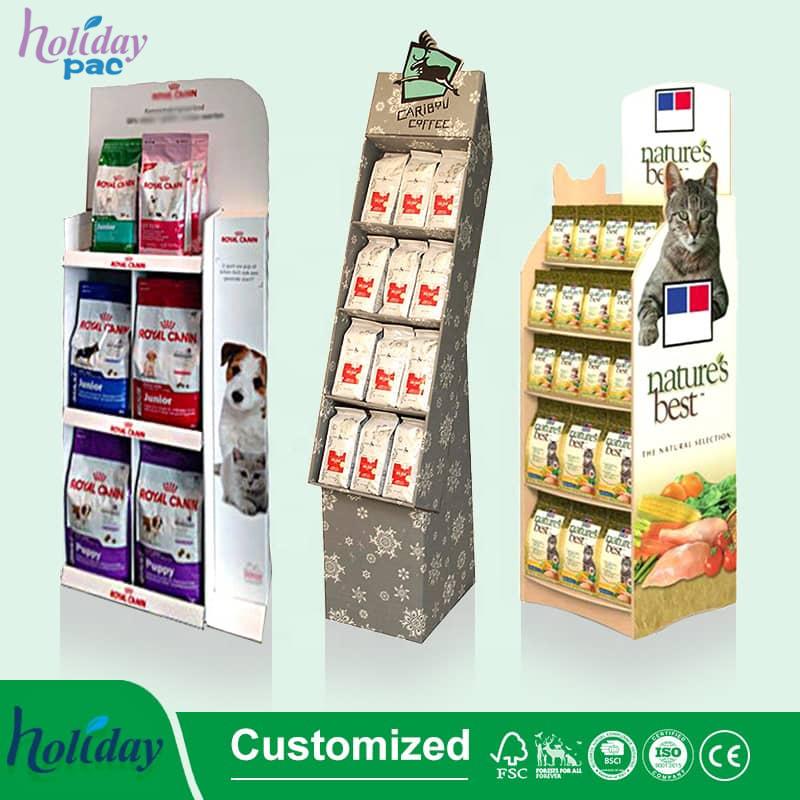
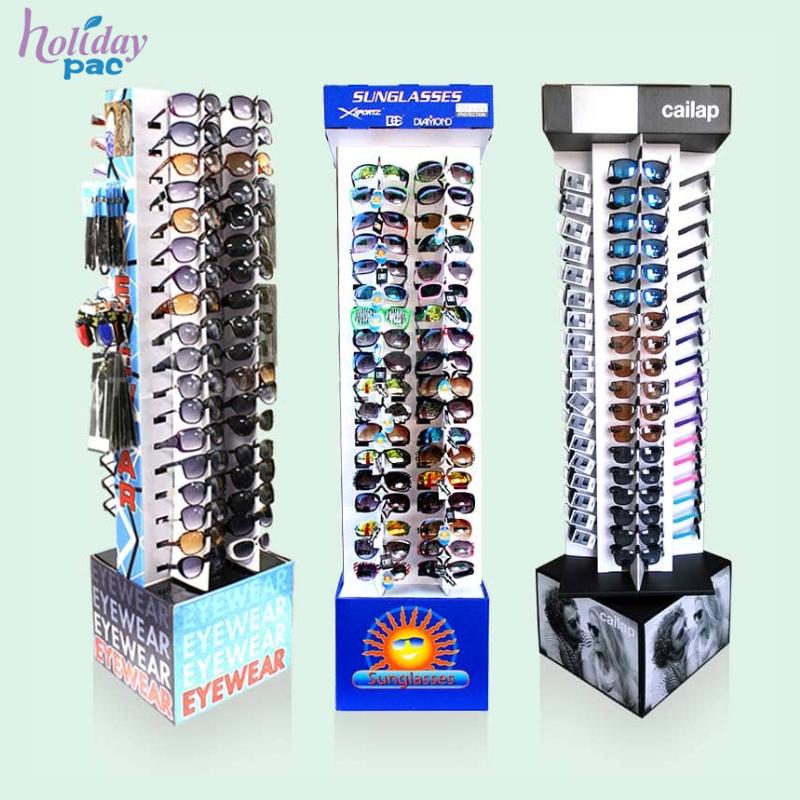
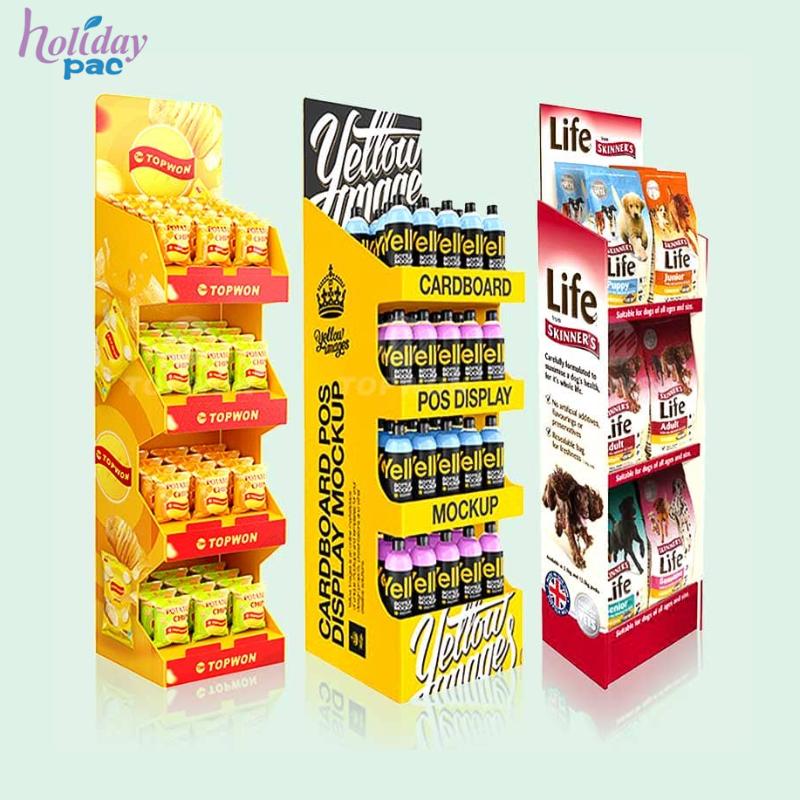
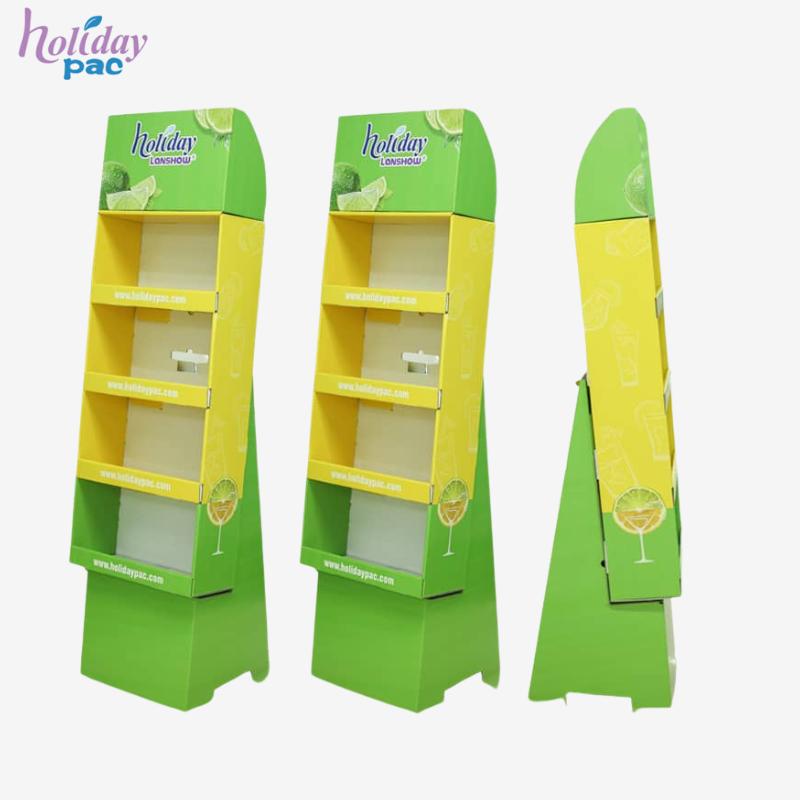
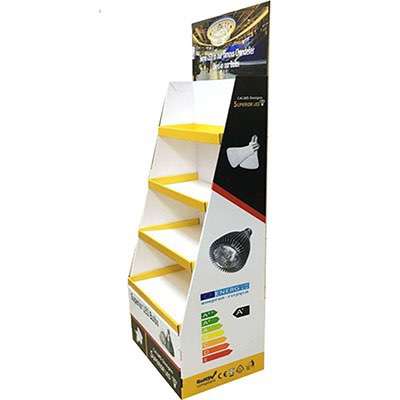
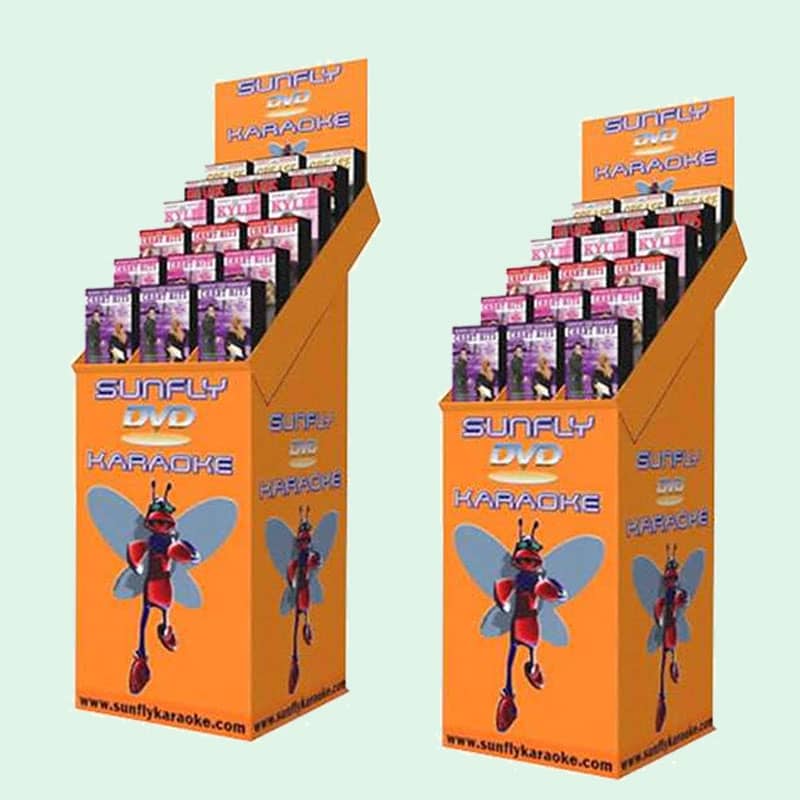
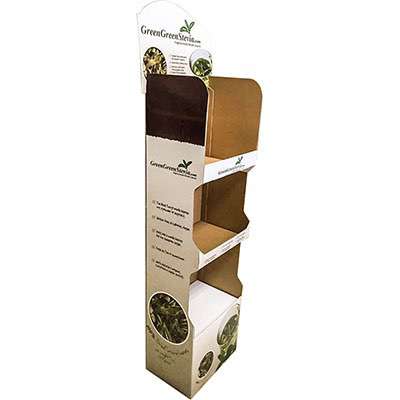
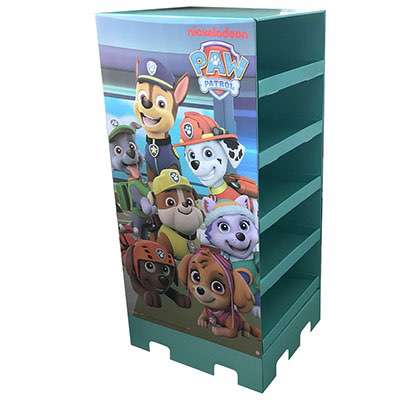
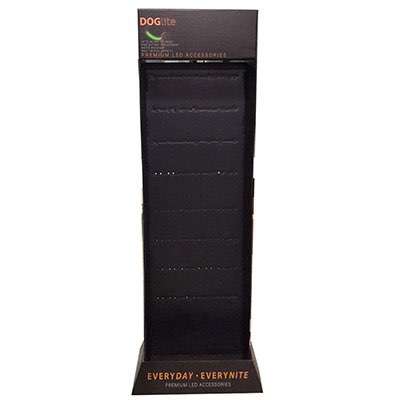
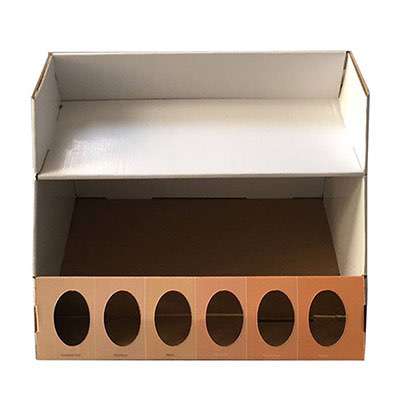
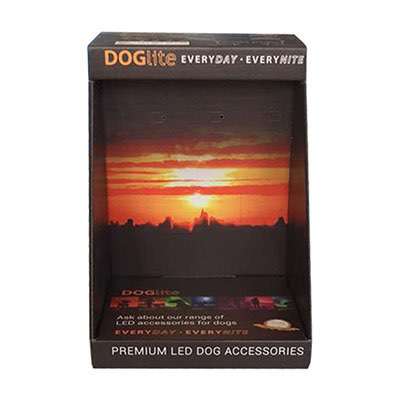
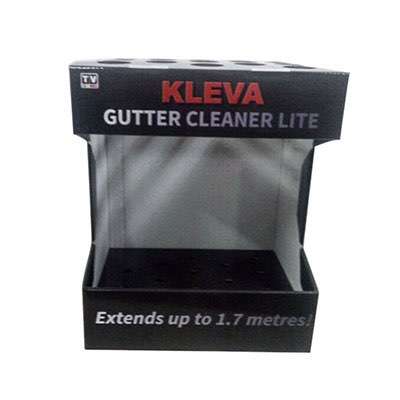
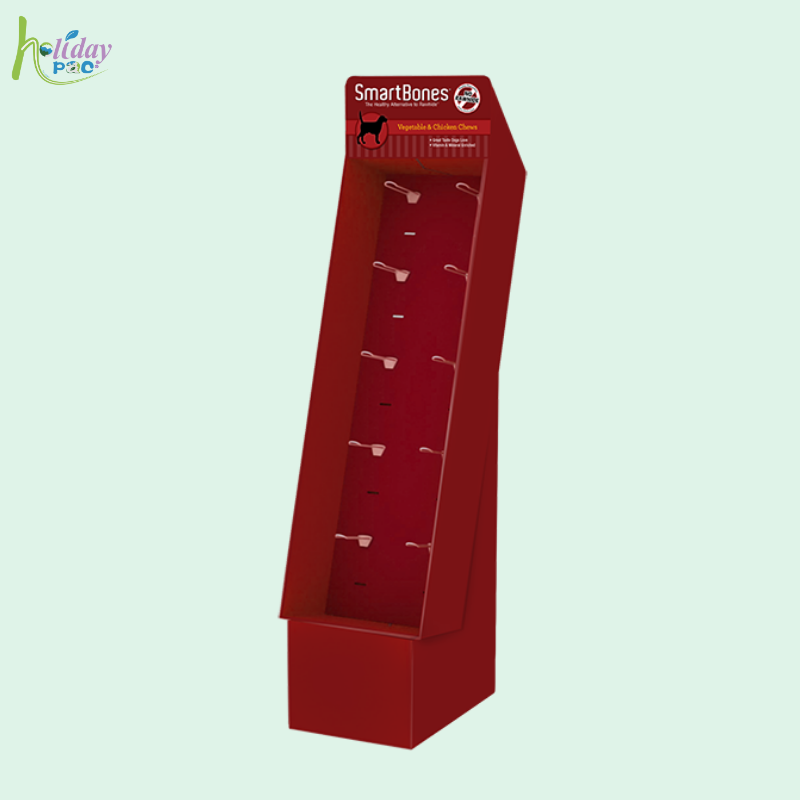
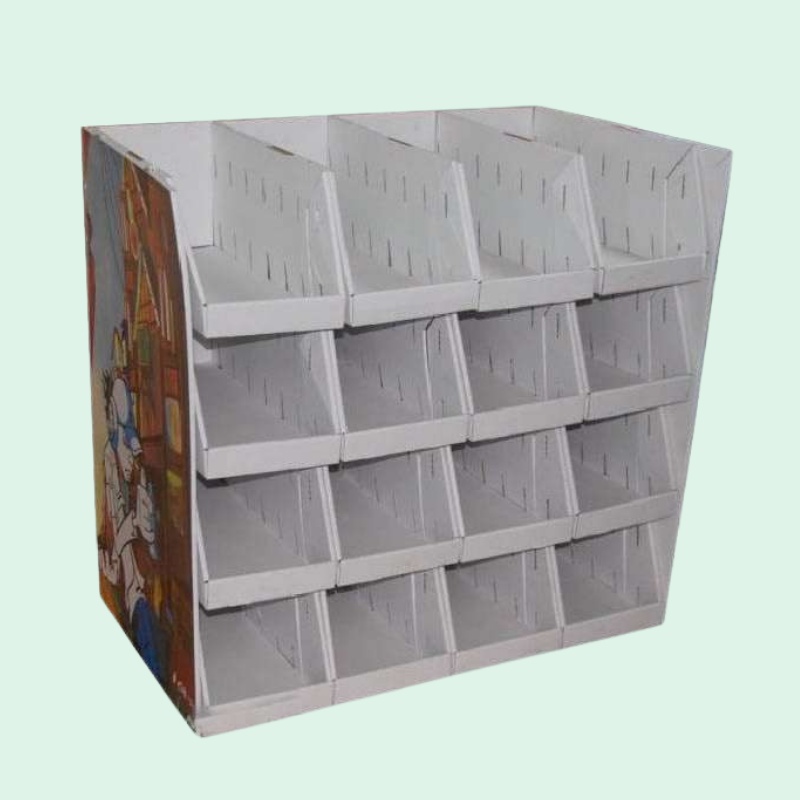
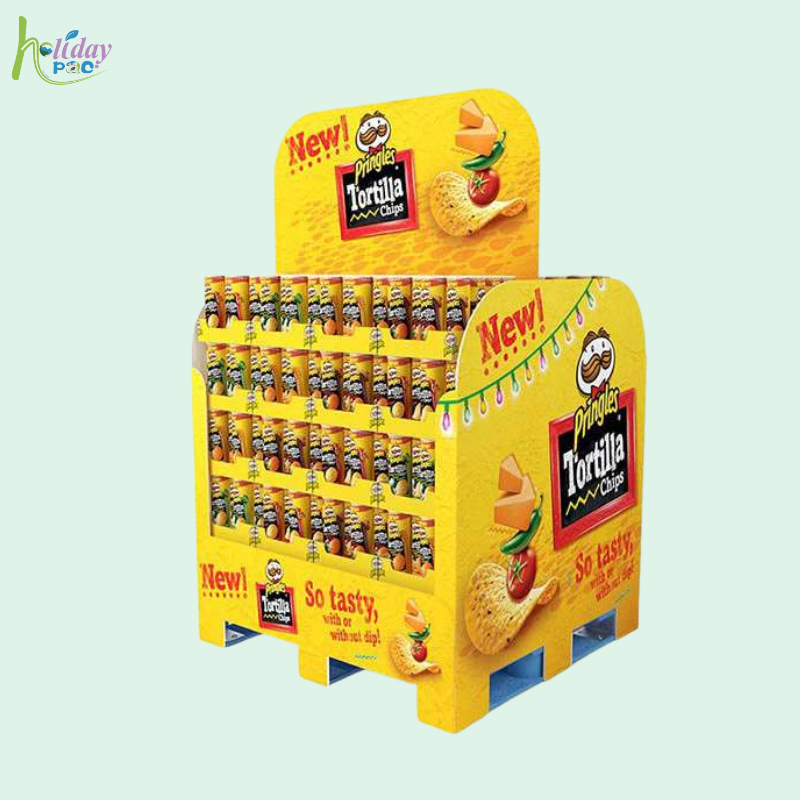
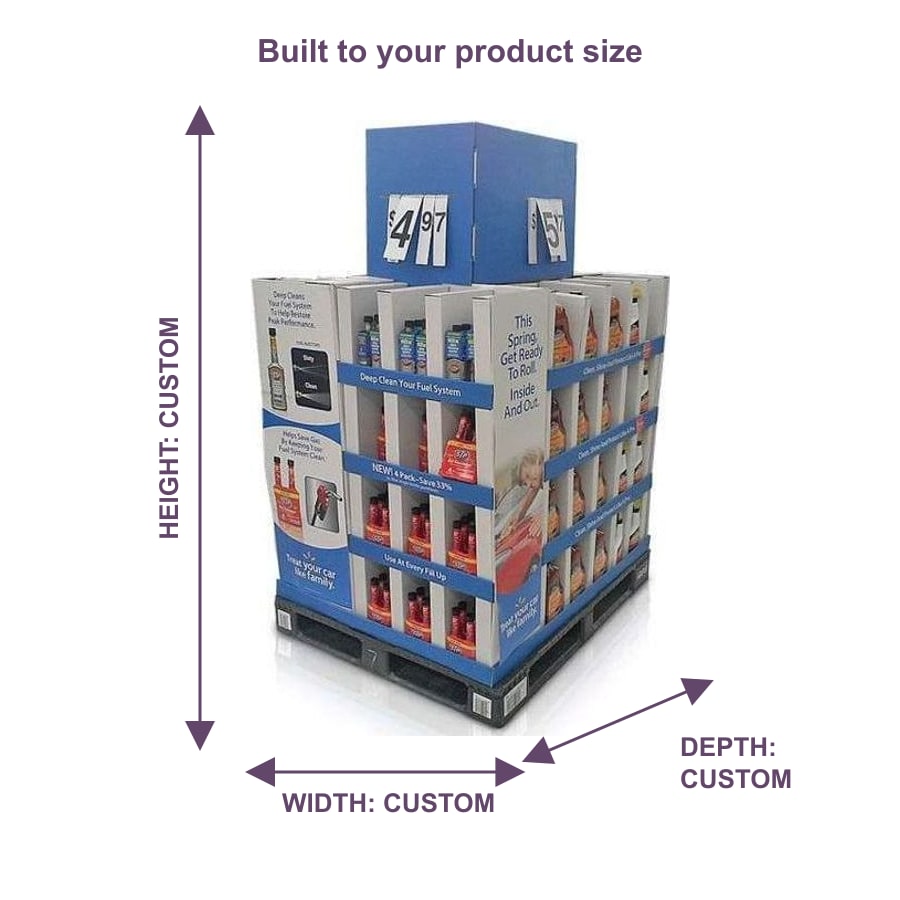
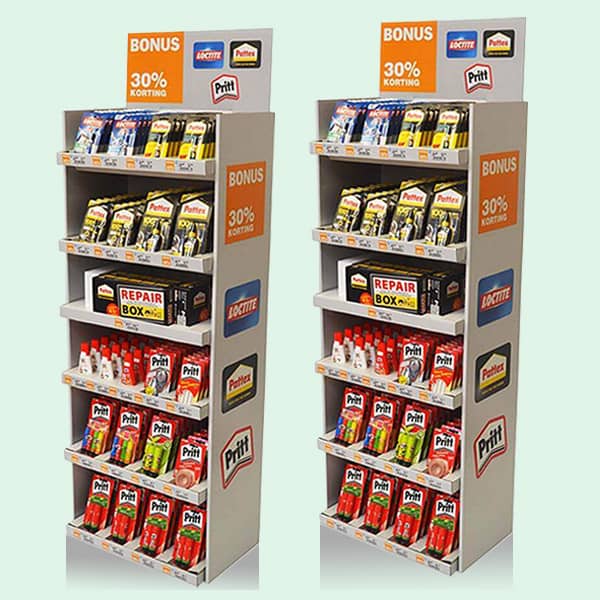
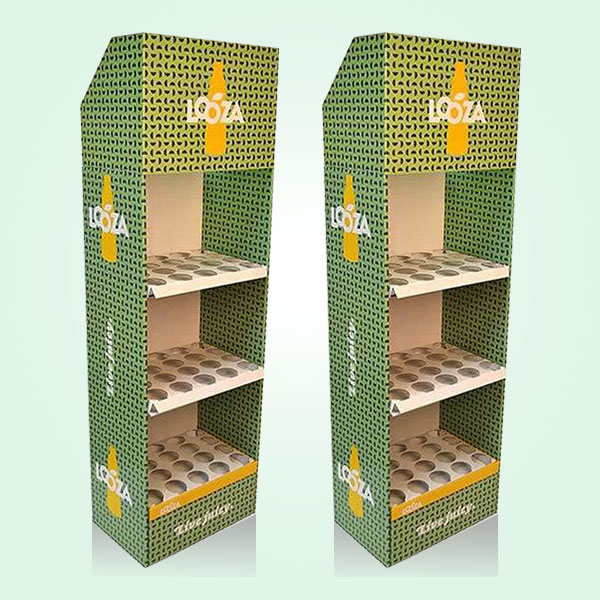
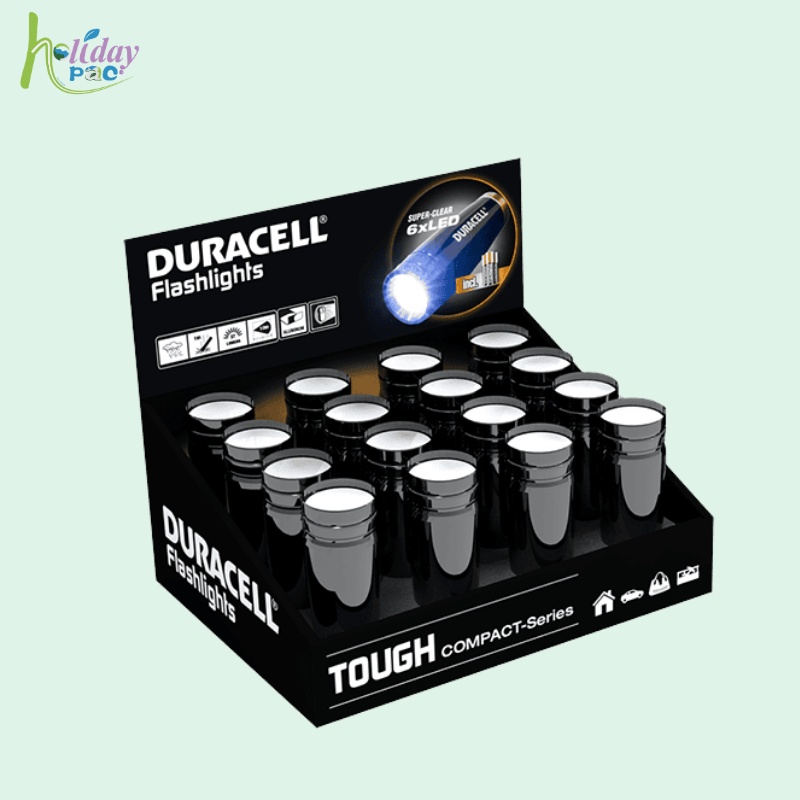
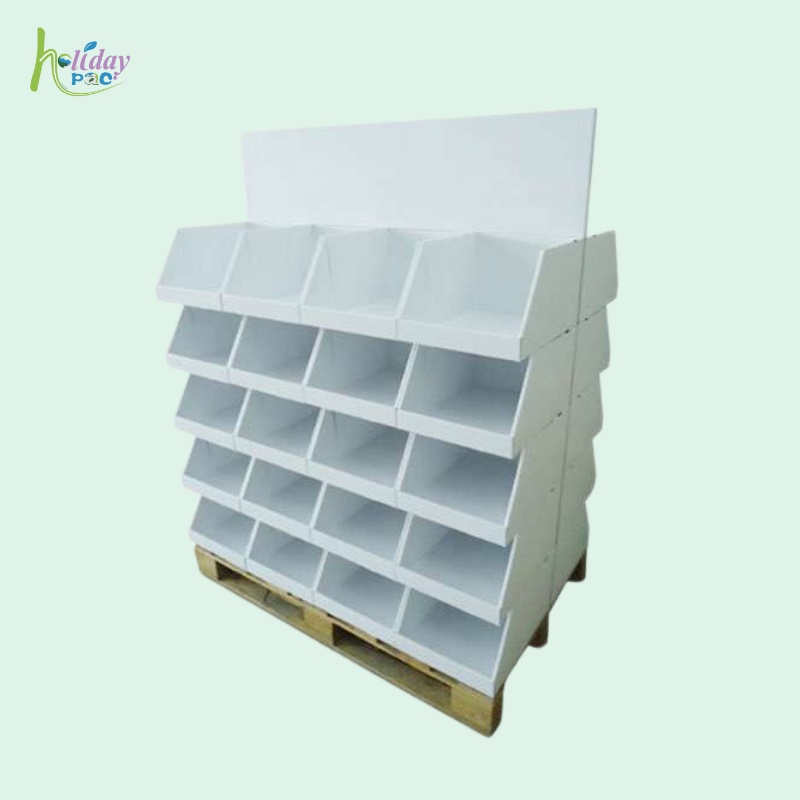
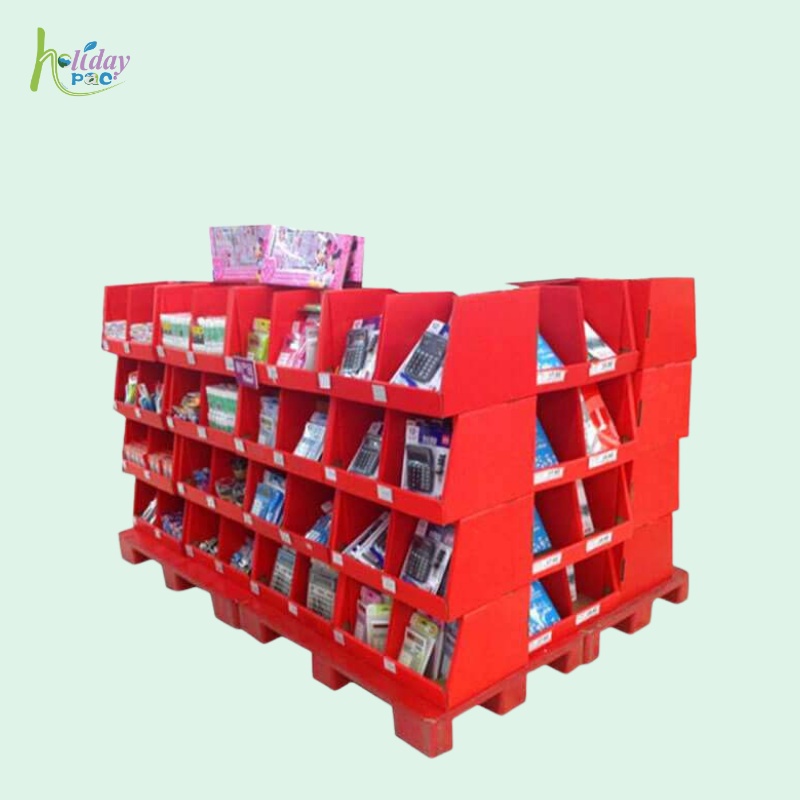
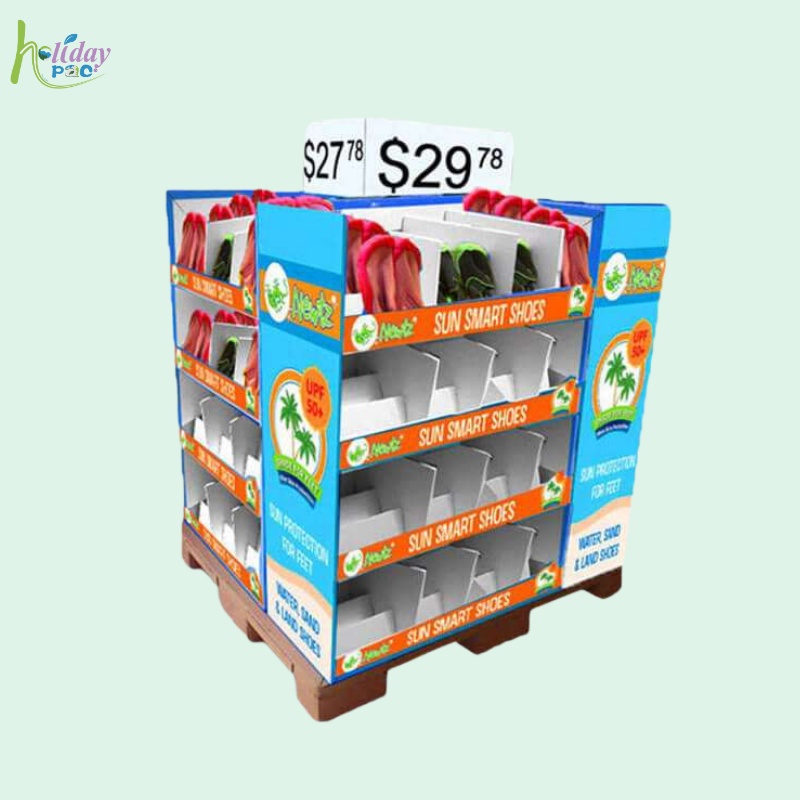
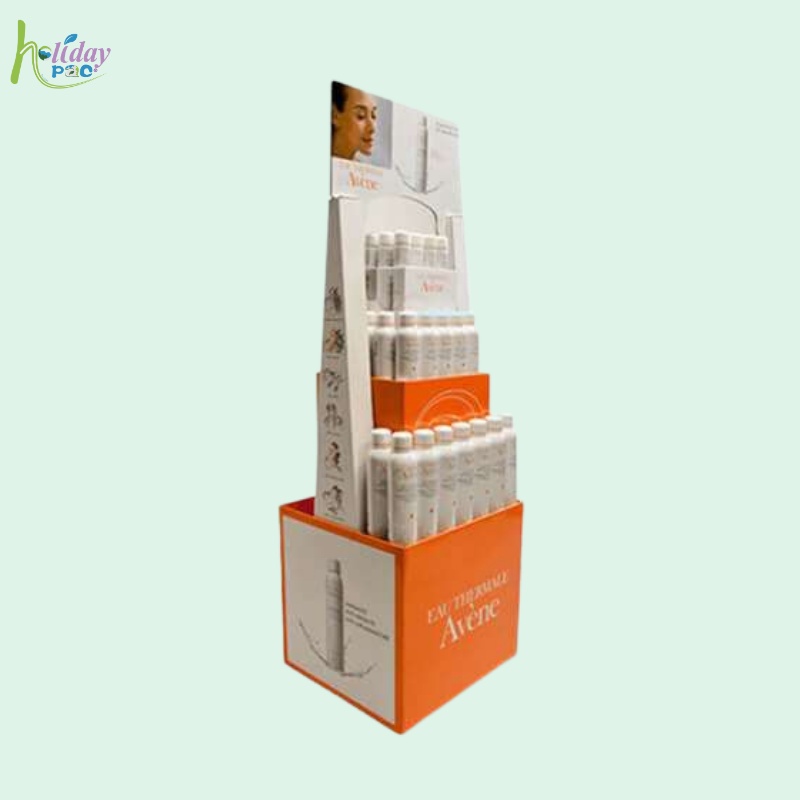
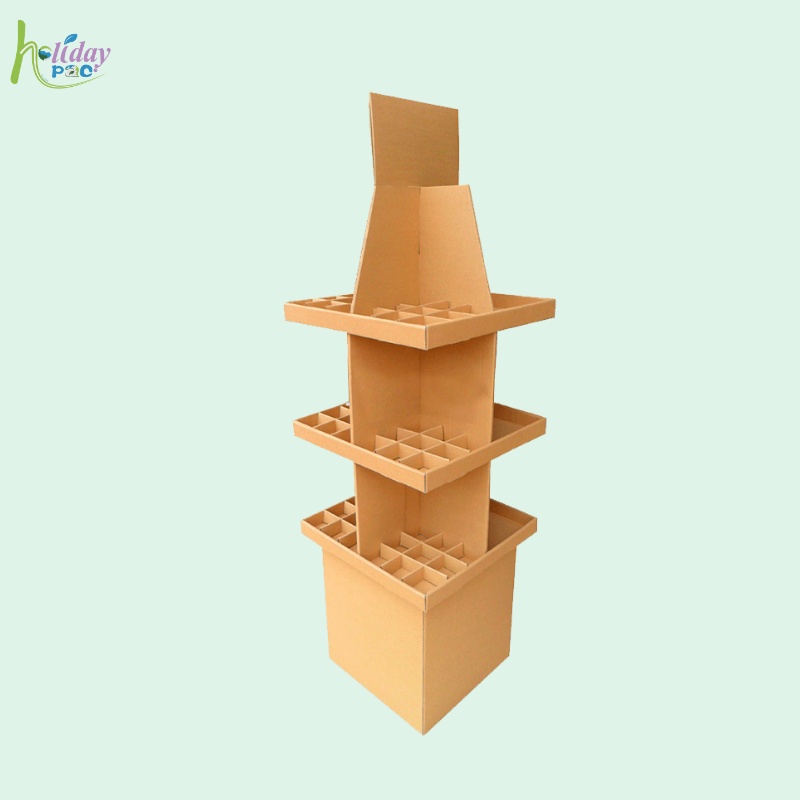
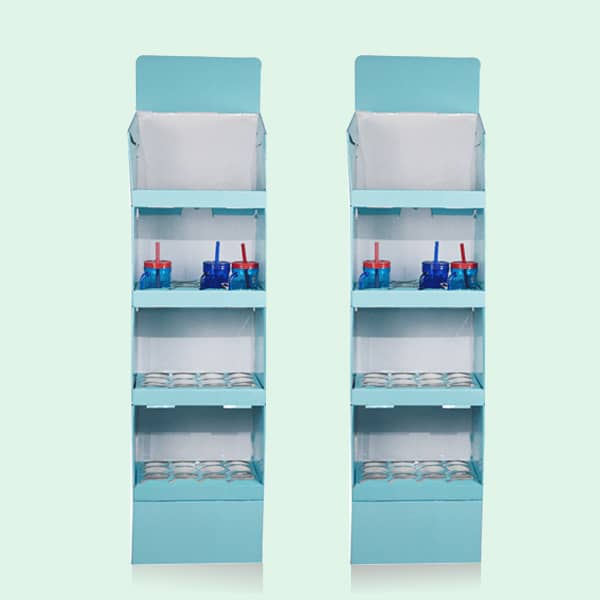
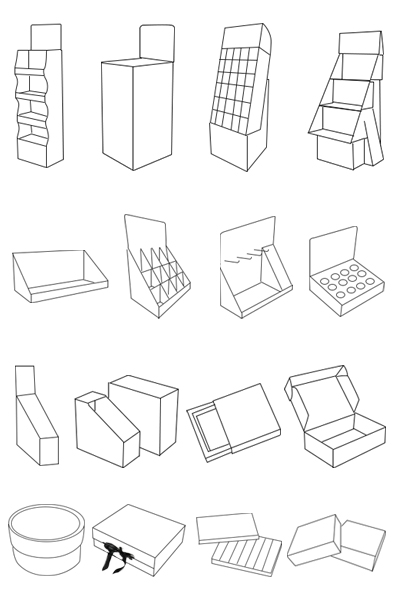
The following eight Holidaypac products cover common retail display formats for hanging accessories, packaged goods, promotional launches and shelf-ready merchandising.
AMOS is a recognizable consumer brand with strong visual packaging. In the image set for this project, the Peelrz and Peelrz Mango packs use bright yellow-green graphics, fruit imagery and a clear front-facing identity. A retail display for this type of product must do more than hold cartons. It must help shoppers identify the brand quickly, create a clear presentation across several shelf levels and keep the packaging visible from the main shopping direction.
Holidaypac approached the project as a coordinated display-development exercise. The available project images document the path from a die-cut blueprint and structural render through print proofing, assembled samples, reinforcement inspection and final product loading. This makes the project useful as a practical reference for brands that need a custom cardboard display stand for a product launch, seasonal campaign or retail promotion.
The display needed to support multiple packaged products while keeping Amos brand graphics prominent. The project also required a stable floor-standing format, several product levels, a top header area and a structure that could be checked before production. These requirements are common when a brand wants a display that is more distinctive than a standard shelf tray but still practical for retail handling.
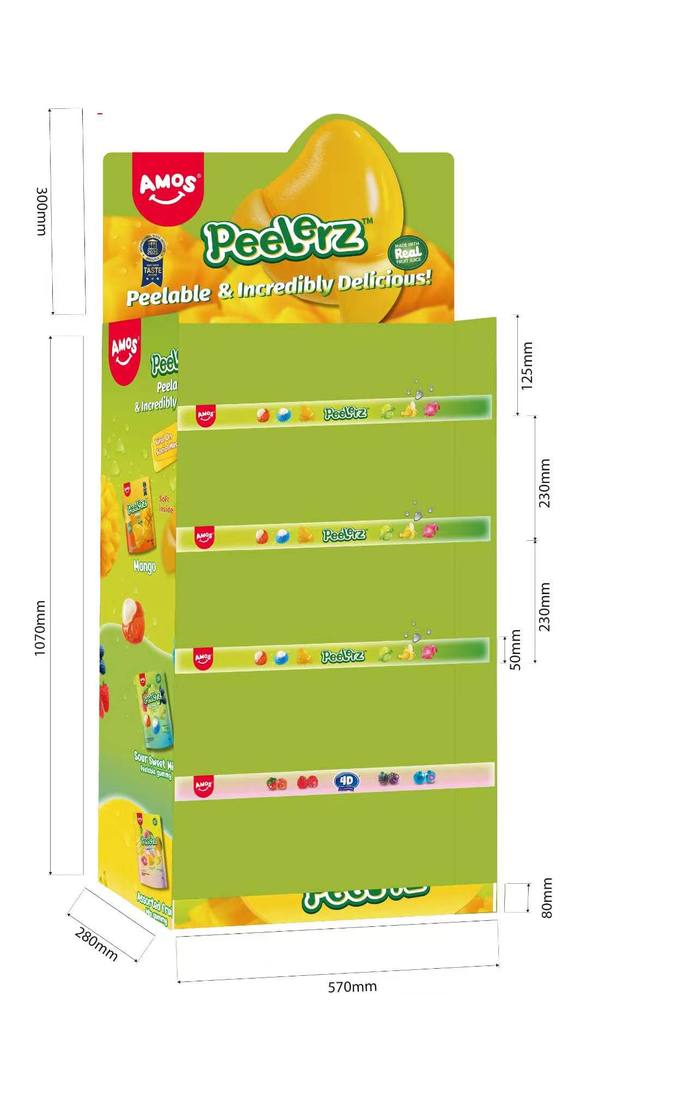
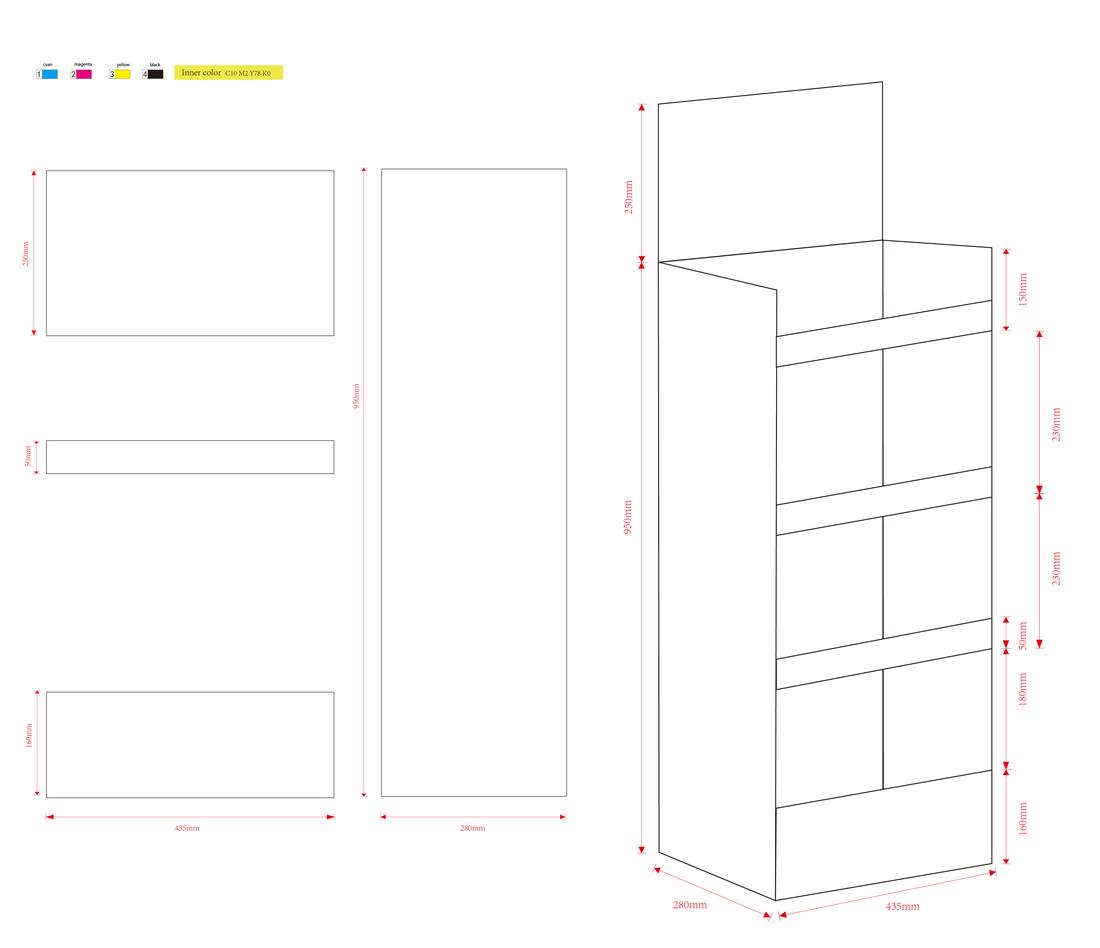
Die-cut blueprint used to plan panels, folds and shelf positions.
The die-cut blueprint is the first important control point. It gives the team a clear view of the panels, folds, shelf positions and header proportions before printed board is converted into a finished display. For a multi-tier cardboard floor display, this planning stage helps separate the visual artwork from the physical construction. The result is a layout that can be reviewed for panel size, fold direction and assembly logic before the project reaches the press.
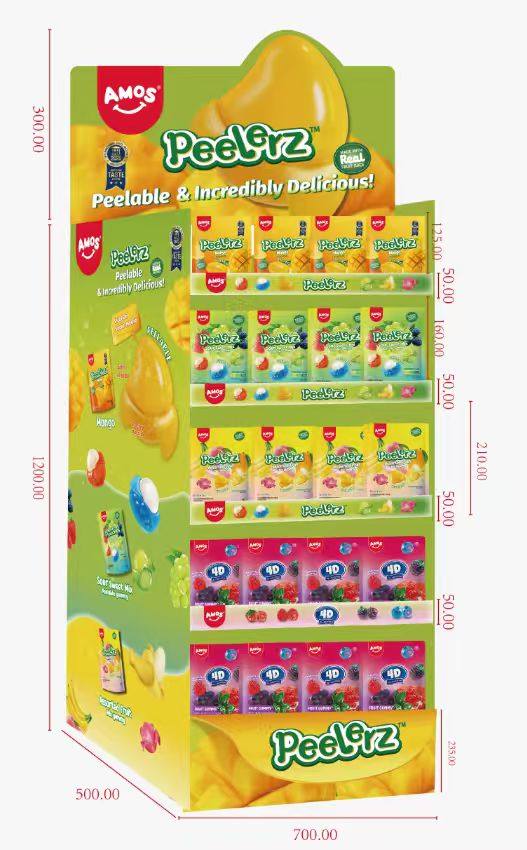
Structural render translating the flat cutting plan into a 3D retail object.
The structural render translates the flat cutting plan into a three-dimensional retail object. The project images show a tall floor display with a branded header, side panels and multiple horizontal product shelves. One dimensional view indicates an overall footprint of approximately 570 mm wide by 280 mm deep, with a main body height of about 1,070 mm and a top header area of about 300 mm. These values are visual references from the supplied artwork and should be confirmed against the final production drawing before ordering.
This review also helps a buyer evaluate the balance between product capacity and visual impact. The header remains visible above the products, while the open shelf arrangement keeps individual packs easy to see.
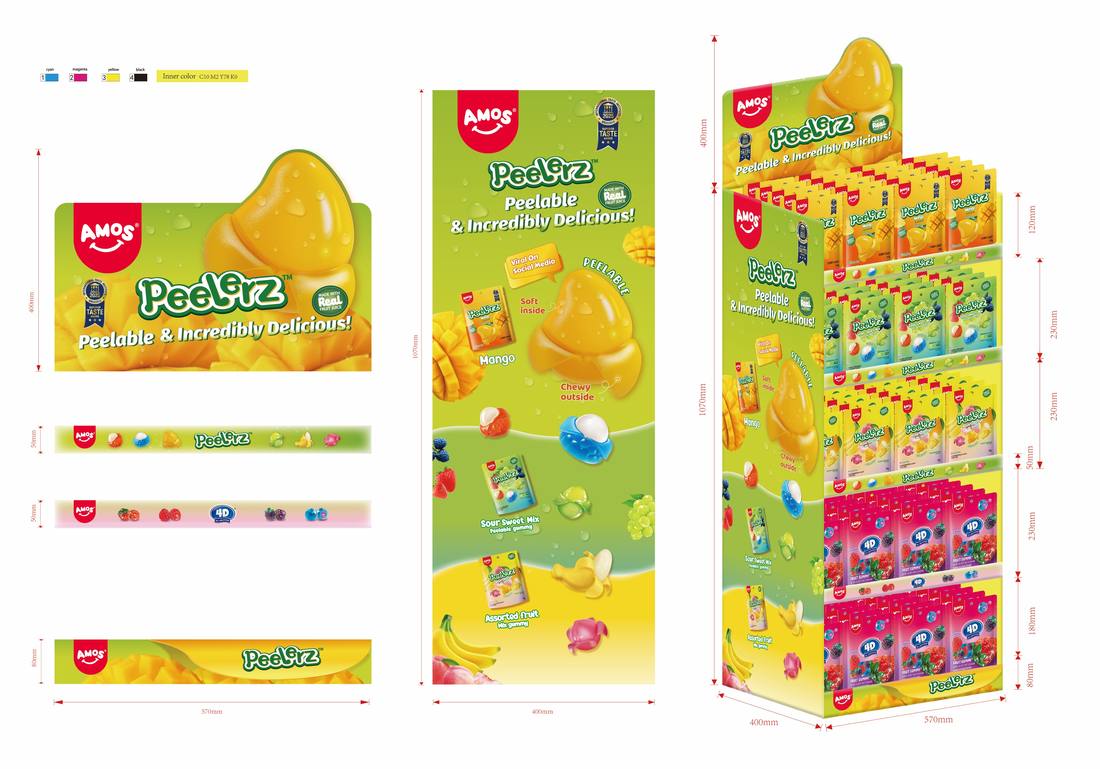
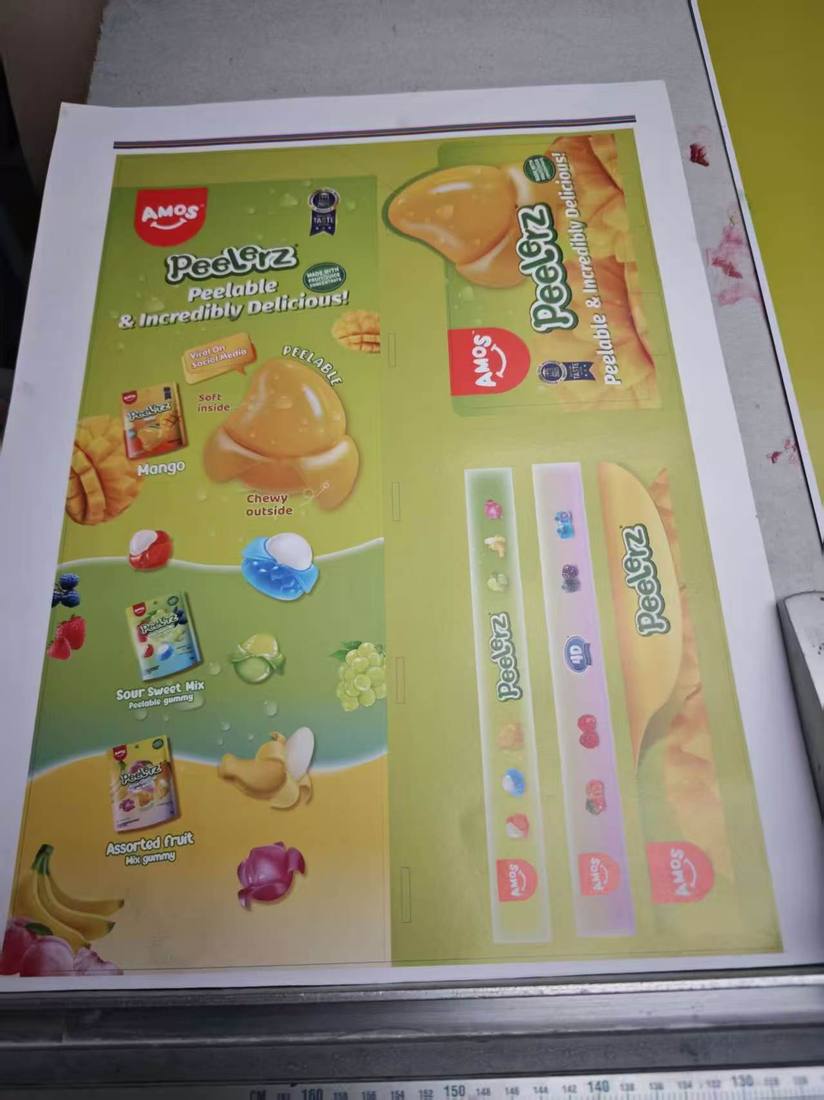
Digital print proof reviewed for color and artwork placement.
For a major brand such as AMOS, printed color and artwork placement are part of the display specification. The digital print proof allows the team to review the front header, side panels and product-facing areas before the final board is produced. The supplied proof images show Amos Peelrz visual elements being carried onto the display structure rather than treated as a generic blank rack.
Holidaypac can use this stage to check artwork scale, logo position, fruit graphics, background color and the relationship between the display graphics and the real packages. The goal is a display that looks like a natural extension of the product range. A proof review is also the right point to identify any text, barcode, color or panel-orientation issue while changes are still manageable.
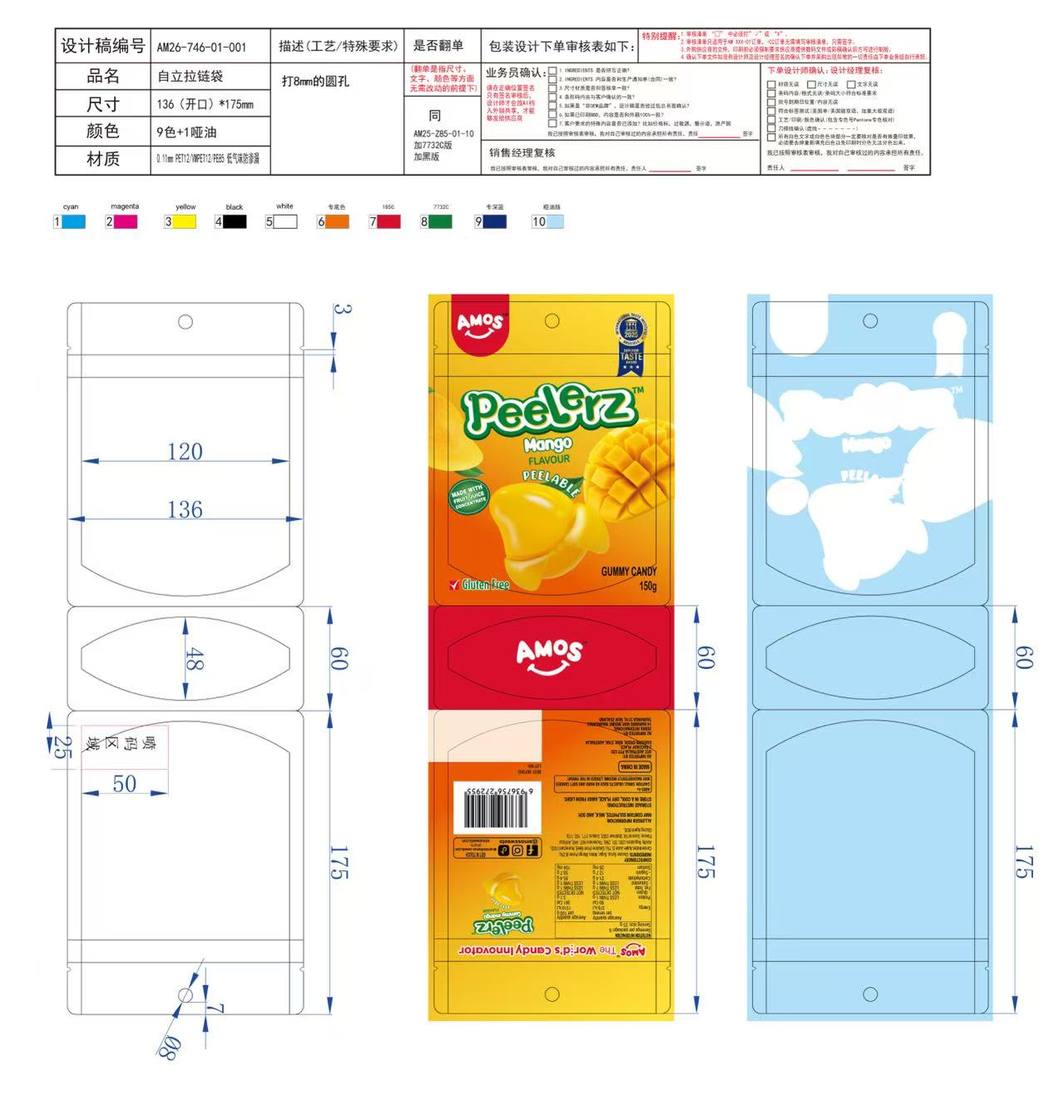
Packaging artwork reference for logo, color and fruit graphics.
Factory press line producing the printed corrugated board.
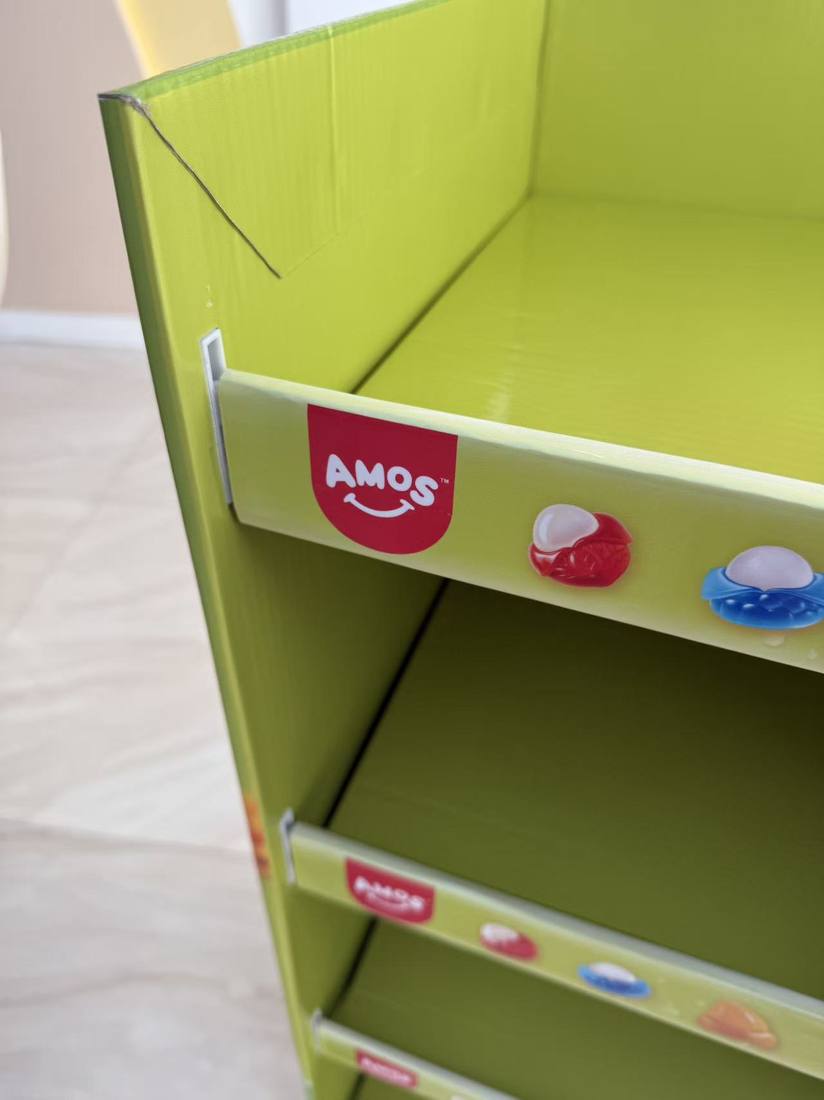
Once the artwork and structure are aligned, the board can be printed, cut, folded and assembled. The factory press-line image records the production environment, while the interior detail image shows that the display construction includes internal support rather than relying only on the outer printed skin. Reinforcement is important for a floor display because the shelves must maintain their shape while holding packaged products during handling and retail presentation.
Holidaypac's practical inspection sequence includes checking panel alignment, fold accuracy, shelf seating, header attachment and visible print quality. The comparison samples also provide a way to review different models or construction details side by side. This is especially helpful when a brand team, packaging engineer and retail buyer all need to evaluate the same physical result.
Interior reinforcement supporting the shelf panels.
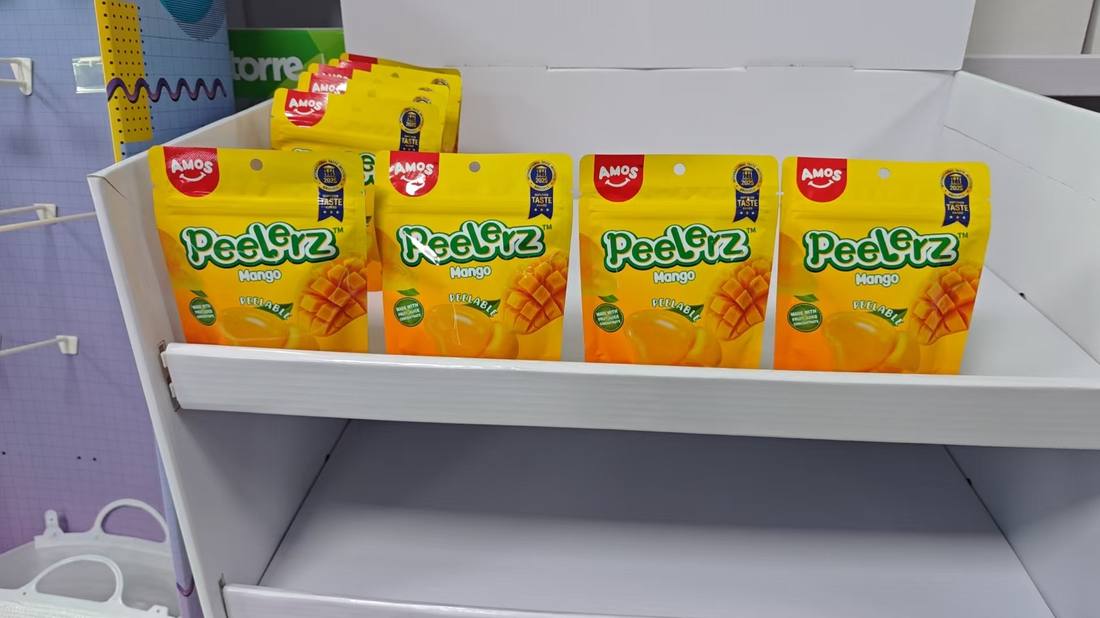
The completed sample is checked with the actual Amos product packs. The images show Peelrz Mango and assorted fruit packaging positioned on the shelves, with measurement references used to compare product width, shelf depth and overall display proportions. This step matters because a display can look correct in a drawing but behave differently once real packaging is placed inside it.
A product-loading check can confirm the practical questions buyers care about: are the front panels visible, is each shelf easy to replenish, does the top header remain readable, and is there enough clearance between product rows? The supplied comparison image indicates a product span of roughly 24 inches in one measurement view. Final dimensions, capacity and pack count should be confirmed with the buyer's current packaging samples and approved production drawing.
Product-loaded shelves with Amos Peelrz packaging.
Measurement reference used to check product and shelf fit.
Comparison reference saWhy the Measurement Check Matters
A ruler-based check gives the buyer a practical visual reference for the relationship between the display and the product pack. It can reveal whether a shelf is too deep, whether the header is proportionate to the body and whether the intended footprint is realistic for the target retail area. The measured sample is a development reference, not a replacement for a final engineering drawing, but it creates a shared basis for discussion between the brand, display supplier and retail team.
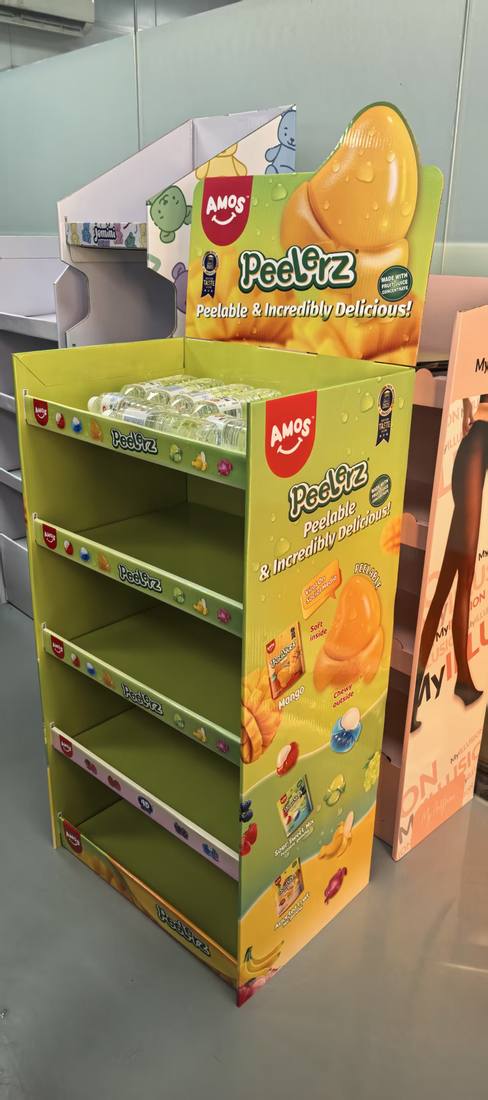
The assembled front view shows the commercial purpose of the structure: a tall branded footprint with several accessible product levels and a clear header. For a retail product launch, this kind of straight-on presentation is what shoppers see first, and it is the version most often used to judge overall visual impact before the display is checked from other angles in person.
The Amos packaging remains the visual focus. The bright product packs create a strong color block across the shelves, while the printed display panels reinforce the brand environment around them. This combination is valuable for supermarkets, specialty retailers, promotional zones, trade events and other environments where the display must attract attention without requiring a permanent fixture
A display stand is part of a wider packaging and merchandising workflow. Before production, the buyer should decide whether the units will arrive flat-packed, partially assembled or fully assembled. The best option depends on the destination, available storage space, store labor and the number of displays required. Holidaypac can review the intended delivery condition alongside the structure so the packing method does not undermine the display's final appearance.
For a branded food or snack display, the team should also confirm how the product will be placed on the shelves after delivery. A shelf-ready loading sequence can make replenishment easier and help the display maintain a consistent front-facing presentation. The product photographs in this case study are therefore more than decorative images: they show why real pack testing should be included before a commercial rollout.
Retail environments vary widely. A supermarket aisle may require a compact footprint and clear access from the front, while a specialty store or event area may allow a stronger three-quarter presentation. The same brand artwork can be adapted to different display formats, but the structure should always be reviewed around the actual viewing distance, product weight and replenishment routine.
The value of the Amos project is the visible connection between brand strategy and physical execution. AMOS brings recognizable packaging and a defined product identity. Holidaypac contributes the display-development process that turns those brand assets into a retail structure: a cutting plan, a three-dimensional model, a printed proof, an assembled sample, internal support, dimensional inspection and product loading.
For buyers comparing suppliers, this sequence is a useful quality signal. It shows that a custom cardboard display should be evaluated as a complete system rather than as a printed picture. The structure, graphics, product fit, access, packing and final placement all influence whether the display works in a real retail setting.
It also gives future customers a clearer starting point. A brand does not need to begin with a fully defined display specification. Product samples, packaging artwork, target location and approximate quantity are enough to begin a conversation. Holidaypac can then help translate those inputs into a practical display direction for review.
| Brand shown | AMOS |
| Product range shown | Amos Peelrz, Peelrz Mango and assorted fruit packaging |
| Display type | Branded corrugated cardboard floor display stand |
| Visible structure | Top header, side panels and multiple horizontal product shelves |
| Approximate reference dimensions | About 570 mm wide x 280 mm deep; main body about 1,070 mm high; header about 300 mm high, based on supplied visual references |
| Artwork focus | Brand identity, fruit graphics, product visibility and coordinated shelf presentation |
| Quality checkpoints | Die-cut layout, structural sample, print proof, reinforcement, assembly, dimensional check and product loading |
| Final confirmation | Confirm board grade, finish, final dimensions, shelf capacity, packing method and delivery requirements before production |
A successful custom display project starts with the product pack, the retail placement and the brand artwork. Holidaypac can review the buyer's product dimensions, expected display location, target quantity and visual direction, then recommend a suitable cardboard display format. Depending on the product, the solution may be a floor display, PDQ tray, side wing display, hook display or another corrugated merchandising structure.
The development process normally includes artwork and dimension review, a structural proposal, sample confirmation, print production, die cutting, assembly inspection and packing coordination. For brand-led projects, the sample stage is particularly important because it gives the buyer a physical reference for color, visibility, shelf access and overall presence before a larger production run.
For related formats, see Holidaypac's custom supermarket promotion corrugated display rack and custom PDQ tray solutions. These internal references help buyers compare floor-standing and shelf-ready approaches before selecting a final structure.
Yes. The artwork, product pack dimensions and brand guidelines can be used as the starting point for a custom display proposal. Final artwork approval remains with the brand owner or authorized buyer.
Useful information includes product dimensions, pack photographs or samples, the number of products per shelf, target display size, artwork files, order quantity, destination and any packing or delivery requirements.
Usually, yes. Shelf spacing, header size, panel graphics, footprint and reinforcement can be reviewed around the actual product. A new sample or revised drawing may be needed when the pack size or loading direction changes.
No. The dimensions are approximate references visible in the supplied project images. The approved technical drawing and the buyer's product samples must be used for final production confirmation.
Share your product pack dimensions, artwork and retail requirements with Holidaypac. Our team can help evaluate the right display format, prepare a structural direction and organize the sample checkpoints needed for a confident production decision.
Request a Display Consultation →In this page, HolidayPac will show the cases how holidaypac supply the packaging and cardboard displays and other related products solution for our clients. To save the communicated time cost and make the solution in a high effect to save our clints time cost. HolidayPAC try to be a global packaging factory, solution expert in paper and paper related products, like, paper packaging, cardboard displays, PDQ, and air fryer liners, pharchment papers.
Links